
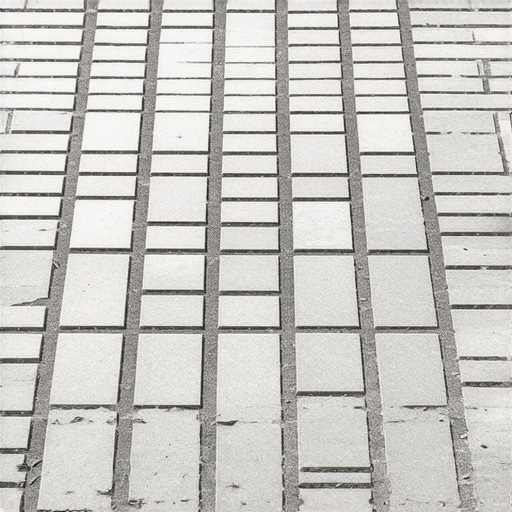
How to Seal Pavers in 2026 Without Making Them Slippery
The $30,000 Hardscape Autopsy: Why Your Patio is a Skating Rink
I recently got called out to tear up a $30,000 patio that was sinking and dangerously slick because the previous contractor used a high-solids topical sealer on a pool deck without checking the moisture vapor transmission rates. The homeowner was literally sliding into the pool before they even reached the water. They had spent a fortune on premium pavers, only to have a ‘mow-and-blow’ guy ruin the surface with a cheap, thick acrylic that trapped moisture and killed the surface friction. We had to use chemical strippers and industrial pressure washers just to get back to the raw stone. It was a mess that could have been avoided with basic engineering knowledge. If you don’t understand the chemistry of the bond, you’re just painting dirt.
The Secret to Slip-Resistant Paver Sealing in 2026
To seal pavers without making them slippery, professionals must utilize penetrating silane-siloxane sealers or high-quality film-forming resins infused with micronized anti-skid additives like shark grip or polymer beads. These materials increase the Coefficient of Friction (COF) while providing a hydrophobic barrier against stains and salt. Don’t skip the testing phase.
“A retaining wall doesn’t fail because of the stone; it fails because of the water trapped behind it. Similarly, a sealer fails because of the moisture trapped beneath the surface film.” – Hardscape Engineering Axiom
The Physics of Surface Friction: Understanding COF
In the world of hardscaping, we measure safety through the Dynamic Coefficient of Friction (DCOF). A standard concrete paver has a high DCOF when raw. The moment you apply a topical sealer, you are essentially laying down a layer of plastic. If that plastic has a smooth finish, the DCOF drops below 0.42, which is the safety threshold for wet surfaces. In 2026, we use high-grade breathable polymers. These aren’t your grandfather’s sealers. We are looking for products that allow for breathability (moisture vapor transmission) so the sealer doesn’t delaminate or turn white. If the sealer can’t breathe, it will fail. Period.
Comparing Sealer Technologies for 2026
| Sealer Type | Finish Style | Slip Risk | Best Use Case |
|---|---|---|---|
| Penetrating (Silane/Siloxane) | Natural/Matte | Extremely Low | Pool decks, high-traffic walkways |
| Water-Based Acrylic | Satin/Semi-Gloss | Moderate | Driveways, decorative borders |
| Solvent-Based Acrylic | High Gloss (Wet Look) | High (Requires Additives) | Showpiece patios, low-moisture areas |
| Polyurethane / Epoxy | Varies | High | Commercial industrial settings |
How much modified gravel do I need for a patio base?
For a standard residential patio, you need a minimum of 4 to 6 inches of compacted modified gravel (2A or CR-6). To calculate the volume, multiply your square footage by the depth in feet (e.g., 0.5 feet for 6 inches), then divide by 27 to get cubic yards. Add 20 percent for compaction. If your base isn’t solid, your pavers will shift, and your sealer will crack at the joints. Don’t be the guy who skimps on the foundation.
The “Grip-Lock” Installation Checklist
- Phase 1: Deep Clean. Use a pH-neutral cleaner to remove efflorescence (salt) and organic growth.
- Phase 2: Joint Stabilization. Ensure polymeric sand is installed to 1/8th inch below the paver chamfer.
- Phase 3: Moisture Testing. Use a concrete moisture meter; levels must be below 4 percent before application.
- Phase 4: Additive Integration. Mix 3.2 ounces of micronized anti-skid powder per gallon of sealer.
- Phase 5: Application. Apply via HVLP sprayer for a thin, even coat. Avoid pooling at all costs.
What is the best anti-slip additive for paver sealer?
The gold standard remains micronized polypropylene beads. Unlike sand, these beads are translucent and rounded, meaning they provide grip without changing the color of the stone or creating a sandpaper-like texture that tears up bare feet. In 2026, we are seeing nano-engineered particulates that bond directly to the polymer chains of the sealer, providing longer-lasting traction than old-school grit. It’s about surface area and mechanical bond. Use it.
The Ground-Up Build: Prepping for the Perfect Seal
Preparation is 80 percent of the job. I tell my crew every day: if you can’t eat off the patio before you seal it, it’s not clean enough. Most failures happen because of efflorescence—that white powdery salt that leaches out of the concrete. If you seal over it, you’ve permanently trapped a blemish. We use a specialized acid-wash to open the pores of the stone, allowing the sealer to bite deep into the matrix. This isn’t just about looks; it’s about structural integrity. A deep-penetrating sealer strengthens the paver against freeze-thaw cycles by reducing water absorption. If water can’t get in, it can’t expand and shatter the stone.
“Surface sealing is only as effective as the substrate’s preparation; failure to remove latent salts will result in premature coating delamination.” – International Concrete Repair Institute (ICRI) Guidelines
Applying the Sealer: The Pro Technique
We don’t use rollers on textured pavers anymore. Rolling leaves too much product in the low spots, which leads to ‘blushing’—that ugly white haze. We use HVLP (High Volume Low Pressure) sprayers. This allows us to control the micron thickness of the coating. You want two thin coats, not one thick one. The first coat acts as a primer, saturating the pores. The second coat provides the wear layer. Between those coats is when you introduce the anti-skid elements. It must be consistent. One missed patch is a liability. It will slip. You must be precise.
Maintaining the Grip: Year One and Beyond
Once the sealer is down, the clock starts. In 2026, we recommend a soft-wash maintenance schedule every 12 months. Do not use high-pressure tips on sealed surfaces; you will strip the anti-skid layer right off. Use a surfactant-based cleaner to lift dirt without degrading the polymer. If you notice the ‘beading’ effect has stopped, it’s time for a maintenance coat. This isn’t a ‘set it and forget it’ situation. Hardscaping is an investment. Treat it like one. If you maintain the surface, the pavers will outlast the mortgage. If you ignore them, the sun and rain will turn them into expensive gravel. Don’t let your patio become another autopsy report in my files. Keep it clean, keep it dry, and for heaven’s sake, keep it grippy.
![Build a $200 2026 Gravel Path with Brick Edging [Quick DIY]](https://lawnmajesty.com/wp-content/uploads/2026/07/Build-a-200-2026-Gravel-Path-with-Brick-Edging-Quick-DIY.jpeg)
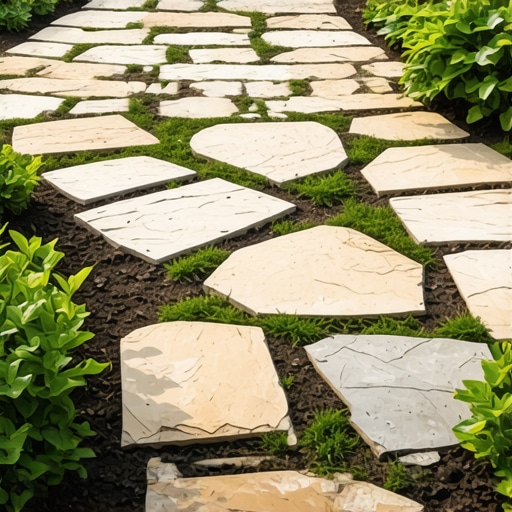
![Building a $100 2026 Natural Stone Path [DIY]](https://lawnmajesty.com/wp-content/uploads/2026/07/Building-a-100-2026-Natural-Stone-Path-DIY.jpeg)
![Repair 2026 Cracked Concrete Walkways for $40 [Fast]](https://lawnmajesty.com/wp-content/uploads/2026/05/Repair-2026-Cracked-Concrete-Walkways-for-40-Fast.jpeg)