How to Seal Your Deck Without Using Harsh Chemicals
Why Eco-Friendly Deck Sealing Starts with Forensic Wood Preparation
Eco-friendly deck sealing utilizes bio-based penetrating oils like tung, linseed, or plant-based resins to saturate wood fibers rather than coating them in plasticized films. This method requires a surface moisture content below 12% and mechanical abrasion to open the wood grain for maximum absorption of the protective lipids.
I recently got called out to tear up a $30,000 patio and deck combo that was sinking and rotting because the previous contractor used a high-VOC, film-forming sealant on green lumber. The homeowner thought they were protecting the wood, but that synthetic shell trapped hydrostatic pressure and internal moisture, effectively pressure-cooking the cedar from the inside out. When I pulled the first board, the underside was a colony of white rot fungi. It was a total structural failure. This is why I drill it into my crew: if you don’t understand the cellular structure of the timber, you’re just painting a coffin. Wood is not a static material; it is a bundle of cellulose tubes held together by lignin. To seal it without harsh chemicals, you must work with the biology of the board, not against it.
“Wood is a hygroscopic material, meaning it constantly exchanges moisture with its environment. Failure to manage this exchange leads to dimensional instability and decay.” – USDA Forest Products Laboratory
The Mechanical Reality of Wood Surface Prep
Before you even think about a natural oil, you have to deal with mill glaze. This is a crushed layer of wood fibers created by high-speed planers at the lumber yard. If you don’t sand it off, your expensive eco-oil will just sit on the surface and turn into a sticky mess. I recommend a floor sander with 60-grit or 80-grit paper. Don’t go higher than 80. If you polish the wood to 120-grit, you’re closing the pores you need to stay open. You need enough surface area for the oil to bite. Don’t skip the edges. Every square inch must be porous. Check the moisture with a pin-meter. If it reads over 15%, walk away. Let it dry.
Comparing Natural Sealants: The Engineering Breakdown
Not all bio-based oils are created equal. You need to understand the difference between drying oils and non-drying oils. Raw linseed oil, for example, is a disaster for decks because it never truly dries and becomes a buffet for mold. You want polymerized oils or high-quality tung oil blends.
| Sealer Type | Durability (Years) | Drying Mechanism | Microbial Resistance |
|---|---|---|---|
| Pure Tung Oil | 1 to 2 | Oxidative Polymerization | High (Naturally Toxic to Pests) |
| Polymerized Linseed | 2 to 3 | Heat-Treated Crosslinking | Moderate (Needs Zinc Additive) |
| Water-Borne Alkyds | 3 to 5 | Evaporative Resin Bond | High |
| Raw Linseed Oil | <1 | None (Non-Drying) | Low (Invites Mold) |
“How do I know if my deck is ready for a natural sealer?”
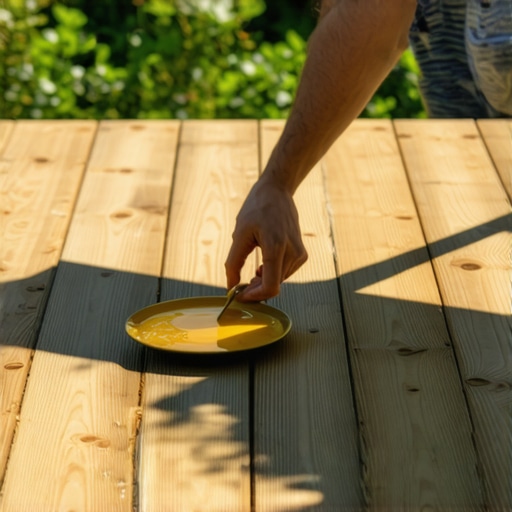
Perform the water droplet test to verify the wood’s absorption capacity. Place several drops of water on different sections of the deck, particularly high-traffic areas and corners. If the water beads for more than two minutes, the surface is either still glazed or contaminated with old finish. If it soaks in within 30 seconds, the capillary structure is open and ready for a bio-based application. This ensures the oil penetrates at least 1/8th of an inch into the timber.
The Bio-Based Application Protocol
Once the wood is prepped, application is a matter of saturation. Forget the brushes; use a 3/8-inch nap roller for the main boards and a pad applicator for the gaps. You want to apply the oil until the wood stops drinking it. This is the ‘wet-on-wet’ technique. Wait 20 minutes. If you see dry spots, add more. After 40 minutes, you must wipe off every single drop of excess oil with lint-free rags. If you leave puddles, the UV rays will bake them into a gummy, amber-colored skin that will peel in a month. It will rot if you leave excess on top. The goal is to have the protection inside the wood, not on it.
“What is the best natural oil for exterior wood decks?”
The gold standard for engineering-grade wood protection is Pure Tung Oil thinned 1:1 with a natural citrus solvent like D-limonene. This combination allows for deep sub-surface penetration while maintaining a zero-VOC profile. Unlike petroleum-based stains, tung oil creates a flexible hydrophobic barrier that doesn’t crack under the thermal expansion and contraction cycles common in most climates.
“A successful wood finish must account for the anisotropic nature of the material, allowing for moisture vapor transmission while repelling liquid water.” – International Code Council (ICC) Wood Standards
- Check Weather Forecast: You need 48 hours of dry weather and temps between 50°F and 85°F.
- Mechanical Clean: Use a stiff brush and oxygen bleach (sodium percarbonate), not chlorine bleach. Chlorine destroys lignin.
- Neutralize: If you use a cleaner, rinse with a weak citric acid solution to balance the pH.
- Apply Thin: Two thin coats are always superior to one heavy, sloppy coat.
- Maintenance: Plan on a light ‘maintenance coat’ every 18 to 24 months.