Stop Killing Your Lavender: 3 Drainage Fixes
Stop Killing Your Lavender: 3 Drainage Fixes
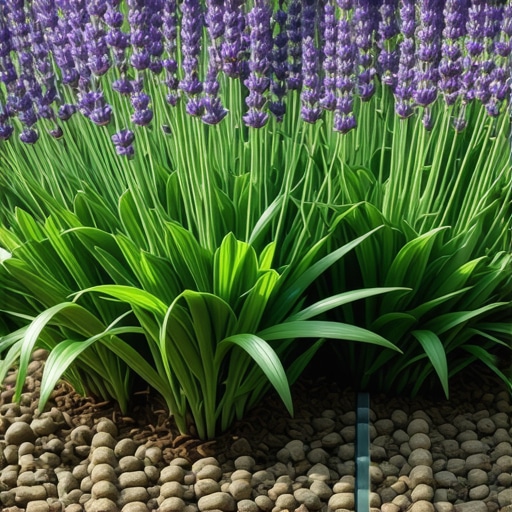
I always drill into my new crew members: if you don’t fix the soil grading first, every plant you put in the ground is just expensive compost. Last season, I walked onto a job site where a homeowner had spent three grand on high-end ‘Phenomenal’ lavender. They were beautiful, silver-blue specimens from a reputable nursery. Two weeks later, they were black, slimy husks. The culprit wasn’t a pest or a lack of water; it was the dirt itself. They had planted Mediterranean stock into heavy, compacted clay without a single thought for drainage. This is the reality of horticulture: you cannot fight physics. Lavender is a dry-land specialist engineered for the rocky, lean soils of the Mediterranean coast. When you put it in a swamp, it dies. Period.
The Forensic Autopsy of a Dead Lavender Patch
Lavender dies because of root suffocation and fungal pathogens triggered by excessive soil moisture and poor gas exchange; to fix this, you must increase soil porosity and ensure rapid percolation using inorganic amendments like 1/4 inch crushed stone instead of organic compost.
When we look at a failing lavender plant, we are usually looking at a case of Phytophthora root rot. In the landscaping world, we call this ‘wet feet.’ Lavender roots require a specific ratio of air to water in the soil micropores. In heavy clay or silt, those pores are too small. Capillary action keeps the water locked in the root zone, preventing oxygen from reaching the root hairs. Within 48 hours of saturation, the roots begin to slough off. You will see the foliage turn a sickly gray-green before it collapses into a black mess. It is a structural failure of the soil, not a biological failure of the plant. You need to understand the bulk density of your soil. If your soil is over 1.6 grams per cubic centimeter, your lavender is already dead; it just hasn’t realized it yet.
“Lavender requires a soil pH between 6.5 and 7.5 and must have excellent internal drainage to prevent root rot caused by Phytophthora cinnamomi.” – Texas A&M AgriLife Extension
Drainage Fix 1: The Sub-Grade Mineral Modification
The most effective way to save lavender is to modify the soil texture by incorporating 50% inorganic aggregates like poultry grit or crushed limestone to a depth of 12 inches, which physically breaks up clay particles and creates permanent macro-pores for water movement.
Forget peat moss. Forget wood chips. If you add organic matter to a lavender hole in heavy soil, you are just making a sponge. As that organic matter breaks down, it consumes more oxygen and creates an even more anaerobic environment. My crew uses a 1:1 ratio of native soil to 1/4-inch crushed stone. This isn’t just about ‘looseness.’ It is about the hydraulic conductivity of the medium. We use a penetrometer to check compaction before we even think about planting. If the resistance is too high, we bring in the power augers. We are looking for an infiltration rate of at least 2 inches per hour. If your soil can’t pass that test, you are wasting your money.
How much grit should I add to soil for lavender?
For standard garden beds, you should integrate at least 2 to 3 inches of coarse aggregate into the top 10 inches of soil to achieve a 30-50% mineral mix. Do not use fine play sand, as it can mix with clay to create a substance similar to concrete. Use sharp, angular grit or pea gravel instead.
Drainage Fix 2: The Engineered Berm and Mounding Strategy
Creating a raised berm or planting mound at least 8 to 12 inches above the surrounding grade utilizes gravitational potential energy to pull excess water away from the plant crown, ensuring the root flare stays dry even during heavy rain events.
This is basic civil engineering applied to a garden. If the water has nowhere to go, it stays. By building a mound, you are creating a ‘high point’ in the local topography. We don’t just pile dirt; we layer it. We start with a base of coarse #57 stone, then layer our mineral-rich soil mix on top. This creates a capillary break. Water moves through the soil and hits the stone layer, where it is then forced out laterally. This is the only way to grow lavender in regions with high annual rainfall. You must force the water to exit the root zone via gravity. It’s a simple, low-tech fix that works 100% of the time if the height is sufficient.
“In clay soils, the installation of a raised bed or a rock garden is often the only way to provide the rapid drainage necessary for Mediterranean herbs.” – Penn State Extension
| Material | Drainage Rating | Longevity | Best Use Case |
|---|---|---|---|
| Pea Gravel | Excellent | Permanent | Mineral soil amendment |
| Coarse Sand | Moderate | Temporary | Breaking up light silts |
| Organic Compost | Poor | Short-term | Not recommended for lavender |
| Crushed Limestone | Superior | Permanent | pH adjustment and drainage |
Drainage Fix 3: Sub-Surface French Drains and Catch Basins
For large-scale lavender installations, you must install a French drain system consisting of a 4-inch perforated PVC pipe wrapped in non-woven geotextile fabric, buried in a trench of clean gravel, to intercept and redirect hydrostatic pressure and surface runoff.
If you have a slope that drains toward your lavender bed, no amount of sand will save you. You are dealing with a volume issue. We dig a trench 18 inches deep on the uphill side of the bed. We use a 1% slope minimum—that’s a 1-inch drop for every 8 feet of pipe. We use NDS catch basins at the low points. This is how pros handle water. We don’t hope the water goes away; we tell it where to go. The geotextile fabric is critical here. If you use cheap landscape fabric, it will clog with fines in two seasons. Use 4-ounce non-woven fabric. It’s the industry standard for a reason. It lets water through while keeping the silt out of your pipe. It is the difference between a 20-year drain and a 2-year headache.
Can lavender survive in heavy clay soil?
Lavender can only survive in heavy clay if it is planted in a raised bed or if the clay is aggressively amended with large-diameter minerals. Standard clay soil retains too much moisture and lacks the necessary pore space for lavender root respiration, leading to inevitable plant death without intervention.
The Professional Lavender Planting Checklist
- Test soil pH: Aim for 6.5 to 7.5. Add lime if you are below 6.0.
- Check the root flare: Never bury the crown. It should be 1 inch above the soil line.
- Use mineral mulch: 2 inches of pea gravel or crushed white stone. No wood mulch.
- Spacing: Ensure 3 feet between plants for maximum airflow to prevent foliar blight.
- Watering: Deep soak at the base once a week during the first season; then leave it alone.
It will rot. Don’t skip this. Landscaping isn’t about pretty colors; it’s about managing the environment to suit the biology of the plant. Lavender is a hardy, rugged survivor if you give it the dry, lean conditions it evolved for. If you insist on treating it like a rose bush, you will be buying new plants every spring. Stop the ‘mow-and-blow’ mentality. Dig the hole right the first time. Use the right stone. Ensure the water has an exit strategy. Your lavender will thank you by living for a decade instead of a month.
![Stop 2026 Rust on Garden Tools [Maintenance Tips]](https://lawnmajesty.com/wp-content/uploads/2026/07/Stop-2026-Rust-on-Garden-Tools-Maintenance-Tips.jpeg)