Stop 2026 Lawn Grubs with This Simple Wash
The Grub Autopsy: Why Your Lawn is Dying from the Roots Up
To stop 2026 lawn grubs, you must disrupt the egg-laying cycle of the Japanese Beetle and European Chafer using a biological wash of beneficial nematodes or milky spore during the late summer larval stage. This prevents root-shearing before the ground freezes.
I have spent twenty years staring at dirt. Most people see a brown patch and think ‘water.’ I see a mechanical failure of the root system. A homeowner called me in a panic after they completely torched their front lawn by applying three times the recommended dose of a heavy-duty synthetic carbaryl. They thought if a little bit killed the grubs, a lot would save the yard. Instead, they sterilized the soil, killed every beneficial earthworm, and left the turf so chemically burned that even the weeds wouldn’t grow. It was a chemical nightmare that cost them a full excavation and four inches of new topsoil. They didn’t understand that grubs are a symptom of a biological imbalance, not just a pest to be nuked with big-box store poisons. When you walk on your lawn and it feels like a soaked sponge, or when you can literally roll the grass up like a piece of cheap carpet, you aren’t looking at a drought. You are looking at an infestation where the root-to-soil connection has been severed by the mandibles of Popillia japonica larvae.
How do I know if I have grubs or just dry soil?
Identify a grub problem by looking for irregular brown patches that do not respond to watering and where the turf pulls away from the soil with zero resistance. Use a soapy water flush to force larvae to the surface for an accurate count per square foot. If you see more than five to ten grubs in a one-square-foot section, the structural integrity of your lawn is at immediate risk. You need to act before the first frost of 2025 to ensure your 2026 season isn’t a graveyard of dead thatch. Grubs are calculated survivors. They move vertically through the soil profile based on temperature and moisture. When the surface dries out, they dive deep. When you water lightly every day, you keep them right at the root zone, feeding on your investment. Stop it. You are literally feeding the enemy.
“White grubs are the most broad-spectrum and destructive pests of turfgrass in the United States, requiring a nuanced understanding of soil temperature and larval instar stages for effective management.” – Penn State Department of Entomology
The Simple Wash: Using Surfactants and Biology to Reclaim Your Dirt
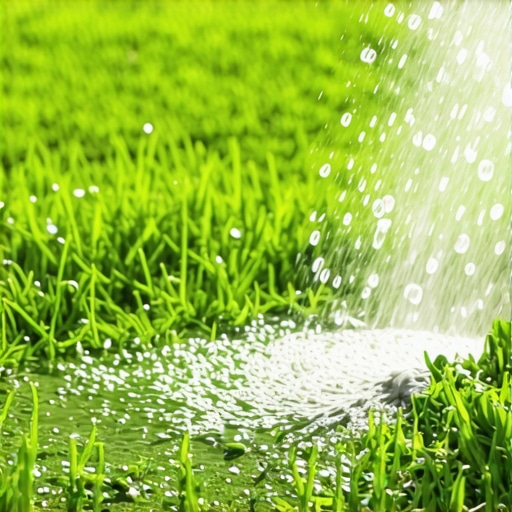
The ‘wash’ I recommend is not a chemical assault; it is a two-stage delivery system. First, use a mild surfactant wash (1 tablespoon of liquid dish soap per gallon of water) to irritate the soil and bring the pests to the surface. This is your reconnaissance. Once you have confirmed the population density, you follow up with a high-volume drench of Heterorhabditis bacteriophora nematodes. These microscopic hunters enter the grubs and release a bacterium that kills them from the inside. This is biological warfare at its finest. It leaves your children, your dogs, and your earthworms safe while wiping out the grubs that will become the 2026 beetle swarm. You must apply this wash when the soil is moist and the sun is low; UV light kills nematodes faster than a dry spell. Don’t skip the watering-in process. These organisms need a film of water to move through the soil pores. If you leave them on the grass blades, they will die in hours. It is a precision strike, not a ‘spray and pray’ operation.
| Lifecycle Phase | Timing | Management Strategy |
|---|---|---|
| Egg Laying | July – August | Soil Moisture Management |
| Neonate Larvae | August – September | Biological Wash (Nematodes) |
| Overwintering | October – March | Deep Root Conditioning |
| Pupation | April – May | Aeration and Mechanical Prep |
The engineering of your soil determines the success of this treatment. If your soil is compacted like a concrete sidewalk, nothing gets through. No air, no water, and certainly no beneficial nematodes. You need to look at your soil bulk density. If you can’t push a screwdriver six inches into the ground without a hammer, your lawn is suffocating. This compaction creates a perfect environment for grubs because it stresses the grass, making it less resilient to root loss. I tell my crew every day: we are not in the business of growing grass; we are in the business of managing soil pore space. Without 25 percent air and 25 percent water in that soil matrix, you are just growing expensive compost. Use a core aerator to pull three-inch plugs. Don’t use those spiked shoes; they just compress the soil further. You need to physically remove the dirt to create room for life.
How much modified gravel do I need for a patio base?
While grubs destroy the green, poor engineering destroys the gray. For a stable hardscape near your lawn, you need a minimum of 6 inches of compacted 21A or 3/4-inch modified gravel for a pedestrian patio. This base must be vibrated in two-inch lifts to reach 95 percent Proctor density to prevent settling. Most contractors skip the compaction layers. They dump six inches of stone, run a plate tamper over the top once, and wonder why the pavers dip after the first freeze. It is about hydrostatic pressure and drainage. If water sits in your base, it will heave. The same applies to your lawn. Poor drainage leads to fungal rot, which looks exactly like grub damage to the untrained eye. This is why a forensic autopsy of your site is mandatory before you buy a single bag of grub control.
“A retaining wall doesn’t fail because of the stone; it fails because of the water trapped behind it.” – Hardscape Engineering Axiom
- Test soil pH: Target a 6.5 to 7.0 range for optimal nutrient uptake.
- Check thatch depth: Anything over 0.5 inches protects grubs from treatments.
- Perform the soapy water flush: Count the larvae to justify the cost of nematodes.
- Calibrate your sprayer: Ensure you are delivering 2 gallons of water per 1,000 square feet.
- Avoid ‘mow-and-blow’ height: Keep your grass at 3.5 to 4 inches to shade the soil and discourage egg-laying.
Grubs love short grass and moist soil. If you scalp your lawn and water it every afternoon, you are laying out a red carpet for Japanese Beetles. They want that warm, exposed soil to drop their eggs. By keeping your turf high, you cool the soil surface and create a mechanical barrier. It is a simple adjustment that costs zero dollars but saves thousands in renovation. Most homeowners are obsessed with a golf-course look. Unless you have a full-time greenskeeper and a $50,000 chemical budget, stop trying to maintain a quarter-inch height of cut. It will rot. Your grass needs leaf surface area to photosynthesize and build the energy reserves required to survive a grub attack. If you strip the leaves, the plant can’t feed the roots. If the grubs are also eating the roots, the plant is dead. It is basic math. Don’t let a ‘pro’ with a zero-turn mower tell you otherwise. They just want to get in and out in ten minutes. They don’t care about your nitrogen cycle or your root-to-shoot ratio.
The Long-Term Prevention Schedule
Planning for 2026 starts now. In the late fall, as the surviving grubs dive deep to escape the frost, you should be focused on soil carbon. Adding a fine layer of compost or humic acid helps build the microbial diversity that keeps pest populations in check. Healthy soil contains natural pathogens that kill grubs. When you over-fertilize with high-salt synthetic fertilizers, you kill these natural allies. You are creating a vacuum that grubs are happy to fill. Switch to slow-release organic sources that feed the soil, not just the plant. Remember, the tamper should literally bounce off a well-compacted base, and your soil should feel alive, not like sterile dust. If you follow this forensic approach, you won’t be chasing your tail with emergency sprays every summer. You will have a system that works with biology rather than fighting it. That is the difference between a landscaper and a guy with a lawnmower. It will take work. Don’t skip the details. Your 2026 lawn depends on the chemistry you establish today.