Stop 2026 Soil Erosion on Slopes with Jute Matting
The Engineering Logic of Slope Stabilization
I always drill into my new crew members: if you don’t fix the soil grading first, every plant you put in the ground is just expensive compost. Most homeowners and ‘mow-and-blow’ hacks look at a washing-out slope and think they can just throw some mulch and hostas at the problem. They are wrong. By 2026, the increased frequency of heavy precipitation events will make standard landscaping techniques obsolete for anything over a 2:1 slope. We are talking about civil engineering on a residential scale. If you don’t understand the sheer force of water moving over bare earth, you are setting yourself up for a catastrophic slope failure that could take out a foundation or a retaining wall. It starts with the physics of the soil. You need a mechanical bond before the biological bond takes over. That is where jute matting becomes the foreman’s best friend. It is not just a net; it is a temporary structural skeleton for your yard.
What is the most effective way to stop soil erosion on a slope?
To stop soil erosion on slopes, jute matting provides an immediate biodegradable barrier that stabilizes soil particles while facilitating vegetation growth. By increasing surface roughness and reducing runoff velocity, jute netting ensures seed-to-soil contact and prevents rill formation during critical 2026 planting windows. This method outperforms plastic netting because it holds moisture and adds organic matter as it decomposes. Don’t skip the prep work. If the dirt is hard as a rock, nothing will grow. You need to scarify the surface. It must be loose enough for roots but stable enough for the mat.
The Anatomy of Jute Matting and Soil Physics
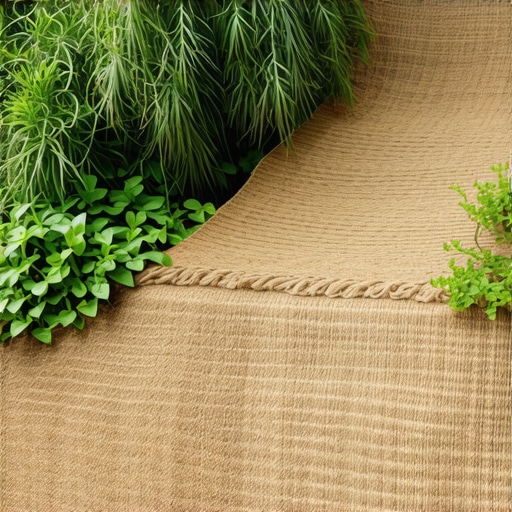
Jute is a natural fiber with a high tensile strength that can withstand the downward pull of gravity and the impact of heavy rain. When we talk about soil erosion, we are really talking about kinetic energy. A single raindrop hits bare dirt like a miniature bomb, dislodging particles that then flow downhill. Jute mesh breaks that energy. It creates thousands of tiny ‘check dams’ across the slope. As the water hits the fibers, it slows down. Slower water means less carrying capacity for sediment. Unlike synthetic nets, jute absorbs up to five times its weight in water, keeping the underlying soil moist and cool, which is the perfect environment for seed germination. It is a biological sponge. It will rot, eventually. That is the point. By the time the jute degrades in two to three years, the root systems of your grasses or groundcovers should have woven a permanent underground mat.
“Surface erosion on steep slopes is primarily driven by raindrop impact and sheet flow; biodegradable blankets like jute provide the necessary cover to mitigate these forces until root systems establish.” – USDA Natural Resources Conservation Service
How much jute netting do I need for a 30-degree slope?
To calculate the required jute matting for a 30-degree slope, you must measure the total surface area and add a 15% margin for overlaps and anchoring trenches. Standard rolls are 4 feet wide by 225 feet long. For a 30-degree incline, you must overlap the vertical seams by 6 inches and the horizontal ‘shingle’ seams by 12 inches to prevent water from getting under the fabric. Use 11-gauge steel U-shaped staples. Every square yard needs at least 2 to 3 staples. Don’t go cheap on the staples. If the wind gets under the mat, it’s gone.
| Material Type | Durability (Years) | Water Retention | Best Use Case |
|---|---|---|---|
| Jute Matting | 1.5 to 2.5 | High | Residential slopes, lawn establishment |
| Coir (Coconut) | 3 to 5 | Medium | High-flow channels, extreme slopes |
| Synthetic Mesh | Permanent | Low | Non-biodegradable, high-traffic areas |
| Straw Blankets | 0.5 to 1 | Low | Flat areas, temporary cover |
The Professional Installation Protocol
The success of an erosion control project is 90% preparation. You cannot lay jute over weeds or compacted clay and expect results. First, you must clear the area of all debris and large rocks. Anything bigger than a tennis ball will create a gap between the mat and the soil, allowing water to tunnel underneath. We call this ‘tenting,’ and it is the primary cause of failure. Once cleared, you must grade the slope to a smooth surface. If you have rills already formed, fill them with a 50/50 mix of screened topsoil and compost. Do not use potting soil. It is too light. You need weight. After grading, broadcast your seed. I prefer a mix of deep-rooted fescues and native clovers. The clover fixes nitrogen, which helps the grass thrive without excessive chemical fertilizers that burn the soil biology.
- Scarify the top 2 inches of soil with a hard rake.
- Apply seed and a slow-release starter fertilizer with a 1-2-1 NPK ratio.
- Dig a 6-inch deep ‘anchor trench’ at the top of the slope.
- Lay the start of the jute roll in the trench and staple it every 12 inches.
- Backfill the trench with soil and compact it.
- Roll the matting down the slope, overlapping vertical edges.
- Staple in a ‘staggered’ pattern every 2 feet.
- Final check: The mat should be in direct contact with the soil everywhere.
Does jute matting attract snakes or pests?
Jute matting does not inherently attract pests, but any ground cover that retains moisture will create a micro-habitat for beneficial insects like beetles and worms. While some homeowners worry about snakes, the tight weave of jute mesh is actually safer than plastic ‘bird netting,’ which can trap and kill small wildlife. In fact, by stabilizing the soil and promoting healthy plant growth, you are creating a balanced ecosystem that encourages predatory insects to manage pest populations naturally. It is a living system.
“A retaining wall doesn’t fail because of the stone; it fails because of the water trapped behind it.” – Hardscape Engineering Axiom
The Maintenance Cycle and Long-Term Success
Once the jute is down and the seed is in, your job is not over. The first three weeks are critical. You must keep the mat damp, but not saturated. If you see water pooling or running off the surface of the mat, you are watering too fast. You want a slow, misty soak that penetrates the jute and gets to the soil. As the grass begins to poke through the mesh, do not be tempted to walk on it. The soil is soft, and your boots will create depressions that channel water. By the end of 2026, the jute will have darkened as it starts to break down. This is good. It is becoming part of the soil. If you see any areas where the mat has lifted, get a staple in it immediately. Don’t wait. A small gap today is a washout tomorrow. Landscaping is not a ‘set it and forget it’ industry. It is a partnership with the land. Respect the grade, manage the water, and the soil will stay where you put it.”,