Stop 2026 Tree Root Damage with Proper Soil Health Hacks
Why Tree Roots Attack Hardscaping and Foundations
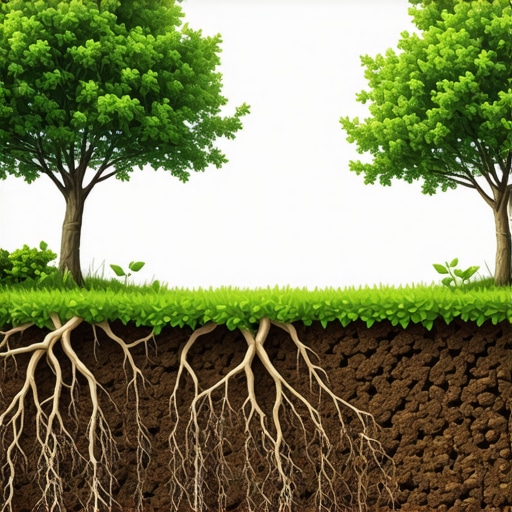
Tree roots destroy hardscaping and foundations when they are forced to search for oxygen, moisture, and nutrients in the loose, aerated aggregate found under pavers and concrete. By prioritizing soil health through aeration, nutrient management, and compaction reduction, homeowners can guide root growth downward and away from expensive structural assets. I always drill into my new crew members: if you don’t fix the soil grading first, every plant you put in the ground is just expensive compost. Most contractors ignore the soil biology because you can’t see it, but that is exactly where the structural integrity of your garden design begins. If you have a tree lifting a sidewalk, it isn’t the tree’s fault. It is the soil’s fault. The soil is too compacted, too dry, or too devoid of oxygen, leaving the tree no choice but to hunt the surface for survival.
“Root systems are opportunistic; they do not grow toward anything, but rather grow where environment conditions—moisture and oxygen—are most favorable.” – International Society of Arboriculture (ISA) Best Management Practices
How much space do tree roots actually need?
A tree’s root system typically extends two to three times the radius of the drip line, requiring at least 400 to 1,000 cubic feet of uncompacted soil to thrive without encroaching on landscaping structures. When you confine a 60-foot oak to a 4-foot planting strip, you are asking for a lawsuit. The roots will eventually hit a wall of compacted clay and turn upward. They will find the sand setting bed of your patio. They will find the moisture under your foundation. To stop this, we must look at the bulk density of the soil. Ideally, you want a bulk density below 1.60 g/cm3 for silty clay. Anything higher, and the roots stop penetrating the soil and start penetrating your plumbing.
The Ground-Up Build: Engineering the Root Zone
Designing a landscape for 2026 requires a ground-up build strategy that prioritizes the sub-grade environment over the aesthetic surface, ensuring that lawn care and hardscaping coexist. You have to stop thinking of soil as dirt. It is a biological engine. When we start a project, we look at the soil horizons. If we see a massive layer of heavy clay (common in the Piedmont regions) sitting over a shale bed, we know we have a drainage disaster waiting to happen. Roots will sit in that water, rot, and then the tree will send out surface ‘adventitious’ roots to keep from suffocating.
What is the best soil for preventing root damage?
The ideal soil for preventing root damage is a well-drained, structured loam with a pH level between 6.0 and 7.0, which allows for deep vertical root penetration and discourages surface-level exploration. We use the following material logic when prepping a site:
| Soil Component | Function for Root Health | Hardscape Risk Level |
|---|---|---|
| Sandy Loam | High oxygen transfer, deep drainage | Low |
| Heavy Clay | Water retention, low oxygen, high compaction | High |
| Organic Compost | Nutrient cycling, microbial activity | Minimal |
| Crushed Stone (Base) | Structural support for pavers | High (if roots enter) |
Every garden design should start with a soil test. Not a cheap $10 kit from a big-box store. A real lab analysis from a state extension office. You need to know your Cation Exchange Capacity (CEC). If your CEC is low, your soil can’t hold onto the nutrients you’re dumping on it. That 10-10-10 fertilizer you bought? Most of it is leaching into the groundwater, while the salt content is dehydrating the fine root hairs of your Japanese Maple. Use organic-based, slow-release fertilizers. Stop chasing the ‘instant green’ high. It’s killing your trees.
The Physics of Compaction and Hydrostatic Pressure
Soil compaction is the silent killer of landscaping longevity, as it eliminates the macro-pores necessary for gas exchange and forces roots to migrate toward the surface. In a hardscaping context, this is exacerbated by hydrostatic pressure. If water cannot move vertically through the soil profile, it moves horizontally. It collects behind retaining walls. It pools under patios. Roots follow that water. I’ve seen 4-inch thick concrete slabs cracked like eggshells by a single 2-inch diameter root that was just looking for a drink. Don’t skip the drainage. If your contractor doesn’t mention French drains or perforated pipes when building a wall near a tree, fire them. They are a hack.
“A retaining wall doesn’t fail because of the stone; it fails because of the water trapped behind it.” – Hardscape Engineering Axiom
We use a 95% Proctor density for the gravel base under pavers, but the surrounding soil must remain loose. This creates a ‘perched water table’ effect if not handled correctly. The solution is often root barriers. These are high-density polyethylene sheets installed vertically to a depth of 12 to 24 inches. They force roots to grow down before they can grow out. It’s a simple mechanical fix that saves $50,000 in foundation repairs a decade later.
The Hardscape Protection Checklist
- Conduct a Soil Perc Test: Ensure water drains at at least 1 inch per hour.
- Install Linear Root Barriers: Place these between the tree and the hardscape edge.
- Use Structural Soil: A mix of gap-graded stone and soil that can be compacted for load-bearing while allowing root growth.
- Vertical Mulching: Drill holes around the tree’s drip line and fill with compost to encourage deep rooting.
- Air-Spade Excavation: Use compressed air to remove soil around roots without damaging them during construction.
- Call 811: Never dig or grade without utility marking.
How do I fix existing root damage in 2026?
Fixing existing root damage requires selective root pruning combined with soil remediation, where offending roots are cleanly cut at a 90-degree angle and the surrounding soil is treated with mycorrhizal fungi to reduce stress. Do not just hack at a root with a dull shovel. That is an invitation for Armillaria root rot. Use a sharp bypass lopper or a dedicated root saw. If the root is larger than 2 inches in diameter, you need to consult a certified arborist. Cutting a structural root can turn your tree into a 20-ton spear aimed at your roof. We use bio-stimulants after pruning. It helps the tree recover. It works.
Long-Term Maintenance: The Soil Health Cycle
Sustainability in lawn care and garden design is not about what you add; it is about what you don’t take away. Stop bagging your grass clippings. They provide up to 25% of your lawn’s nitrogen needs. Stop raking every single leaf out of your planter beds. That leaf mold is the primary food source for the microbes that keep your soil aerated. In 2026, the focus must be on regenerative landscaping. If the soil is healthy, the roots stay where they belong. If the soil is a dead, compacted slab of dirt, the roots will come looking for your house. It is that simple. Don’t be the homeowner who spends $10,000 on plants and $0 on the soil. You will lose. Every time. It’s physics. It’s biology. It’s the job. Keep the pH balanced, keep the oxygen flowing, and keep the roots down. That is how you build a legacy, not a liability. [{“@context”:”https://schema.org”,”@type”:”Article”,”headline”:”Stop 2026 Tree Root Damage with Proper Soil Health Hacks”,”author”:{“@type”:”Person”,”name”:”Veteran Horticulturist”},”datePublished”:”2024-05-22″,”description”:”Learn how to prevent tree root damage to hardscaping and foundations using advanced soil health techniques and engineering standards.”},{“@context”:”https://schema.org”,”@type”:”FAQPage”,”mainEntity”:[{“@type”:”Question”,”name”:”How much space do tree roots actually need?”,”acceptedAnswer”:{“@type”:”Answer”,”text”:”Tree roots typically require 400 to 1,000 cubic feet of uncompacted soil to grow properly without damaging structures.”}},{“@type”:”Question”,”name”:”What is the best soil for preventing root damage?”,”acceptedAnswer”:{“@type”:”Answer”,”text”:”A well-drained sandy loam with a pH between 6.0 and 7.0 promotes deep vertical growth, keeping roots away from the surface.”}}]}]