Stop 2026 Tree Sucker Growth with Pruning Tips
Stop 2026 Tree Sucker Growth with Pruning Tips
I always drill into my new crew members: if you don’t fix the soil grading and respect the root flare, every plant you put in the ground is just expensive compost. I’ve seen million-dollar landscapes turn into overgrown thickets because some ‘mow-and-blow’ contractor didn’t understand the basic biology of apical dominance. Tree suckers—those spindly, aggressive shoots springing from the base of your trees—are not just an eyesore. They are a physiological scream for help from a stressed specimen. When a tree feels its primary canopy is failing or when it’s been butchered by improper pruning, it triggers dormant buds in the rootstock to hunt for light. This isn’t ‘lush’ growth; it is parasitic. If you don’t manage them before the 2026 growing season, you’re looking at a tree that is effectively trying to replace itself with inferior wood. We’re going to perform a forensic breakdown of why your trees are suckering and how to stop it with surgical precision.
What Are Tree Suckers and Why Do They Appear?
Tree suckers are adventitious shoots that originate from the rootstock or the base of the trunk, typically triggered by hormonal imbalances or environmental stressors like drought, soil compaction, or poor planting depth. These shoots divert nitrogen and photosynthates away from the main canopy, weakening the overall structure of the tree. Many homeowners mistake these for ‘new growth,’ but in reality, they are often genetically different from the grafted canopy above, leading to a structural and aesthetic nightmare. In my twenty years, I’ve seen more Pyrus calleryana (Bradford Pear) and Malus (Crabapple) specimens ruined by unmanaged suckers than by actual disease. It’s a resource war happening right in your root zone.
“A tree’s survival strategy is hardwired into its meristematic tissue; when apical dominance is lost, the plant will prioritize any growth over structured growth to survive.” – ANSI A300 Pruning Standards
How do I tell if a sprout is a sucker or a branch?
Identify the origin point of the growth; if the shoot emerges from below the graft union or directly from the roots, it is a sucker. Branches emerge from the scion (the upper portion of the tree) and usually follow a predictable architectural pattern, whereas suckers grow vertically at an accelerated rate, often bypassing the tree’s natural growth habit. Check the leaf shape. Often, the rootstock foliage looks entirely different from the rest of the tree. It’s a red flag. If it looks like a weed growing out of a trunk, it’s a sucker. Cut it.
Will cutting tree suckers kill the tree?
No, removing suckers will not kill the tree; in fact, failing to remove them causes a gradual decline in the health of the primary canopy. By removing these parasitic sinks, you allow the tree to reallocate its vascular resources—specifically water and minerals transported via the xylem—to the intended lead branches. It actually saves the tree. Think of it as a biological audit. You’re cutting the dead weight.
The Biology of Sucker Development: A Forensic Diagnosis
To stop suckers in 2026, you have to understand the auxin-cytokinin ratio within the tree’s vascular system. Auxins are hormones produced in the terminal buds at the very top of the tree; they travel downward and suppress the growth of latent buds lower on the trunk. When you ‘top’ a tree or when a branch dies back, the auxin flow stops. The cytokinins, produced in the roots, then have no opposition, and they ‘wake up’ every dormant bud they can find. This is why ‘lion-tailing’—the practice of stripping all the inner foliage of a tree—is a crime against arboriculture. It removes the very hormone source that keeps suckers in check. [image_placeholder_1]
| Feature | Root Suckers | Water Sprouts | Structural Branches |
|---|---|---|---|
| Origin Point | Below graft/Roots | Above graft/On trunk | Scion/Main Scaffold |
| Growth Rate | Extreme (3-5ft/yr) | High/Vertical | Controlled/Lateral |
| Hormonal Cause | Root stress/Low Auxin | Aggressive pruning | Apical Dominance |
| Genetic Match | Often No (Rootstock) | Yes | Yes |
How to Prune Tree Suckers: The Professional Protocol
Proper removal isn’t just about ‘snipping.’ If you leave a stub, you leave behind basal buds that will produce three suckers for every one you cut. You have to get flush to the branch bark ridge without damaging the branch collar. For root suckers, the process is even more invasive. You must excavate the soil to the point of origin on the root and prune it there. I’ve seen guys use chainsaws on suckers; that’s butcher work. Use sharp, bypass pruners sterilized with 70% isopropyl alcohol. Pathogens like Fire Blight love fresh, ragged pruning wounds. Don’t give them an entry point. Clean tools are non-negotiable.
- Step 1: Identify the graft union and locate all growth originating below it.
- Step 2: Clear mulch and soil away from the base to expose the root flare.
- Step 3: Use bypass pruners to cut as close to the parent root as possible without nicking the root itself.
- Step 4: For young, green suckers, use the ‘pull’ method—a sharp downward tug can often pull the entire bud base out, preventing regrowth.
- Step 5: Sterilize your blades between every tree to prevent the spread of systemic diseases.
Maintaining the 2026 Canopy Health
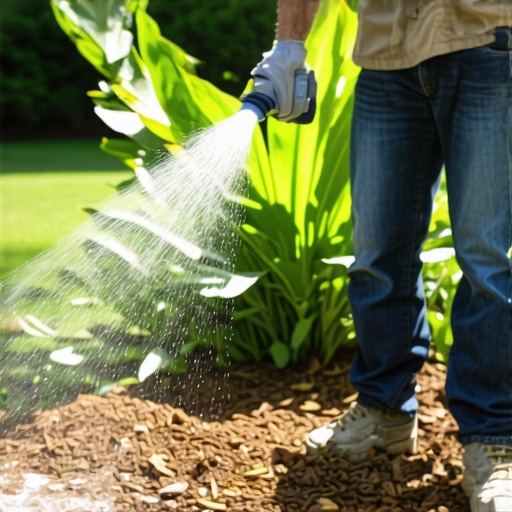
Stopping regrowth requires more than just pruning; it requires environmental stabilization. Trees sucker when they are thirsty or when the soil is so compacted the roots can’t breathe. If your yard feels like concrete, your tree is going to sucker. You need to address the hydrostatic environment of the root zone. Mulching is key, but don’t you dare build a ‘mulch volcano’ against the trunk. That creates a dark, moist environment that encourages adventitious rooting and rot. Two inches of wood chips, kept three inches away from the bark. That’s the rule. It reduces soil temperature and keeps moisture consistent, which keeps the tree’s hormones in balance. Consistency is the enemy of suckers.
“Compacted soil leads to anaerobic conditions, forcing the tree to produce surface-level adventitious growth to find oxygen.” – International Society of Arboriculture (ISA) Management Guide
Finally, monitor your nitrogen levels. High-nitrogen lawn fertilizers used right up to the base of a tree can stimulate ‘soft’ vegetative growth, leading to a flush of suckers. Use a slow-release organic fertilizer and keep it at the drip line, not the trunk. If you’re still seeing massive suckering after following these steps, you likely have a structural root issue or a graft incompatibility that a professional arborist needs to look at. Don’t wait until 2026 is halfway over. Dormant pruning in late winter is the best time to strike. It’s clean, it’s efficient, and the tree is better prepared to seal the wounds before the spring sap flow begins. Do it right, or don’t do it at all.