![Stop Watering Hostas at Night (Do This Instead) [2026]](https://lawnmajesty.com/wp-content/uploads/2026/06/Stop-Watering-Hostas-at-Night-Do-This-Instead-2026.jpeg)
Stop Watering Hostas at Night (Do This Instead) [2026]
Stop Watering Hostas at Night (Do This Instead) [2026]
I always drill into my new crew members: if you don’t fix the soil grading first, every plant you put in the ground is just expensive compost. It is a harsh truth that separates professional landscapers from the weekend warriors. Last season, I walked onto a property where a client had spent four grand on premium ‘Empress Wu’ and ‘Blue Angel’ hostas. Within three weeks, the leaves looked like they had been hit by a blowtorch. The homeowner was watering every night at 9:00 PM, thinking they were being helpful. In reality, they were running a biological incubator for pathogens. They were essentially marinating their plants in a fungal soup. We had to rip out twelve mature specimens because the crown rot had progressed into the vascular system of the rhizomes. It was a total loss of material and labor because of one bad habit.
Why Night Watering is Hosta Suicide
Watering hostas at night creates a persistent high-humidity microclimate that triggers fungal pathogen germination such as anthracnose. Without evaporative solar energy, moisture remains on foliar surfaces for over eight hours, allowing Sclerotium rolfsii to colonize the plant crown and petioles. Switch to predawn irrigation to ensure leaves dry rapidly while roots achieve full turgor pressure.
[image]
When you apply water at night, you are defying the physics of the garden. Hostas are structural powerhouses in the shade, but their broad leaves act like giant collection plates for moisture. At night, the air temperature drops, and the relative humidity near the soil surface spikes. This is known as the boundary layer. When a leaf stays wet for more than four to six hours, the spores of fungi like Cercospora begin to hydrate. They send out germ tubes that penetrate the leaf cuticle. By the time you wake up and have your coffee, the infection is already cellular. It is not just about the leaves; it is about the soil temperature. Night water cools the soil down at a time when the plant is trying to recover from daytime heat stress, leading to a physiological disconnect that weakens the root system’s immune response. Do not do it. Stop immediately.
“Irrigation applied in the late evening or night significantly increases the duration of leaf wetness, which is the primary driver for foliar diseases in ornamental landscapes.” – Penn State Agricultural Extension
How much water do hostas actually need per week?
To maintain optimal turgid cell structure, hostas require exactly one inch of water per week, delivered in deep, infrequent intervals rather than daily shallow mists. This forced hydrotropism encourages roots to migrate deeper into the subsoil layers, increasing drought resistance during August heat cycles. If you are just wetting the top half-inch of soil, you are training your plants to fail. Shallow roots bake in the sun. Deep roots survive. I tell my clients to use a rain gauge. If the sky does not give you an inch, the hose must. But it must be done between 5:00 AM and 8:00 AM. This timing allows the plant to take up water before the sun starts pulling moisture out through the stomata in a process called transpiration.
Can you rescue a hosta with crown rot?
If the rhizome remains firm and the basal plate is not yet mushy, you can rescue a hosta by excavating the root flare, removing necrotic tissue with a sterilized blade, and applying a copper-based fungicide. Ensure the soil drainage is corrected using expanded shale or coarse sand to prevent hydrostatic pressure from building up around the root zone again. If the center of the plant pulls out easily and smells like fermented garbage, it is over. Bag it and trash it. Do not compost it. You will just spread the spores to next year’s garden bed.
The Morning Hydration Protocol: A Better Way
The Morning Hydration Protocol focuses on soil-level saturation and foliar dryness to maximize nutrient transport through the xylem. By irrigating between 5:00 AM and 8:00 AM, you utilize the diurnal cooling cycle of the soil while ensuring the rising sun evaporates any accidental leaf splash, effectively neutralizing bacterial leaf spot risks.
The engineering of your garden bed is just as important as the timing of the water. If your soil is heavy clay, that water is just going to sit there like a bathtub. You need to understand the hydraulic conductivity of your site. We use a 60/40 mix of organic compost and coarse mineral aggregate for all our hosta installations. This creates macro-pores in the soil. These pores allow oxygen to reach the roots even after a heavy rain. Remember, roots need to breathe just as much as they need to drink. If you saturate the soil at night, you are effectively drowning the root hairs because there is no active transpiration pulling that water up and out of the soil pores.
| Watering Method | Efficiency Rating | Fungal Risk | Best Use Case |
|---|---|---|---|
| Overhead Sprinkler | 40% | High | Large scale turf only |
| Soaker Hose | 75% | Low | Established perennial beds |
| Drip Irrigation | 95% | Very Low | Precision garden design |
| Hand Watering | 60% | Medium | Targeting stressed plants |
Engineering the Bed: Drainage and Soil
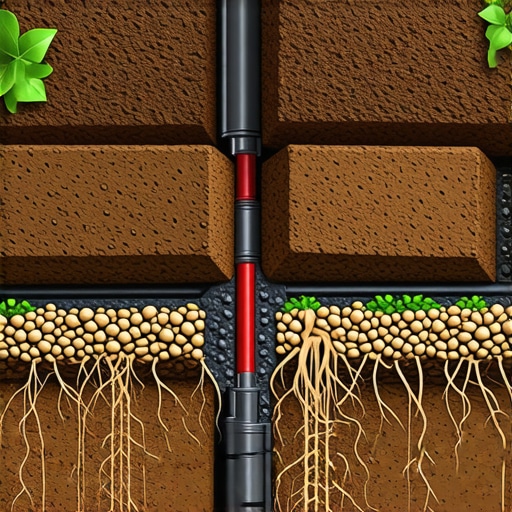
You cannot talk about watering without talking about drainage. It is civil engineering on a small scale. I see so many ‘landscaping’ crews just toss plants in a hole and walk away. That is a crime. If you have a low spot in your yard, you do not plant a hosta there without installing a French drain or a dry creek bed. We use 57-stone as a base for our drainage trenches, wrapped in a non-woven geotextile fabric. This ensures that the fine silt doesn’t clog the pipe over time. When you water in the morning, any excess moisture should move through the soil profile at a rate of at least one inch per hour. If it ponds, your engineering is wrong.
“A retaining wall doesn’t fail because of the stone; it fails because of the water trapped behind it.” – Hardscape Engineering Axiom
The same logic applies to your planting beds. If water is trapped around the hosta crown, the plant will fail. We often use raised planters or tiered stone walls to provide the necessary vertical separation from the water table. This is especially critical in regions with heavy clay. The hydrostatic pressure of water-logged clay can literally crush the delicate root hairs of a shade plant. Use a modified gravel base under your garden walls to ensure that the entire system sheds water away from the plant’s root zone. It is about control. You control the water; you control the health of the garden.
- Inspect the crown: Check for any signs of softening or gray mold every two weeks.
- Check mulch depth: Never exceed three inches of mulch. Avoid the ‘mulch volcano’ around the stems.
- Test soil pH: Hostas prefer a slightly acidic profile (6.5 to 7.0) for optimal cation exchange.
- Sanitize tools: Use 70% isopropyl alcohol on your pruners to avoid spreading Hosta Virus X.
- Monitor slugs: Night watering attracts gastropods. Morning watering keeps the surface dry and less inviting.
If you want a professional-grade yard, you have to think like a scientist and act like an engineer. Stop the midnight hose sessions. Invest in a mechanical timer for your spigot. Set it for 5:30 AM. Give your plants the deep soak they need and let the sun do the rest of the work. Your hostas will reward you with massive, heavy-veined leaves that look like they belong in a botanical garden, not a compost pile. It is the difference between surviving and thriving. It is about the dirt, the water, and the timing. Get those three right, and you will never have to replace a ‘compost’ plant again.
![Build a $60 Backyard Composter [2026 DIY]](https://lawnmajesty.com/wp-content/uploads/2026/07/Build-a-60-Backyard-Composter-2026-DIY.jpeg)