The Best Organic Fertilizer for a Dark Green Lawn
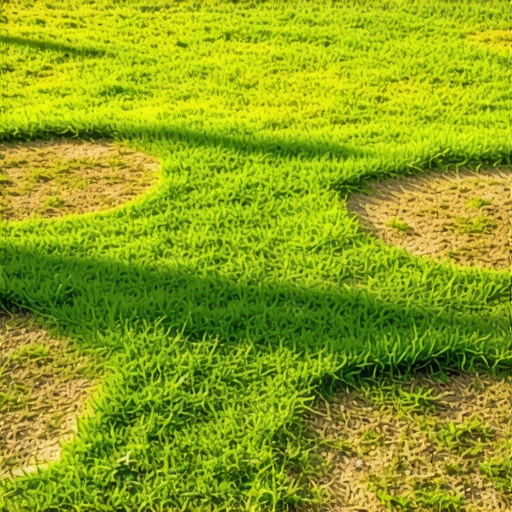
A homeowner called me in a panic last August after they completely torched their front lawn by applying a high-dose synthetic ‘step program’ during a 90-degree heatwave. When I arrived, the turf wasn’t just yellow; it was literally cooked from the inside out by salt desiccation. I could see the white crust of unabsorbed urea sitting on the parched soil surface. This is the ‘fast-food’ trap of modern lawn care. We had to strip the top two inches of salt-saturated soil and start over with biological inoculants to restore the dead rhizosphere. It was an expensive, avoidable autopsy of a dying landscape. If you want a deep green lawn that doesn’t collapse under stress, you must stop feeding the grass and start feeding the soil biology.
The Forensic Autopsy of Synthetic Failures in Turfgrass
Organic lawn fertilizers derived from alfalfa meal, poultry manure, and feather meal outperform synthetics because they build soil organic matter (SOM) and increase the Cation Exchange Capacity (CEC). Synthetic salts provide a temporary nitrogen spike but eventually sterilize the beneficial microbes and mycorrhizal fungi necessary for long-term health. It will rot. Don’t skip the biology. When you use synthetic urea, you are essentially putting your lawn on an IV drip of salt. The grass grows fast, but the cell walls are thin and weak. Pathogenic fungi like Brown Patch or Pythium find these weak cell walls to be an easy target. I have spent two decades digging up lawns that looked great for one season and then died the next because the soil was functionally dead. A professional-grade organic approach focuses on the Nitrogen Cycle: the process where Nitrosomonas and Nitrobacter bacteria convert organic proteins into ammonium and then nitrates that the plant can actually utilize without a salt-induced thirst. This is why organic lawns stay green during droughts while synthetic lawns turn into hay.
“The health of the soil is directly proportional to the diversity of its microbial life, which organic fertilizers actively cultivate.” – Penn State Agricultural Extension
Understanding NPK Ratios for Professional Organic Success
NPK ratios in organic fertilizers are typically lower than synthetics, appearing as 5-4-3 or 6-2-0, because the nutrients are bound in complex proteins that require microbial mineralization. These slow-release nutrients provide a consistent nitrogen feed for 8-12 weeks, preventing the surge growth that causes frequent mowing and excessive thatch accumulation. Use this table to understand the raw materials we use in the field.
| Material Source | Primary Nutrient | Release Velocity | Information Gain Point |
|---|---|---|---|
| Alfalfa Meal | Nitrogen / Potash | Slow | Contains Triacontanol, a natural growth stimulant. |
| Feather Meal | Nitrogen (12%) | Very Slow | Highest protein-based nitrogen for late-season feeding. |
| Bone Meal | Phosphorus / Calcium | Slow | Critical for root architecture and cell wall strength. |
| Kelp Meal | Potassium / Trace Minerals | Fast | Provides over 60 chelated minerals to fight heat stress. |
How much modified gravel do I need for a patio base?
While this article focuses on turf, remember that hardscape engineering dictates that a standard 10×10 patio requires approximately 2.5 tons of CR6 or 21A modified gravel to create a 4-inch compacted base. Improper compaction leads to settling which can divert surface runoff directly into your turf, causing anaerobic soil conditions and root rot.
The Role of Iron and Magnesium in Deep Pigmentation
Chelated iron and magnesium are the core components of the chlorophyll molecule, which is the engine responsible for the saturated dark green color in Kentucky Bluegrass and Tall Fescue. Without a soil pH between 6.2 and 7.0, these micronutrients become chemically locked in the soil, making them unavailable to the plant roots. [image_placeholder] This is what I call ‘The Iron Lockout.’ You can pour gallons of liquid iron on a lawn, but if your pH is 7.5, the iron just binds to the soil particles and stays there. Magnesium is the central atom of the chlorophyll molecule. If you don’t have enough magnesium, your grass cannot process sunlight. It is that simple. We use Epsom salts or Sul-Po-Mag to correct these deficiencies in the field. When we design a garden design, we always look at the micronutrient profile first. High-end lawn care is about chemistry, not just dumping bags of ‘Green-Up’ from the local big-box store.
What is the best month to apply organic lawn fertilizer?
The best time to apply organic fertilizer is during the active growth phases of spring (April/May) and fall (September/October) when soil temperatures are between 55 and 70 degrees Fahrenheit. Microbial activity peaks in these windows, ensuring the mineralization of organic nitrogen occurs exactly when the turfgrass root system is most receptive to nutrient uptake.
The Engineering of Thatch and Soil Aeration
Core aeration at a depth of 3 to 4 inches is mandatory for organic fertilizer programs because it introduces oxygen into the sub-surface rhizosphere, accelerating the decomposition of thatch layers. Excessive thatch acts as a hydrophobic barrier, preventing water infiltration and causing organic nutrients to remain trapped on the surface where they cannot be processed.
“Nitrogen is the driver of vegetative growth, but iron and magnesium are the architects of the deep green pigmentation in high-performance turfgrass.” – Agronomy Manual Vol. 4
I tell my crew: if the aerator plug isn’t at least 3 inches long, you’re just making holes in the grass, not fixing the soil. We need to break the surface tension. Soil compaction is the silent killer of the American lawn. When soil is compacted, there is no pore space for oxygen. Without oxygen, the aerobic bacteria that break down organic fertilizer die off, and anaerobic bacteria take over, producing hydrogen sulfide which smells like rotten eggs and kills roots instantly. Keep the soil open. Let it breathe.
The Professional Organic Protocol Checklist
- Conduct a Soil Test: Never fly blind; determine your pH, CEC, and organic matter percentage first.
- Calibrate the Spreader: Ensure you are delivering exactly 1 lb of Nitrogen per 1,000 square feet.
- Mow High: Set your deck to 3.5 or 4 inches to shade the soil and protect the microbial colony.
- Hydrate Correctly: Provide 1 inch of water per week in a single deep soaking to force roots downward.
- Monitor Soil Temp: Organic fertilizers are inactive below 50 degrees Fahrenheit.
Final Maintenance Protocol
A dark green lawn is a byproduct of a healthy ecosystem, not a chemical coincidence. By focusing on protein-based nitrogen and micronutrient availability, you eliminate the boom-and-bust cycles associated with synthetic products. This is the same logic we apply to hardscaping: the foundation is 90 percent of the job. If the soil foundation is solid, the grass will thrive. Expect a transition period of one full growing season when switching from synthetics to organics. Your soil needs time to wake up. Once the earthworm populations return and the fungal networks establish, the lawn will require 30 percent less water and almost zero fungicides. Stick to the schedule. Watch the soil. The results will follow.