
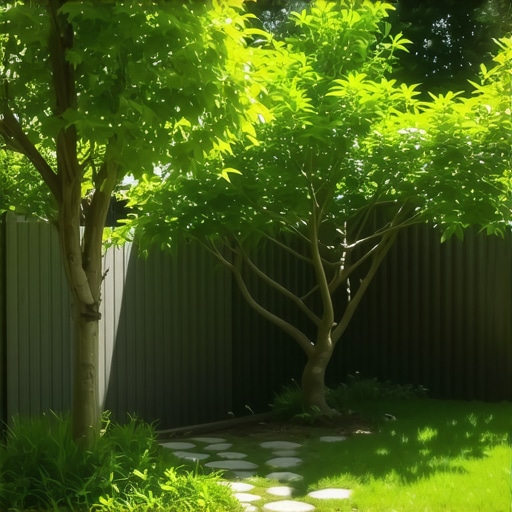
The best trees for a tiny backyard
I always drill into my new crew members: if you don’t fix the soil grading first, every plant you put in the ground is just expensive compost. Last season, we spent three weeks excavating a 20×20 lot where the client had dumped five thousand dollars in specimen trees into what was essentially a clay-lined bathtub. No drainage. No oxygen. Just anaerobic rot. You can buy the rarest cultivar in the world, but if your soil compaction levels are sitting at 300 PSI, that tree is a dead man walking. In small urban lots, we deal with the ‘Urban Heat Island’ effect and stagnant air pockets, making species selection a matter of biological engineering rather than simple aesthetics. Stop looking for something pretty and start looking for something that survives the physics of a confined root zone.
Site Analysis: Why Tiny Backyards Fail by Default
To choose the best trees for a tiny backyard, you must calculate the total available soil volume, assess the local USDA hardiness zone, and identify subterranean utility lines to prevent root interference. A tree is not just a canopy; it is a complex biological engine that requires specific NPK ratios and gas exchange in the soil to maintain structural integrity and leaf density. Most homeowners ignore the ‘Critical Root Zone’ (CRZ), which is typically a one-foot radius for every inch of trunk diameter. In a ten-foot by ten-foot space, you are already at a deficit before the first shovel hits the dirt. [IMAGE_PLACEHOLDER]
How much room does a Japanese Maple need?
A standard Japanese Maple requires a minimum of 50 to 100 square feet of permeable surface area to avoid root girdling and long-term decline. Soil volume is the most overlooked metric in garden design. If you are planting near a foundation, you must account for the concrete leaching lime into the soil, which spikes the pH level. Most specimen trees for small spaces, like Acer palmatum, prefer slightly acidic conditions. Planting them next to a fresh concrete footer is a recipe for iron chlorosis. Use a digital pH probe. Don’t guess. If the meter reads 7.5, you are already in trouble.
“Soil compaction levels above 300 psi will physically prevent root penetration, leading to stunted growth or surface rooting that destroys nearby hardscaping.” – University of California Agriculture and Natural Resources
The Materials Breakdown: Specimen Selection
Selecting trees for small spaces requires choosing cultivars with non-invasive root systems and predictable growth habits, such as the Amelanchier or specific dwarf conifers, to ensure they do not exceed the structural limits of the property. We look for ‘columnar’ or ‘fastigiate’ forms. These plants are genetically programmed to grow up, not out. This is where the big-box stores fail you. They sell generic species that will eventually heave your patio and crack your sewer lines. You need nursery-grade stock with a documented graft history. Below is a breakdown of the top performers for high-density residential zones.
| Tree Species | Mature Height | Spread | Root Habit | Best Use ||—|—|—|—|—|| Amelanchier ‘Autumn Brilliance’ | 15-20 ft | 10-15 ft | Non-aggressive | Multi-season interest || Acer palmatum ‘Bloodgood’ | 15-20 ft | 15 ft | Slow-growing | Focal point || Cercis canadensis ‘Little Woody’ | 10-12 ft | 8-10 ft | Taproot focused | Tight corners || Carpinus betulus ‘Fastigiata’ | 30 ft | 10 ft | Dense, structural | Privacy screening |
Will tree roots damage my patio?
Tree roots will only damage your patio if you use a poor base layer of modified gravel or if the tree species is prone to surface rooting like a Willow or Silver Maple. To prevent heaving, we install 18-inch deep root barriers made of high-density polyethylene (HDPE). This forces the root system downward into the subsoil, away from the screed sand and pavers. This is not optional for hardscaping projects. If your contractor says you don’t need a barrier, fire them. They are a hack. We also use structural soil (a mix of gap-graded gravel and loam) under patios to allow roots to grow through the stone without destabilizing the surface.
The Installation Process: Precision Planting
The installation process for small-space trees involves excavating a hole three times wider than the root ball, exposing the root flare to prevent bark rot, and backfilling with native soil to ensure proper hydraulic conductivity. Do not use bagged potting soil for the backfill. It creates a ‘pot-bound’ effect where the roots refuse to leave the fluffy mix to enter the tougher native clay. You want the tree to adapt to the local dirt immediately. Check the root flare. The flare is where the trunk widens at the base. If that flare is underground, the tree will suffocate. It is that simple. Most ‘mow-and-blow’ crews bury it under three inches of mulch. We call those mulch volcanoes. They are tree killers.
- Step 1: Perform a percolation test. Dig a 12-inch hole, fill with water. If it takes more than 2 hours to drain, you have a drainage crisis.
- Step 2: Locate all underground utilities via 811. Don’t cut a fiber optic line for a twenty-gallon tree.
- Step 3: Remove all burlap and wire cages. These do not rot fast enough and will girdle the roots within five years.
- Step 4: Set the tree two inches higher than the surrounding grade to allow for settling.
- Step 5: Apply two inches of arborist wood chips, keeping the mulch six inches away from the trunk.
“Proper tree selection for small sites requires understanding the ‘Ultimate Size’ of the cultivar, as genetics will always override pruning in the long term.” – ISA Arborist Manual
The Maintenance Schedule: Year One and Beyond
Maintaining trees in a tiny backyard focuses on deep, infrequent watering to encourage deep root growth and structural pruning to maintain the desired footprint within the landscape design. Year one is the ‘settling in’ period. The tree is under high stress. You need to deliver exactly one inch of water per week, ideally through a pressure-compensated drip-line. This isn’t about keeping the leaves green; it is about establishing the root-to-soil contact necessary for nutrient uptake. Forget the granular fertilizers for now. Focus on mycorrhizal inoculants. These fungi attach to the roots and extend their reach, allowing the tree to pull moisture from tiny soil pores that it couldn’t reach on its own. It is a biological partnership that outperforms any chemical product on the market. Monitor for scale and aphids. In small yards, pests jump from plant to plant with high efficiency. One infested shrub can take down your new specimen in a single season. Stay vigilant. Use dormant oil in the late winter. Keep your tools sharp. Every cut is a wound. Make it clean.
![4 Heat-Proof Perennials That Won't Wilt in 2026 [Zone 7]](https://lawnmajesty.com/wp-content/uploads/2026/05/4-Heat-Proof-Perennials-That-Wont-Wilt-in-2026-Zone-7.jpeg)