3 Reasons Your Flagstone Path is Cracking and How to Fix It
The Autopsy of a Failed Flagstone Walkway
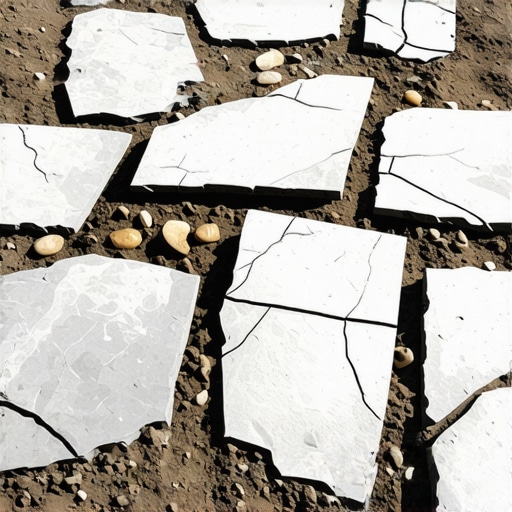
You hear it before you see it. That hollow, rhythmic clack-clack as you walk across your stone path. Then comes the visual: a hairline fracture across a piece of Pennsylvania Bluestone that cost you twelve dollars a square foot. It is not just an eyesore; it is a structural failure. I recently got called out to tear up a $30,000 patio that was sinking because the previous contractor used pea gravel as a base. Pea gravel is essentially a box of marbles. It never reaches a state of compaction. Those marbles shifted, the stones tilted, and the freeze-thaw cycle did the rest, snapping the stone like a dry cracker. Landscaping is not just aesthetics; it is civil engineering on a domestic scale.
The Foundation: Subgrade Incompetence and Lack of Compaction
Cracked flagstone is almost always a result of **subgrade settlement** where the underlying **base material** was either the wrong aggregate or was not compacted in **four-inch lifts**. If the soil beneath the path is not excavated to a depth of at least 8 to 12 inches and replaced with **compacted modified gravel**, the path will eventually fail.
“A retaining wall doesn’t fail because of the stone; it fails because of the water trapped behind it.” – Hardscape Engineering Axiom
How deep should a flagstone patio base be?
To ensure a stable walk, you need a minimum of 6 inches of **crushed aggregate** (often called 21A or CR-6) topped with 1 inch of **bedding sand**. In regions with heavy clay, you might need to go deeper to reach stable subsoil. If you are laying stone over