Stop 2026 Grass Thinning Under Large Oak Trees [Fix]
The Forensic Autopsy of the Dead Zone Under Oak Canopies
Grass thinning under oak trees is primarily caused by light attenuation, where the canopy blocks 80% of photosynthetic active radiation (PAR), combined with moisture competition from the tree’s shallow feeder roots and a pH drop caused by tannin leaching from leaf litter.
I always drill into my new crew members: if you don’t fix the soil grading and chemistry first, every plant you put in the ground is just expensive compost. You cannot fight biology with a bigger spreader. When a client calls me about a ‘dead zone’ beneath a 50-year-old White Oak, they usually expect me to recommend a miracle fertilizer. I don’t. Instead, I look at the soil compaction levels and the light quality. I recently saw an apprentice try to ‘fix’ a thinning patch of fescue by dumping four inches of topsoil over the roots of a Red Oak. I had to stop him before he killed a $10,000 tree. Suffocating the root flare is the fastest way to trigger a slow, decade-long decline of the entire canopy. We are here to manage a biological battlefield where the grass is losing.
Why Grass Struggles Near Mature Oaks
Oak trees are resource hogs. A mature oak can transpire over 50 gallons of water a day during the peak of summer. Its feeder roots, which mostly reside in the top 6 to 12 inches of soil, are in direct competition with the turf’s root system. Furthermore, the chemistry of the soil changes. Oak leaves contain high levels of tannins. As these decompose, they can slightly acidify the immediate topsoil, though the bigger issue is the physical barrier they create. A thick layer of unraked oak leaves creates a damp, anaerobic environment that promotes fungal pathogens like Pythium or Rhizoctonia, which melt turf blades faster than any drought. Then there is the light problem. Turf grass generally requires at least 4 to 6 hours of direct sunlight or 8 hours of filtered light. Under a dense oak, you might only get 10% of that. The grass enters a state of ‘etiolation’—it grows tall, thin, and weak as it searches for light, eventually exhausting its carbohydrate reserves and dying off.
“Turfgrasses grown in shade have thinner leaves, lower shoot density, and reduced root mass compared to those grown in full sun, making them significantly more susceptible to traffic and environmental stress.” – Penn State Center for Turfgrass Science
The Soil Compaction Crisis
Most homeowners assume the grass is dying because of the ‘shade.’ While shade is a factor, the real killer is often the physical state of the earth. Beneath these trees, we often find soil with a bulk density exceeding 1.6 g/cm3. This is like trying to grow grass on a sidewalk. Foot traffic from people seeking shade and the sheer weight of the tree’s root expansion compresses the pore spaces that should hold oxygen and water. Without oxygen, the aerobic microbes that fuel the nitrogen cycle die off. The soil becomes inert. I use a penetrometer to test these sites; if I can’t push the probe in more than two inches, no fescue seed on earth is going to survive the winter.
| Grass Variety | Min. Sunlight Req. | Drought Tolerance | Mowing Height (Shade) |
|---|---|---|---|
| Fine Fescue | 4 Hours | High | 3.5 – 4.0 inches |
| St. Augustine (Palmetto) | 4-5 Hours | Medium | 3.0 – 4.0 inches |
| Tall Fescue | 6 Hours | High | 4.0 inches |
| Zoysia (Zeon) | 5 Hours | Medium | 2.0 – 2.5 inches |
How much sunlight does shade-tolerant grass actually need?
To maintain cellular respiration and survive the 2026 season, most shade-tolerant cultivars like Creeping Red Fescue or Palmetto St. Augustine require a minimum of 3 to 5 hours of direct, unobstructed sunlight or a full day of high-quality dappled light. Anything less results in metabolic failure.
The Remediation Protocol: A Step-by-Step Fix
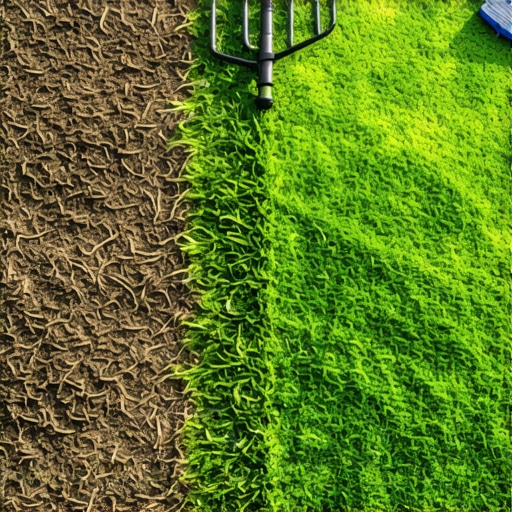
We don’t just throw seed. We rebuild the environment. First, we address the canopy. I hire a certified arborist to perform ‘crown thinning’ and ‘skirting.’ We remove no more than 15-20% of the interior growth to allow sun flecks to penetrate to the ground. We don’t ‘lion’s tail’ the tree—that’s a hack move that leads to limb failure. Next, we address the soil. We use a vertical mower or a core aerator, but we are surgical. We stay away from the critical root zone (CRZ) near the trunk to avoid damaging the buttress roots. We top-dress with 1/4 inch of high-grade leaf compost to reintroduce biology without burying the tree roots.
- Soil Testing: Check for pH levels below 6.0 and apply lime if necessary to neutralize tannin acidity.
- Species Selection: Use a blend of Fine Fescues (Chewings, Hard, and Creeping Red) for the north, or shade-tolerant St. Augustine cultivars for the south.
- Mowing Height: Raise the deck. More leaf blade means more surface area for photosynthesis.
- Irrigation: Water deeply and infrequently. If you mist the area every day, you just encourage shallow tree roots to move to the surface.
Can I add soil over oak tree roots to level the lawn?
No. Adding more than two inches of heavy soil or clay over the root zone of a mature oak can effectively asphyxiate the tree by cutting off gas exchange. This causes root rot and canopy dieback that may not show symptoms for three to five years.
“The primary cause of failure in retaining walls and soil structures near large trees is the failure to account for hydrostatic pressure and the gas exchange requirements of the root system.” – ICPI Hardscape Standards
The Hard Reality of Deep Shade
Sometimes, the physics don’t work. If you are under a massive live oak with a 60-foot spread, you might have to give up on turf. This is where landscaping beats lawn care. We transition these areas to ‘hardscaping light’ or shade-loving perennials. I recommend a thick layer of double-ground hardwood mulch or arborist wood chips. This mimics the forest floor, retains moisture for the tree, and stops the soil from eroding. If the client wants green, we go with Sedge (Carex), Hostas, or Hellebores. These plants evolved for the understory. They don’t fight the tree; they live with it. Don’t be the guy who keeps buying seed every March only to see it brown out by July. It’s a waste of money and fuel. Follow the biology or change the plan.
![5 2026 Drought-Proof Grass Alternatives [Tested]](https://lawnmajesty.com/wp-content/uploads/2026/06/5-2026-Drought-Proof-Grass-Alternatives-Tested.jpeg)