The problem with over-fertilizing your lawn
The Chemical Nightmare: A Forensic Look at Yellowing Turf
Over-fertilizing your lawn triggers nitrogen burn, a physiological condition where excessive mineral salts in the soil create higher osmotic pressure outside the roots than inside, effectively sucking moisture out of the grass. This root desiccation leads to brown, crunchy patches, thatch accumulation, and a total collapse of the soil microbiome essential for long-term turf health.
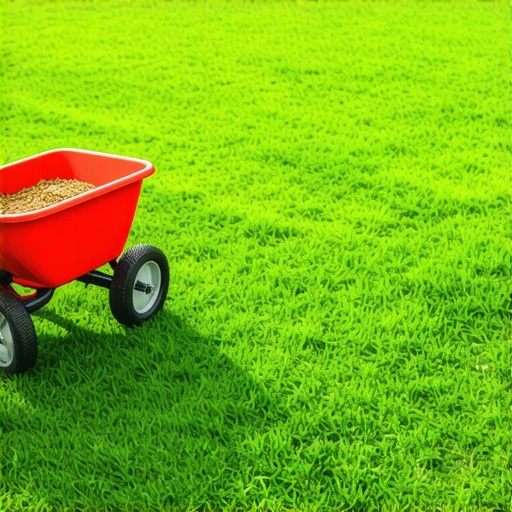
I recently got called out to a job in a high-end neighborhood where the homeowner had just fired their previous ‘mow-and-blow’ guy. They were panicked because their front lawn—an expensive Kentucky Bluegrass blend—was turning a sickly straw color in perfect 6-foot wide stripes. A quick soil probe told the whole story. The previous contractor had used a cheap, high-salt index urea fertilizer and overlapped the passes without calibrating the spreader. They didn’t just feed the grass; they pickled it. The soil was so hot with nitrogen that the turf was literally sweating out its cellular water to compensate. I had to explain that we weren’t just looking at a yellow lawn; we were looking at a chemical burn that had sterilized the top two inches of the rhizosphere. It was a $5,000 mistake that could have been avoided with a $20 soil test. Grass is a living organism, not a trash can for synthetic chemicals. When you dump an excess of nitrogen (N) onto a lawn, you force the plant into what we call luxury consumption. The grass grows at a rate the roots can’t support. This creates weak, succulent cell walls that are basically a dinner bell for Pythium blight and Brown Patch fungus.
“Excessive nitrogen applications can lead to a reduction in root growth, making the turfgrass more susceptible to drought and heat stress during the summer months.” – Penn State Center for Turfgrass Science
How do you fix over-fertilized grass?
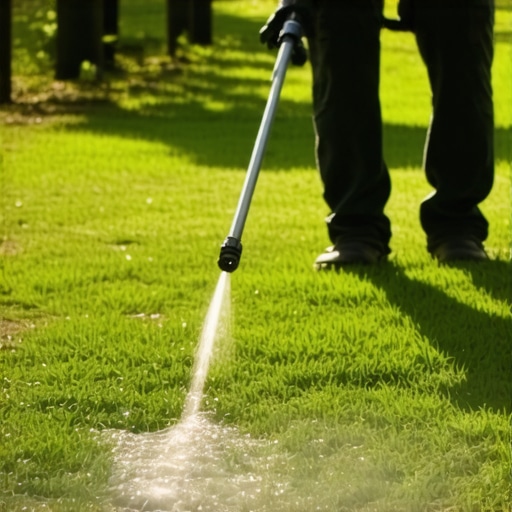
To fix over-fertilized grass, you must immediately perform a heavy leaching irrigation by applying approximately 1 inch of water to the affected area every day for three days to flush nitrate salts below the root zone. Avoid mowing for at least a week to reduce further plant stress, and do not apply any additional garden design chemicals or landscaping treatments until a soil test confirms the pH and nutrient levels have stabilized. Recovery depends on the severity of the burn. If the crowns of the grass are still green, it will survive. If they are brown and mushy, the plant is dead. You cannot ‘undo’ a chemical burn once the protein structures in the roots have denatured. It is like trying to un-cook a steak. You have to wait for the salts to move through the soil profile.
How much nitrogen is too much for a lawn?
Most turf species reach a saturation point at 1 pound of actual nitrogen per 1,000 square feet per application; exceeding this threshold or failing to use slow-release fertilizers significantly increases the risk of foliar burn and groundwater contamination. You need to understand the math. If you buy a 50-pound bag of 20-0-0 fertilizer, only 20% of that bag is actually nitrogen. That’s 10 pounds of N. If you spread that whole bag on a 5,000 square foot lawn, you are hitting it with 2 pounds of N per 1,000 square feet. That is double the safe limit for most cool-season grasses. It will rot.
| Fertilizer Type | Release Rate | Salt Index | Burn Risk |
|---|---|---|---|
| Urea (46-0-0) | Very Fast | High (75.4) | Critical |
| Ammonium Sulfate | Fast | Very High (88.3) | Extreme |
| Methylene Urea | Slow | Low (24.6) | Low |
| Polymer Coated Urea | Controlled | Very Low | Negligible |
The problem with big-box store lawn care products is that they are designed for the lowest common denominator. They want the grass to turn dark green in 48 hours so you feel like you got your money’s worth. But that ‘green-up’ is often just a massive surge of chlorophyll that weakens the plant’s structural integrity. In hardscaping and landscaping, we talk about the foundation. In turf, the foundation is the Cation Exchange Capacity (CEC) of the soil. When you over-fertilize, you disrupt the balance of calcium, magnesium, and potassium. You’re essentially poisoning the well. My crew is trained to look at the soil structure first. If the soil is compacted, no amount of nitrogen will help. You need core aeration. You need to get oxygen to the microbes. If you don’t fix the soil grading and compaction first, every plant you put in the ground is just expensive compost.
“Maintaining a soil pH between 6.0 and 7.0 is critical for nutrient availability; outside this range, fertilizers can become toxic or locked away from the plant entirely.” – Texas A&M AgriLife Extension
The Forensic Restoration Checklist
- Check the grass crown: If it is firm and white, the plant can be salvaged.
- Measure the salt levels: Use a handheld EC meter to check the soil’s electrical conductivity.
- Flush the zone: Apply 1/2 inch of water twice daily to move nitrates through the soil.
- Stop all mowing: Let the grass grow to 4 inches to maximize photosynthesis for recovery.
- Apply humic acid: Use liquid humates to help buffer the soil and stimulate microbial life.
Don’t skip the water. Water is the only solvent that can move those salts. But don’t drown it either. You want to move the salts down, not create a pond. If you live in an area with heavy clay, like the red clays of the Southeast, this process is even harder because the drainage is so poor. You might end up with hydrostatic pressure issues if you over-water a sloped lawn near a retaining wall. This is where garden design and engineering meet. A lawn is a living system. Treat it with respect or it will cost you a fortune. Stop chasing the ‘neon green’ look. Real health is a deep, dark green that comes from balanced micronutrients, not a nitrogen overdose. I tell my apprentices: ‘The bag says 10,000 square feet for a reason.’ Read the label. If you don’t, you’re just a hack with a spreader. Don’t be that guy.”