Stop 2026 Weed Spread with This Cardboard Trick
Stop 2026 Weed Spread with This Cardboard Trick
Most homeowners are fighting a losing war against weeds because they only think about the current season. If you want a clean property in 2026, you have to kill the seeds waiting in the soil right now. We call this managing the soil seed bank. Standard weeding just scratches the surface. To actually win, you need to use sheet mulching, specifically a technical application of recycled cardboard to create a biological barrier that starves weeds of light and oxygen while improving soil structure through carbon sequestration.
The Core Strategy for Long Term Weed Suppression
To stop the 2026 weed cycle, you must disrupt the soil seed bank now using sheet mulching with recycled cardboard to create an anaerobic environment that kills germinating seeds while feeding mycorrhizal fungi. This method outperforms synthetic landscape fabrics because it integrates organic matter directly into the soil profile rather than just sitting on top of it. It works by cutting off the photoblastic response required for weed seed germination.
I always drill into my new crew members: if you don’t fix the soil grading and biology first, every plant you put in the ground is just expensive compost. Last year, I saw a homeowner spend four thousand dollars on perennials only to have the entire bed overtaken by invasive Canada Thistle within three months. They used plastic weed barriers. Plastic is a death sentence for soil. It traps heat, kills beneficial microbes, and eventually, the weeds just grow right through the seams. I made them rip it all out. We laid down heavy grade corrugated cardboard, soaked it to the point of saturation, and capped it with three inches of double shredded hardwood mulch. That bed is now the cleanest on the block. The cardboard acted as a temporary barrier that eventually digested into high quality humus.
Why Cardboard Beats Landscape Fabric
The engineering of cardboard is superior to synthetic geotextiles for residential garden design. Cardboard is composed of cellulose fibers that provide a massive carbon source for earthworms. As worms migrate through the cardboard to reach the surface mulch, they create macro-pores in the soil. These pores increase the infiltration rate of water and allow for better gas exchange at the root zone. Landscape fabric does the opposite: it compacts the soil and creates a stagnant layer where fine weed roots can anchor into the fabric itself. Once a weed anchors in fabric, you have to rip the whole system up to fix it.
“Sheet mulching with organic barriers like cardboard allows for the natural decomposition process to enhance soil tilth while effectively suppressing competitive vegetation through light exclusion.” – Agricultural Extension Agronomy Manual
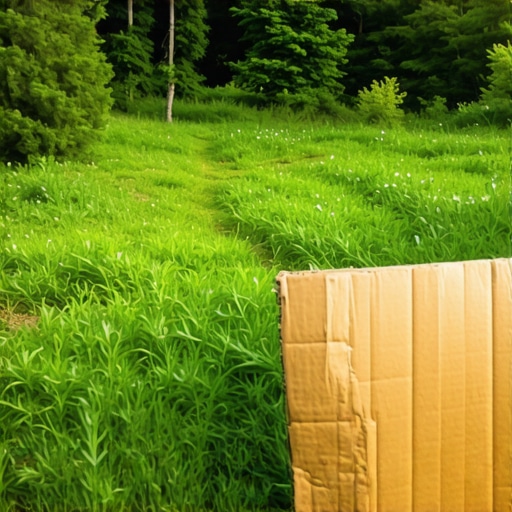
When selecting your cardboard, you must be surgical. Avoid anything with heavy color inks, glossy coatings, or excessive tape. These contain heavy metals and plastics that will not break down. You want clean, brown corrugated boxes. The corrugation is key. Those tiny air pockets provide a thermal buffer for the soil, keeping it cooler in the summer and warmer in the winter, which protects the root flares of your desirable plants. We are looking for a thickness of at least 1/8th of an inch. If the cardboard is thin, you must overlap the edges by at least 8 inches. Weeds are opportunistic. They will find a gap. Don’t skip this.
Comparison of Weed Suppression Materials
| Material | Longevity | Soil Impact | Cost |
|---|---|---|---|
| Corrugated Cardboard | 6-12 Months | Increases Organic Matter | Zero / Recycled |
| Woven Plastic Fabric | 5-10 Years | Causes Compaction | $0.50 – $1.20 per sq ft |
| Black Plastic Film | 1-2 Years | Kills Soil Microbes | $0.20 – $0.40 per sq ft |
| Heavy Wood Chips | 2-3 Years | Slow Nitrogen Drawdown | $30 – $50 per yard |
The Ground Up Build: Step by Step Sheet Mulching
Installation is not just about laying paper down. It is about site preparation. First, you must scalp the existing vegetation. Set your mower to the lowest possible setting. We want the weeds stressed. If you have woody stalks or invasive vines, use a brush cutter to get them flush with the grade. Do not rototill. Tilling is a mistake. It brings buried weed seeds to the surface and destroys the soil structure you have spent years building. Leave the dead vegetation where it lies; it will serve as the initial nitrogen source for the decomposition process.
How much cardboard do I need for a garden bed?
To calculate your cardboard needs, measure the square footage of the bed and add 25 percent for the mandatory 8 inch overlaps at every seam. For a 100 square foot bed, you need approximately 125 square feet of cardboard to ensure no light penetration reaches the soil surface. This coverage prevents even the most aggressive weeds like Nutsedge from pushing through the joints. One layer of heavy duty shipping boxes is usually sufficient, but for areas with heavy Bermuda grass, double the thickness.
- Remove all plastic tape and staples from the boxes.
- Mow the area as short as possible to reduce air pockets.
- Lay cardboard with a minimum 8 inch overlap on all sides.
- Saturate the cardboard with water until it is limp and heavy.
- Apply 3 to 4 inches of organic mulch immediately to weigh it down.
- Edge the perimeter with a spade to tuck the cardboard into a trench.
Once the cardboard is down and soaked, it becomes a heavy, suffocating blanket. This is where the biological magic happens. Underneath that wet paper, the lack of light triggers a massive die off of green plant matter. This death release of nutrients attracts bacteria and fungi. Within weeks, the soil surface will be crawling with life. If you dig a hole through the cardboard to plant a shrub, you will see the soil is darker and more friable than the surrounding turf. It works. Don’t doubt the process.
Managing Hydrostatic Pressure and Drainage
A common concern is that cardboard will prevent water from reaching the roots. This is a myth. Cardboard is hydrophilic once it is saturated. It actually holds moisture against the soil, reducing the need for irrigation by up to 30 percent. However, if your yard has a steep grade, you must be careful. Large sheets of cardboard can act as a slide for mulch during heavy rains. In sloped areas, you must use smaller pieces of cardboard and pin them with sod staples. This increases the friction and prevents the entire mulch layer from washing into the street.
“Surface drainage must be managed to prevent the saturation of the subgrade, which can lead to structural failure in both hardscapes and planting beds.” – Hardscape Engineering Axiom
Can you put mulch directly on top of cardboard?
Yes, you must put mulch directly on top of the cardboard to prevent it from drying out and blowing away. A layer of 3 to 4 inches of wood chips or bark mulch provides the necessary weight to keep the cardboard in contact with the soil and protects the cardboard from UV degradation. This top layer also provides an aesthetic finish while slowly breaking down to add nutrients to the system. Without the mulch, the cardboard will curl, crack, and fail within days.
The Long Game: What to Expect in 2026
By the time 2026 rolls around, the cardboard you lay today will be completely gone. It will have been converted into rich soil by the local worm population. The weed seeds that were sitting in the top two inches of your soil will have germinated under the cardboard, found no light, and died. You have effectively cleaned the top layer of your soil profile. Maintenance will become a five minute task instead of a weekend chore. You might see a stray wind-blown seed sprout in the mulch, but because the soil underneath is so loose and healthy, you can pluck it with two fingers. No shovels required.
This is the difference between a hack and a professional. A hack sprays Roundup every two weeks and wonders why the weeds keep coming back. A professional changes the environment so the weeds can’t survive in the first place. Focus on the biology. Respect the soil. Stop the 2026 spread now. It is cheaper, faster, and better for the planet. Just get the tape off the boxes first. Your worms will thank you.