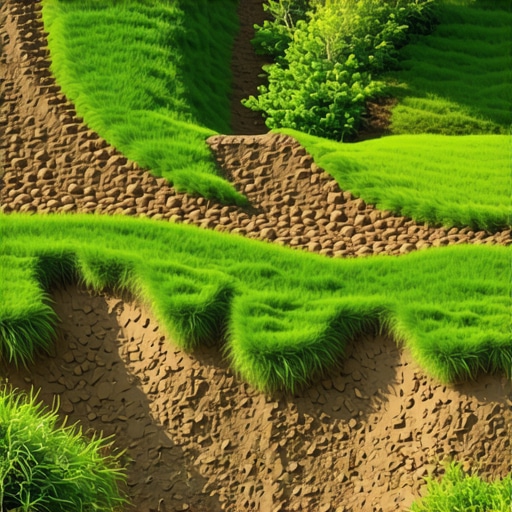
Stop 2026 Garden Fungi with Proper Watering Times
The Forensic Autopsy of a Dying Landscape
The smell of a lawn rotting from the inside out is unmistakable. It is a sour, fermented odor that hits you the moment your boots sink into the spongy, waterlogged turf. I see this every year, but 2026 is shaping up to be a record-breaker for fungal outbreaks. A homeowner recently called me in a panic after they completely torched their front lawn by applying a high-nitrogen quick-release fertilizer at 8:00 PM followed by a 40-minute irrigation cycle. By morning, the humidity had trapped that moisture against the grass blades, creating a literal petri dish. Within 48 hours, the entire yard was covered in a white, cobweb-like mycelium known as Pythium blight. It was a chemical and biological nightmare. The grass did not just die; it liquefied. This happened because the homeowner ignored the fundamental physics of leaf wetness duration and soil oxygenation. Landscaping is not a hobby; it is a battle against rot.
The Critical Window: Why Timing Prevents Fungal Pathogens
To stop garden fungi in 2026, you must eliminate excessive leaf wetness duration by watering strictly between 4:00 AM and 8:00 AM. This allows the rising sun to evaporate surface moisture while ensuring the root zone receives deep hydration without fostering mycelial growth associated with nocturnal irrigation. If you water at night, the water sits on the foliage for 10 to 12 hours. This is the exact environmental trigger that fungi like Rhizoctonia solani need to colonize the plant tissue. You are essentially inviting a parasite to dinner and giving it a warm bath. Stop it. Water early so the wind and sun can dry the blades. This is the first rule of lawn care. It is non-negotiable. If your irrigation clock is set to 10:00 PM, you are paying for the privilege of killing your yard.
“Incidence of many turfgrass diseases is related to the length of time that free moisture is present on the leaves.” – Penn State Center for Turfgrass Science
How much water does my garden need to prevent fungi?
Your garden requires exactly one inch of water per week, delivered in one or two deep sessions rather than daily light mists. Deep watering forces the root system to grow downward into the soil profile to find moisture, which increases the plant’s drought tolerance and mechanical strength. Light, daily watering keeps the top layer of soil perpetually damp. This dampness encourages shallow roots and provides a constant moisture source for fungal spores in the thatch layer. Use a rain gauge or a tuna can to measure your output. If you are hitting half an inch twice a week, you are doing it right. Anything more, and you are inviting root rot.
| Watering Time | Fungal Risk Level | Impact on Soil Microbiology |
|---|---|---|
| 4:00 AM – 8:00 AM | Low | Optimal oxygen exchange; rapid leaf drying. |
| 10:00 AM – 2:00 PM | Moderate | High evaporation loss; potential for leaf scorch. |
| 2:00 PM – 6:00 PM | High | Increases humidity before nightfall. |
| 8:00 PM – 2:00 AM | Extreme | Maximum leaf wetness; ideal for Pythium and Brown Patch. |
What is the best time of day to water a lawn?
The absolute best time to water is daybreak, specifically 5:00 AM or 6:00 AM, because evapotranspiration rates are at their lowest and the wind is usually calm. Watering at this hour ensures that the soil profile is fully saturated before the heat of the day, which prevents the grass from entering a state of wilting stress. It also ensures that the grass blades are dry by mid-morning, which is the most effective cultural practice for disease suppression. If you wait until noon, you lose 30 percent of your water to evaporation before it even hits the roots. That is a waste of money and a waste of a precious resource.
The Engineering of Drainage: Hardscaping and Garden Design
Garden design is not just about aesthetics; it is about managing hydrostatic pressure and surface runoff. If your garden has standing water, your watering schedule does not matter; you have a soil grading failure. Most fungal issues start in low spots where the bulk density of the soil is too high, preventing water from infiltrating the B-horizon. When I design a landscape, I look at the percolation rate of the soil. If the soil is heavy clay, we must amend it with organic matter or install a French drain system. Without proper drainage, the roots suffocate in an anaerobic environment. Fungi love anaerobic conditions. It is their playground.
“A retaining wall doesn’t fail because of the stone; it fails because of the water trapped behind it.” – Hardscape Engineering Axiom
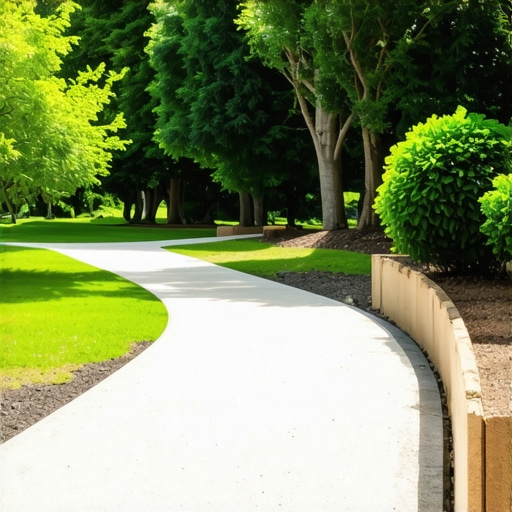
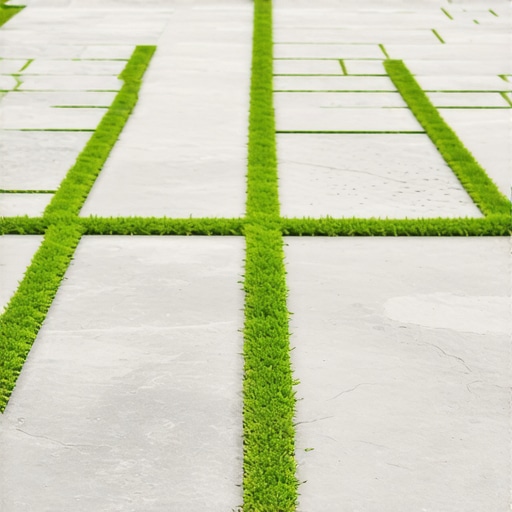
Check your retaining walls and patios. Are they shedding water away from your planting beds? If your hardscaping is funneled into a garden bed without a proper exit strategy, you are creating a swamp. We use modified gravel bases and polymeric sand to ensure stability, but the most important part is the drainage tile behind the wall. If that pipe is clogged or missing, the water will saturate the soil behind the wall, leading to heaving and eventually, a total structural collapse. The same applies to your lawn. If the grade is not a minimum of two percent away from the house, you are asking for a flooded basement and a moldy yard.
2026 Fungus Prevention Checklist
- Calibrate irrigation nozzles for uniformity to avoid dry spots and puddles.
- Core aerate the soil to a depth of 3 inches to reduce thatch buildup.
- Test soil pH; fungi thrive in overly acidic environments (below 6.0 pH).
- Sharpen mower blades; ragged cuts on grass blades are open doors for infection.
- Switch to a slow-release, sulfur-coated urea fertilizer to avoid nitrogen spikes.
The Biological Reality: Nitrogen and Thatch
Excessive nitrogen is the fuel for fungal fire. I see guys go out and dump bags of high-nitrogen fertilizer in May because they want that dark green look. What they actually get is succulent growth. This is new, tender tissue that has thin cell walls. Fungi can penetrate thin cell walls in hours. You want slow, steady growth. I prefer a 3-1-2 NPK ratio for most turf applications. This provides enough phosphorus for root development and potassium for cellular health without over-stimulating the top growth. Also, watch your thatch layer. Thatch is the layer of dead and living organic matter between the green vegetation and the soil surface. If it gets thicker than half an inch, it acts like a sponge, holding water and fungal spores right at the base of the plant. It will rot. Use a vertical mower or a power rake to keep it in check.
Ultimately, your landscape is a living system. You cannot treat it like a static object. You have to monitor the microclimate of your specific lot. Does the north side of the house stay shaded until noon? Then water it less. Does the south side get baked by the sun? It might need an extra cycle during a heatwave. But always, always adhere to the timing. If you miss the morning window, wait until the next day. One day of drought stress is better than a week of fungal rot. Don’t skip this. Check your timers today.
![Stop Killing 2026 Peonies: 3 Drainage Secrets [Zone 6]](https://lawnmajesty.com/wp-content/uploads/2026/05/Stop-Killing-2026-Peonies-3-Drainage-Secrets-Zone-6.jpeg)