![Build a $150 2026 Gravel Parking Pad [Weekend Fix]](https://lawnmajesty.com/wp-content/uploads/2026/05/Build-a-150-2026-Gravel-Parking-Pad-Weekend-Fix.jpeg)
Build a $150 2026 Gravel Parking Pad [Weekend Fix]
A parking pad is not just a pile of rocks dumped on the ground; it is a structural civil engineering project on a micro scale. To build a $150 gravel parking pad that lasts until 2026 and beyond, you must understand soil mechanics, hydrostatic pressure, and the physics of angular aggregate. Most homeowners fail because they ignore the subgrade. If you place stone directly on topsoil, the organic matter will decay, the soil will compress, and your gravel will disappear into the earth within six months. This is a weekend fix that requires calloused hands and a respect for grading.
The Hardscape Autopsy: Why Cheap Pads Fail
I recently got called out to tear up a $30,000 patio that was sinking because the previous contractor failed to recognize the difference between structural fill and native topsoil. They had laid high-end pavers over a base of uncompacted sand and organic-rich dirt. Within two seasons, the freeze-thaw cycle turned that expensive patio into a roller coaster. The same logic applies to your gravel pad. If you don’t excavate down to the mineral soil, you are wasting your $150. You are building on a foundation of rot. Every project I lead starts with a forensic look at the dirt. We look for clay content, moisture retention, and compaction levels. Stop thinking about the top layer. Start thinking about what is underneath it.
“A retaining wall doesn’t fail because of the stone; it fails because of the water trapped behind it.” – Hardscape Engineering Axiom
What materials do I need for a $150 gravel parking pad?
To build a $150 gravel parking pad, you must source #57 limestone or crushed granite and a non-woven geotextile fabric to separate the subgrade from the aggregate. This prevents the stone from sinking into the soil, maintaining structural integrity under heavy vehicle loads while allowing for proper drainage. By sourcing from a local quarry rather than a big-box retail store, you can acquire the necessary three to four tons of stone for under a hundred dollars, leaving room in the budget for the fabric and rental of a hand tamper.
| Material/Tool | Quantity (10×12 Pad) | Estimated Cost |
|---|---|---|
| #57 Crushed Limestone | 3 Tons | $75.00 |
| Non-Woven Geotextile | 120 Sq. Ft. | $40.00 |
| Timber Edging (4×4) | 3 Units | $30.00 |
| Steel Spikes | 1 Box | $5.00 |
How much gravel do I need for a 10×12 parking pad?
Calculating aggregate volume is a matter of pure math: (Length x Width x Depth) / 27. For a 10×12 pad at a 4-inch depth, you need 1.48 cubic yards. Since limestone typically weighs 2,800 pounds per yard, you are looking at roughly 2.1 tons. Always over-order by 10 percent to account for compaction. If the stone is loose, it will shift. If it is compacted, it becomes a monolithic slab. You want the latter. Don’t eyeball it. Use a calculator.
The Blueprint: Excavation and Subgrade Preparation
Eighty percent of hardscaping happens below the surface where no one will ever see it. You must excavate at least 6 inches deep. The first 2 inches are for the organic layer (grass and roots) which must be entirely removed. The next 4 inches are for your structural stone. Use a flat-head shovel. Keep the floor of your pit level. If you have heavy clay soil, you may need to go deeper and add a sub-base of larger #2 stone. Clay holds water. Water expands when it freezes. This creates frost heave. Frost heave ruins pads. Compact the bare soil until it is hard enough that a heavy boot leaves no indentation. This is your foundation. Don’t skip this.
- Mark the perimeter with high-visibility stakes and string lines.
- Check for underground utilities by calling 811 before you dig.
- Excavate to a depth of 6 inches, ensuring a 1 percent slope for drainage.
- Remove all roots, sticks, and organic debris from the pit.
- Compact the subgrade using a heavy hand tamper or a rented plate compactor.
“Proper compaction of the subgrade is the single most important factor in the longevity of any pavement system, including aggregate paths and drives.” – ICPI Tech Spec No. 2
The Geotextile Layer: Your Secret Weapon
The biggest mistake DIYers make is skipping the fabric. Without a non-woven geotextile, your expensive gravel will mix with the mud the first time it rains. This is called soil migration. The fabric acts as a filter. It lets water pass through but keeps the stone and soil separate. This increases the load-bearing capacity of the pad by distributing the weight of the vehicle across a wider surface area. Overlap your seams by at least 12 inches. Pin it down. It must be tight. If it bunches, it creates a weak point.
What is the best gravel for a driveway or parking pad?
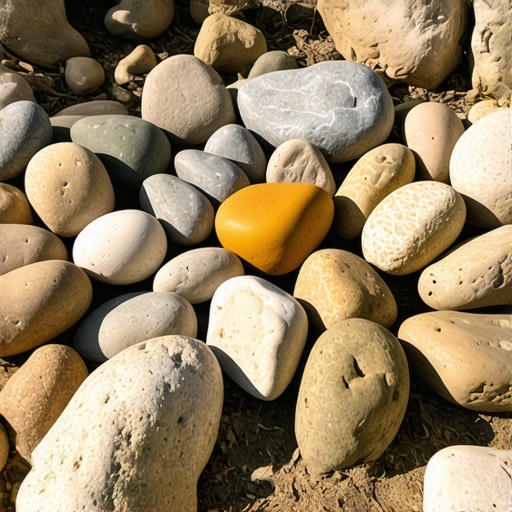
Avoid pea gravel at all costs. Pea gravel is round; it acts like ball bearings under a tire. You want #57 crushed stone. These are angular pieces that lock together when compacted. Crushed limestone is ideal because it contains
![Why Your 2026 Retaining Wall is Leaning [3 Fixes]](https://lawnmajesty.com/wp-content/uploads/2026/06/Why-Your-2026-Retaining-Wall-is-Leaning-3-Fixes.jpeg)