5 Edible Plants for 2026 Curb Appeal
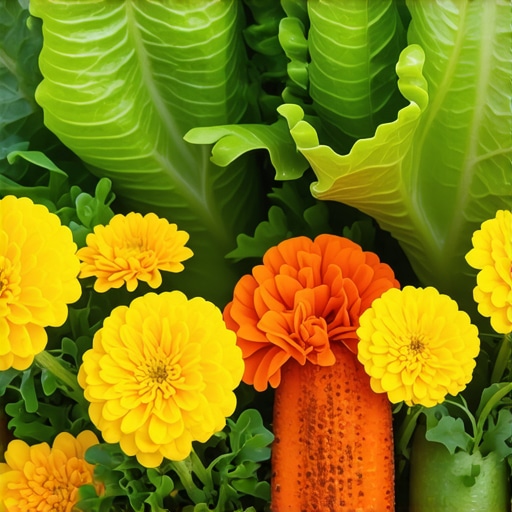
I always drill into my new crew members: if you don’t fix the soil grading first, every plant you put in the ground is just expensive compost. I have spent two decades remediating properties where homeowners or low-bid contractors installed thousands of dollars in nursery stock only to watch it drown in standing water or starve in compacted red clay. 2026 is seeing a massive shift toward edible landscaping, but this isn’t about tossing some lettuce in the front yard. This is about structural horticulture. You need to understand the biology of the root zone and the engineering of the hardscape to make it work. Most people treat curb appeal like a paint job. It isn’t. It is an ecosystem.
The Soil-First Methodology for Edible Curb Appeal
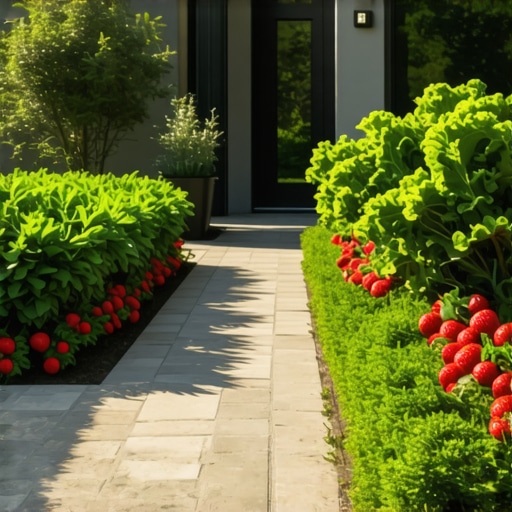
Designing for 2026 involves integrating perennial edibles like serviceberries and espaliered apples into structural hardscapes. This approach maximizes utility and aesthetics by using plants that provide structural volume while yielding high-nutrient harvests without compromising the architectural integrity of the property.
Before you buy a single plant, you must address the soil mechanics. Most suburban yards suffer from severe compaction. When developers build homes, they scrape off the topsoil and leave you with subsoil that has a PSI so high that roots cannot penetrate. You need to measure your soil bulk density. If your soil is too dense, gas exchange stops. Without oxygen, the aerobic bacteria that facilitate the nitrogen cycle die off, and your expensive edible hedge becomes a row of sticks. We use a penetrometer to check for hardpan layers. If we hit 300 PSI, we stop and bring in the aerators or start deep tilling with organic amendments. Don’t skip the soil test. You need to know your cation exchange capacity (CEC) and your pH levels before you even think about plant selection.
“The most common mistake in edible landscaping is the failure to account for drainage in the root zone, leading to anaerobic conditions that kill high-value perennial crops.” – Texas A&M AgriLife Extension
Top 5 Edible Selections for 2026
1. Highbush Blueberries (Vaccinium corymbosum): These are the ultimate structural shrubs. They offer spring flowers, summer fruit, and intense red foliage in the fall. However, they are chemical divas. They require a pH between 4.5 and 5.5. If your soil is 7.0, the plant will suffer from iron chlorosis and die. We excavate a wide trench, backfilling with acidified peat and pine bark to create a micro-climate for their shallow, fibrous roots. 2. Espaliered Apple Trees: For high-end curb appeal, we train apples along a 14-gauge wire trellis. This is civil engineering with wood. You need a dwarf rootstock like M9 or M26 to ensure the tree doesn’t outgrow its frame. The structural pruning creates a formal look that rivals any non-fruiting ornamental. 3. Serviceberry (Amelanchier laevis): This is a native power player. It produces berries that taste like a mix of blueberry and almond. They are hardy, drought-tolerant once established, and provide the height needed for multi-story garden design. 4. Creeping Rosemary: For hardscape edges, rosemary is unbeatable. It thrives in the radiant heat of a stone walkway. It requires a gravelly, well-drained substrate with a minimum 2% slope to prevent root rot during winter dormancy. 5. Dinosaur Kale (Brassica oleracea): Used as a seasonal focal point, the blue-green, pebbled texture of Lacinato kale provides a modern, architectural look. We treat it as a structural annual, grouping them in odd numbers to create visual weight.
| Plant Species | USDA Zone | Soil pH Requirement | Primary Design Function |
|---|---|---|---|
| Vaccinium corymbosum | 3-8 | 4.5-5.5 | Structural Shrubbery |
| Amelanchier laevis | 4-8 | 5.5-7.0 | Vertical Accent |
| Espaliered Apple | 4-9 | 6.0-7.0 | Architectural Screening |
| Rosmarinus officinalis | 7-10 | 6.0-7.5 | Hardscape Border |
| Lacinato Kale | Annual/5-9 | 6.5-7.0 | Textural Focal Point |
Hardscaping the Edible Garden
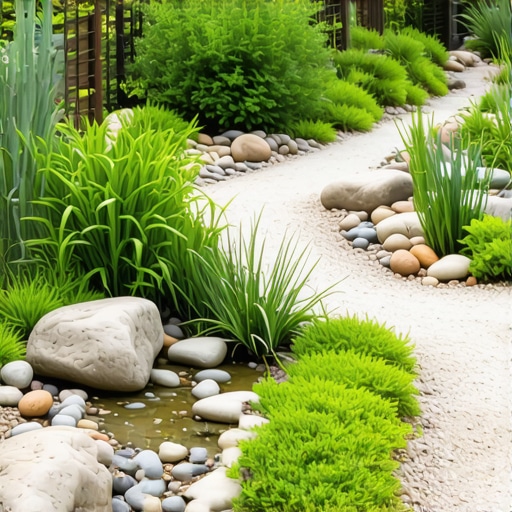
Hardscape engineering is the backbone of any foodscape that doesn’t look like a farm. We use dry-stack stone walls or pavers to create defined zones. If you are building a raised bed for edibles, you must account for hydrostatic pressure. Water is heavy. Without proper drainage holes and a geotextile-wrapped French drain at the base of the wall, the soil weight will push the stones out of alignment within three years. We use a modified gravel base, compacted in 2-inch lifts with a vibratory plate compactor. Each lift should be so solid that the tamper bounces off the surface. This prevents settling, which is the number one cause of failed stone borders.
“A retaining wall doesn’t fail because of the stone; it fails because of the water trapped behind it.” – Hardscape Engineering Axiom
Installation Checklist for Edible Landscapes
- Call 811 to mark all utility lines before excavation.
- Conduct a soil drainage test (dig a 12-inch hole, fill with water, time the drainage).
- Amend soil with 3 inches of composted organic matter to improve CEC.
- Identify root flares on all trees; never bury the trunk-root transition.
- Install a drip-line irrigation system to keep water off the foliage and prevent fungal pathogens.
- Apply a 2-inch layer of double-shredded hardwood mulch, avoiding the ‘mulch volcano’ around stems.
How much modified gravel do I need for a patio base?
To calculate gravel, multiply the square footage of the area by the desired depth in feet, then divide by 27 to get cubic yards. For a standard patio, a 4-inch base is the absolute minimum, but 6 inches is better for heavy clay soils to prevent frost heave.
What is the best soil pH for edible shrubs?
Most edible shrubs like blueberries require acidic soil between 4.5 and 5.5, while others like serviceberries prefer a more neutral 6.0 to 7.0 range. You must group plants by their chemical needs to avoid nutrient lockout. Failure to match pH to the species will result in stunted growth and zero yield.
The Long-Term Maintenance Cycle
The first year is the most critical. You are monitoring for transplant shock. Deep, infrequent watering is the goal. You want to force those roots to chase the moisture down 12 inches into the soil profile. Shallow daily watering creates weak plants. In 2026, the trend is toward automation, but no sensor replaces the human eye. Look for leaf curl, spider mites, and nitrogen deficiency. It will rot if you over-water. It will scorch if the soil is bare. Keep your tools sharp. A jagged cut on a fruit tree branch is an open door for fire blight. Prune for airflow. Prune for light penetration. This is not a set-it-and-forget-it project. It is an investment in your property’s value and your own health. Stick to the science, forget the big-box store shortcuts, and get the drainage right. Your yard will thank you.
![Build a $100 Modern Rock Garden for 2026 [DIY]](https://lawnmajesty.com/wp-content/uploads/2026/06/Build-a-100-Modern-Rock-Garden-for-2026-DIY.jpeg)