Stop Tree Roots from Lifting Your New Paver Walkway
The Hardscape Autopsy: Why Your Walkway Is Failing
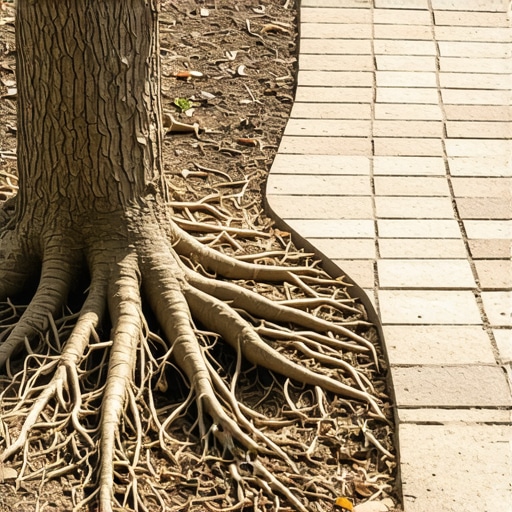
I recently got called out to tear up a $30,000 patio that was sinking because the previous contractor thought they could outsmart a mature Silver Maple. The homeowner thought the soil had simply settled. I knew better the moment I saw the diagonal heaving pattern. We spent three days excavating 400 square feet of premium pavers just to find a three-inch thick lateral root that had effectively used the gravel base as a highway. The contractor had skipped the root barrier and used a standard non-woven fabric that the root tip pierced through like it was wet paper. This is the reality of hardscaping without understanding biology. If you do not respect the force of a growing root, your investment will become expensive rubble within five years.
The Biological Reality of Root Heave
To stop tree roots from lifting your new paver walkway, you must install a vertical root barrier at least 18 inches deep, utilize a compacted modified gravel base, and ensure proper drainage to prevent the moisture buildup that attracts opportunistic root growth toward the surface.
Roots do not grow under pavers because they want to annoy you. They grow there because they are searching for the path of least resistance and maximum resources. Under a paver walkway, condensation often forms on the underside of the stones. This is a process called internal dew. In a poorly constructed base, this moisture stays trapped in the bedding sand. For a tree root, that moisture is a beacon. As the root grows in diameter, it exerts incredible pressure. We are talking about hundreds of pounds per square inch of hydraulic force. If your base is only 4 inches of loose stone, that root will win every single time. You need to think like a civil engineer. You are not just laying stones; you are building a multi-layered defense system against a living organism.
“A retaining wall or paver system doesn’t fail because of the stone; it fails because of the water trapped behind it, or the biological pressure exerted by unmanaged root systems.” – Hardscape Engineering Axiom
How close can a paver walkway be to a tree?
Ideally, you should stay outside the Critical Root Zone (CRZ), which is generally calculated as one foot of radius for every inch of trunk diameter at breast height (DBH). If a tree is 20 inches wide, stay 20 feet away. If you must go closer, you need advanced mitigation. This involves air-spading the area to locate major structural roots rather than blind digging with a backhoe. If you sever a root larger than two inches, you are not just hurting the tree; you are creating a stability hazard. The tree could literally fall on the house three years later because you wanted a straight path.
The Ground-Up Build: Engineering the Defense
Preparation is 80 percent of the job. Most hacks spend half a day digging and two days laying stone. I do the opposite. I spend two days on the excavation and base compaction. If the subgrade isn’t right, nothing else matters. You need to dig deep. For a pedestrian walkway near trees, I am looking for at least 10 to 12 inches of total excavation depth. This allows for a 6-inch base of 2A modified gravel, 1 inch of bedding sand, and the thickness of the paver itself.
We use a vibratory plate compactor that hits with at least 4,000 pounds of centrifugal force. You don’t just run it over the top once. You compact in 2-inch lifts. If you throw 6 inches of stone in a hole and run a compactor over it, only the top 2 inches get tight. The bottom stays loose, and roots will find those air pockets. The tamper should literally bounce off the compacted base when it is ready. It should feel like concrete before you even think about sand.
What is the best root barrier for pavers?
The best root barrier is a high-density polyethylene (HDPE) sheet that is at least 60 mils thick and installed vertically between the tree and the walkway. These sheets are slick, meaning roots cannot get a grip, and they are deep enough to force roots downward into the lower soil profile. Biobarriers, which contain nodules of trifluralin, are also effective as they create a chemical zone that roots refuse to enter. This does not kill the tree; it simply redirects the growth away from your hardscape.
| Mitigation Method | Cost Level | Effectiveness | Lifespan |
|---|---|---|---|
| HDPE Vertical Barrier | Moderate | Very High | 25+ Years |
| Chemical Biobarrier | High | High | 15-20 Years |
| Geogrid Reinforcement | Moderate | Medium | 20 Years |
| Root Pruning | Low | Low (Temporary) | 2-5 Years |
The Installation Process: A Step-by-Step Guide
Once your excavation is complete, you install the root barrier. It must be placed on the tree-side of the trench. Do not just put it under the pavers; it must be a vertical wall. Leave about an inch of the barrier above the final grade to ensure roots don’t jump over the top, which we call over-topping. You can hide this with mulch later.
- Step 1: Layout the path using marking paint and calculate the CRZ of nearby trees.
- Step 2: Excavate to a depth of 12 inches, avoiding major structural roots.
- Step 3: Install the HDPE root barrier vertically along the edge of the trench.
- Step 4: Lay down a heavy-duty woven geotextile fabric (not the cheap stuff).
- Step 5: Add 2 inches of modified gravel and compact. Repeat until you reach the 6-inch base mark.
- Step 6: Set your screed pipes and spread 1 inch of washed concrete sand.
- Step 7: Lay your pavers in the desired pattern, ensuring tight joints.
- Step 8: Sweep in polymeric sand and vibrate the pavers to lock them in.
“According to the University of Florida IFAS Extension, tree roots will grow where there is moisture and oxygen; a poorly drained paver base creates a perfect environment for root heave.” – IFAS Agronomy Manual
The final step is the polymeric sand. This is not just sand; it is a binder. When activated with water, it hardens and prevents weed seeds from blowing in from the top and, more importantly, keeps moisture from easily seeping into the bedding layer. It creates a monolithic surface that is much harder for roots to disrupt. Don’t skip the vibration step after the sand is in. You need to shake that sand down into the full depth of the paver joint. It will rot if you leave air pockets.
The Settling-In Period and Maintenance
Your walkway will move slightly in the first year. This is normal. What is not normal is a single paver lifting higher than the others. If you see that, you have a root issue or a compaction failure. In my 20 years, I have found that if you follow the vertical barrier protocol, you won’t see heave for decades. You should also be mindful of your lawn care and garden design around the walkway. Do not plant high-water-demand annuals right next to the path, as the extra irrigation will draw roots toward the base. Stick to drought-tolerant groundcovers. Remember, your walkway is a piece of engineering. Treat it with the same respect you would a foundation. It is a battle against biology. Win the ground war first. The rest is just aesthetics.
![Build a $500 2026 Flagstone Fire Pit Circle [DIY]](https://lawnmajesty.com/wp-content/uploads/2026/05/Build-a-500-2026-Flagstone-Fire-Pit-Circle-DIY.jpeg)