
5 2026 Fast-Growing Privacy Vines for Chain Link
Understanding the Horticultural Engineering of Vertical Privacy
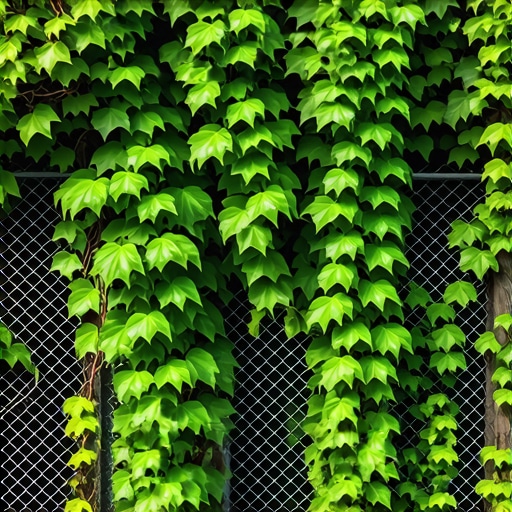
Chain link fencing is a structural necessity for many property lines, yet it offers zero visual mitigation. I always drill into my new crew members: if you don’t fix the soil grading and the rhizosphere first, every plant you put in the ground is just expensive compost. Most homeowners see a fence and think of it as a finished border, but a professional sees it as a vertical trellis that requires specific soil mechanics and structural integrity. Before you select a species for 2026, you must understand that privacy is a result of biomass density, and biomass density is a direct product of nitrogen availability and root space. If your fence line is sitting in compacted subsoil from the original construction of your home, these vines will fail. You are not just planting a seed; you are engineering a living wall that must withstand wind load and moisture retention.
Soil Science and Grading for Vertical Screening
To achieve rapid growth on chain link, you must remediate soil compaction and adjust the Cation Exchange Capacity (CEC) to ensure nutrient uptake for heavy biomass. Chain link fences are often installed in high-compaction zones where heavy machinery traveled during house construction. This leaves the soil with low pore space, suffocating root respiration. You need to perform a soil test to check your pH levels. Most fast-growing vines prefer a slightly acidic to neutral range (6.0 to 7.0 pH). If your soil is heavy clay, you are looking at a drainage nightmare that will lead to root rot before the vine even reaches the second diamond of the fence mesh. We utilize a 50/50 mix of aged leaf compost and coarse sand to break up the molecular bonds of clay particles. This ensures that the 1 inch of water per week you provide actually reaches the root flare instead of pooling at the surface and evaporating.
“A vine is only as strong as the root system beneath it. Without proper soil aeration and nutrient density, vertical growth will be stunted regardless of the species genetics.” – USDA Plant Physiology Manual
How much modified gravel do I need for a patio base near my fence?
If you are integrating a hardscape near your new privacy screen, you need a minimum of 4 to 6 inches of compacted 21A or 3/4-inch minus gravel. This base prevents the weight of the patio from shifting the fence posts as the vine adds hundreds of pounds of wet weight to the structure. Never skip the plate compactor. A loose base is a failed project.
Top 5 High-Performance Privacy Vines for 2026
The following selections are vetted for their growth rate, durability, and ability to handle the thermal conductivity of metal fencing. Metal chain link can get extremely hot in the summer, which can scorch tender tendrils if the plant isn’t resilient.
| Vine Species | Growth Rate (Yearly) | Hardiness Zone | Key Benefit |
|---|---|---|---|
| Campsis radicans | 10-15 Feet | 4-9 | Aggressive Coverage |
| Lonicera sempervirens | 6-10 Feet | 4-9 | Non-Invasive Native |
| Humulus lupulus | 15-20 Feet | 3-8 | Rapid Biomass |
| Clematis terniflora | 10-12 Feet | 5-9 | Dense Foliage |
| Parthenocissus quinquefolia | 8-12 Feet | 3-9 | Adhesive Strength |
1. Campsis radicans (Trumpet Vine)
This is the heavy hitter of the horticultural world. It uses adventitious roots (small hair-like structures) to latch onto the metal. In a single season, it can cover a 10-foot section of fence. However, you must be careful. Its woody stems can actually bend thin-gauge chain link if not managed. It requires a high-nitrogen starter fertilizer (10-10-10) in early spring to kickstart the leaf production. It is not for the faint of heart. It is a biological machine.
2. Lonicera sempervirens (Coral Honeysuckle)
Do not confuse this with the invasive Japanese variety. The Coral Honeysuckle is a native powerhouse. It twines around the wire mesh rather than using suckers. This means it puts less structural stress on the fence fabric. It thrives in full sun and requires a well-drained root zone. We typically install these at 3-foot intervals to ensure a solid wall of green within two growing seasons. It is resistant to many common pests that plague other ornamental vines.
3. Humulus lupulus (Hops)
If you want a screen by mid-summer, Hops is the answer. It can grow up to 12 inches in a 24-hour period during peak heat. It dies back to the ground in winter, but the rhizome system underneath is massive and stores incredible amounts of energy. For 2026, we are seeing more homeowners use this for temporary summer privacy. You must ensure the soil has a high organic matter content. Hops are heavy feeders. They need consistent moisture and a thick layer of mulch to keep the rhizomes cool.
4. Clematis terniflora (Sweet Autumn Clematis)
This species provides a dense, leather-like foliage that is excellent for visual blocking. It is a late bloomer, but its primary value is the sheer volume of leaves it produces. It can easily overwhelm a chain link fence if you don’t prune it back to 12 inches every spring. This pruning forces the plant to send out multiple new leads from the base, which fills in the bottom of the fence where privacy is often needed most. Many contractors fail to prune, leading to a ‘top-heavy’ vine with an exposed bottom.
5. Parthenocissus quinquefolia (Virginia Creeper)
This vine uses adhesive disks to stick to the metal. It is incredibly tough. It handles salt spray, high heat, and poor soil better than almost any other vine in the trade. While some call it a weed, in a managed landscape, it is a sophisticated privacy tool. It turns a deep crimson in the fall, providing aesthetic value long after the growing season ends. It is a workhorse for large commercial perimeter fences where maintenance is infrequent.
Engineering Considerations for Fence-Mounted Growth
You must account for the static and dynamic loads that a fully mature vine places on a chain link structure during high-wind events. A 20-foot run of chain link covered in dense foliage acts like a sail. If your fence posts are not set in at least 24 inches of 3000 PSI concrete, the entire line could lean or collapse during a storm. Before planting, check the tension of the top rail and the bottom tension wire. If the fence is saggy, the vine will only exacerbate the issue. We often recommend adding a mid-rail for Campsis radicans installations to handle the sheer weight of the woody trunks.
“Hydrostatic pressure isn’t just for retaining walls; it affects the soil stability around fence footings. Proper drainage away from the fence line is critical for long-term structural integrity.” – Hardscape Engineering Axiom
How much fertilizer do I need for new privacy vines?
For new installs, apply 1 pound of 5-10-5 fertilizer per 100 square feet of planting bed. Do not over-nitrogenate in the first year, as you want to encourage root establishment over excessive top-growth. Roots first, leaves second. That is the rule of the trade.
Installation and Maintenance Checklist
- Call 811 before you dig. Utility lines often run parallel to fence lines.
- Excavate a trench 12 inches wide and 12 inches deep along the fence line.
- Amend native soil with 30% organic compost.
- Install plants at the manufacturer-recommended spacing (usually 3-5 feet).
- Secure main leads to the chain link mesh using biodegradable garden twine.
- Apply a 3-inch layer of hardwood mulch to retain moisture.
- Set up a drip irrigation system to deliver water directly to the root zone.
It will rot. If you allow mulch to pile up against the metal posts (mulch volcanoes), you create a moisture trap that accelerates rust and corrosion on galvanized steel. Keep the mulch 2 inches away from all metal structures. Maintenance isn’t optional. It is the difference between a professional screen and a tangled mess. Pruning should be done with sharp, sanitized bypass pruners to prevent the spread of fungal pathogens like powdery mildew, which can thrive in the high-humidity micro-climate created by dense vine foliage.
![4 Native Groundcovers for 2026 Clay Soil [No-Mow]](https://lawnmajesty.com/wp-content/uploads/2026/07/4-Native-Groundcovers-for-2026-Clay-Soil-No-Mow.jpeg)