Fix 2026 Backyard Flooding with This $200 Swale
Fix 2026 Backyard Flooding with This $200 Swale
I always drill into my new crew members: if you don’t fix the soil grading first, every plant you put in the ground is just expensive compost. Water is a relentless force of physics. If your backyard turns into a swamp after every 2026 spring rain, you don’t need a miracle; you need a swale. Most homeowners think they need a $10,000 internal drainage system, but for about $200 in materials and a weekend of manual labor, you can solve 90% of surface runoff issues using a dry creek bed swale. We aren’t just digging a ditch; we are engineering a hydraulic bypass for your property.
What is a Dry Creek Bed Swale and How Does It Stop Backyard Flooding?
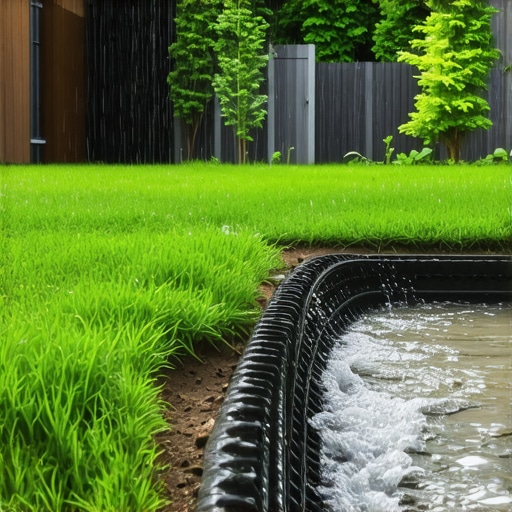
A dry creek bed swale is a shallow, graded channel lined with non-woven geotextile fabric and river rock designed to capture surface runoff and redirect it away from your home’s foundation. It works by utilizing gravity to move water along a predetermined path toward a catch basin or a lower, safe discharge point on the property line.
“Surface drainage systems should be designed to move water away from the structure at a minimum slope of 2 percent, or 1/4 inch per foot, to prevent ponding and structural saturation.” – Penn State Agricultural Extension
The Engineering Reality of Soil Compaction
In most residential developments, the soil is heavily compacted by heavy machinery during the build phase. This leaves you with a percolation rate that is nearly zero. When rain hits, the water cannot penetrate the clay subsoil. Instead, it sits on the surface, creating hydrostatic pressure against your basement walls or drowning the root zones of your turf. A swale acts as a release valve for this pressure. It is the difference between a functional yard and a mud pit.
The $200 Swale Material Breakdown
To fix your drainage for under $200, you have to prioritize function over aesthetic fluff. You aren’t buying polished Mexican beach pebbles; you are buying angular river rock and drainage fabric. Below is the cost breakdown for a standard 20-foot swale.
| Material Type | Quantity Needed | Estimated Cost | Purpose |
|---|---|---|---|
| #57 River Rock | 1.5 Tons | $90 – $110 | Armoring and flow control |
| Non-Woven Geotextile | 4′ x 50′ Roll | $45 | Soil separation and weed suppression |
| Grass Seed / Straw | 1 Bag / 1 Bale | $30 | Stabilizing the swale edges |
| Marking Paint | 1 Can | $10 | Defining the layout |
Don’t buy the thin, woven weed barrier from the big-box garden centers. It will clog with silt in six months. You need 4oz non-woven needle-punched geotextile. This allows water to pass through while keeping the soil from migrating into your stone. If the stone gets choked with dirt, the swale fails. Period.
How to Build the Swale: Step-by-Step Construction
Before you touch a shovel, you must call 811. Do not assume your utility lines are deep. Gas and cable lines are often buried just a few inches below the thatch layer. Once cleared, follow this protocol.
- Survey the Slope: Use a line level or a transit to ensure you have at least a 1% grade. Water does not run uphill.
- Excavate the Channel: Dig a wide, shallow parabolic shape. Avoid V-shaped trenches; they erode faster. Aim for 3 feet wide and 6-8 inches deep at the center.
- Compaction: Use a hand tamper to firm the base. If the soil is loose, the first heavy rain will cause the swale to settle and hold water.
- Line the Swale: Lay your geotextile fabric. Ensure it extends slightly past the edges of the trench.
- Place the Stone: Distribute your river rock. Use larger stones (4-6 inch) in the center where the water velocity is highest, and smaller stones on the edges.
How much modified gravel do I need for a patio base?
While this guide focuses on swales, the principle of modified gravel applies to all hardscaping. For a standard 4-inch base, you need roughly 1 ton of CR6 or 21A gravel for every 50 square feet. For a swale, you are using open-graded stone, which allows for 40% void space for water storage. Never use crusher run in a drainage swale; the fines will cement the channel shut.
“A retaining wall doesn’t fail because of the stone; it fails because of the water trapped behind it.” – Hardscape Engineering Axiom
Planting for Stability: The Bio-Swale Hybrid
A swale isn’t just a rock pile. To prevent the edges from slumping, you need deep-rooted vegetation. Avoid decorative annuals. You need native sedges or tall fescue that can handle both wet feet and drought. The roots act as biological anchors for the soil. If you choose to leave it as a grass swale, you must ensure the mowing height is kept at 3.5 inches or higher. Scalping the grass in a swale leads to instant erosion.
How deep should a swale be for maximum drainage?
For most residential applications, a swale should be between 6 and 12 inches deep. Any deeper and you create a safety hazard and a maintenance nightmare. The goal is a gentle depression that is easy to mow over but capable of carrying the peak flow of a 10-year storm event. If you find you need a 2-foot deep trench, you don’t need a swale; you need a civil engineer and a culvert pipe.
The Maintenance Schedule: Year One and Beyond
A swale is a living piece of infrastructure. In the first year, check it after every heavy rain. Look for siltation at the head of the swale. If you see dirt accumulating on top of your rocks, your upstream grading is failing. Clear any debris, leaves, or mulch that has washed into the rocks. If the swale becomes clogged, the water will simply jump the bank and find a new way to flood your yard. It’s a binary system: it’s either clear and working, or it’s a dam. Don’t skip the cleaning.
![Fix a 2026 Yard Slope with This $300 Fieldstone Wall [DIY]](https://lawnmajesty.com/wp-content/uploads/2026/05/Fix-a-2026-Yard-Slope-with-This-300-Fieldstone-Wall-DIY.jpeg)