
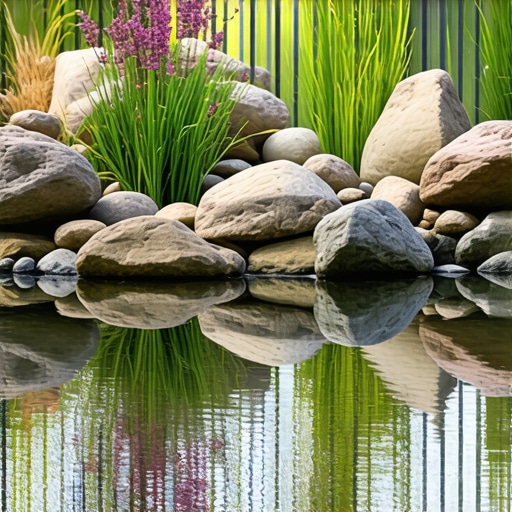
How to Choose the Right Pond Liner for a Rocky Backyard
Choosing the Right Pond Liner for Rocky Terrain
Selecting a pond liner for rocky backyard environments requires prioritizing puncture resistance and tensile strength to withstand hydrostatic pressure. High-density materials like 45-mil EPDM or Reinforced Polyethylene (RPE) are essential when installed over non-woven geotextile underlayment to prevent sub-grade sharp edges from causing leaks.
I recently got called out to tear up a $30,000 pond that was losing four inches of water a day because the previous contractor thought a 20-mil PVC liner was good enough for a site sitting on jagged limestone. The liner looked like Swiss cheese within six months. Rocks do not move; water does, and when that pressure pushes a thin membrane against a sharp edge, physics wins every time. We spent three days excavating the failed material just to start over. It was a waste of labor and a massive financial hit for the homeowner who tried to save $500 on materials. In this business, if you do not respect the geology of the site, the site will break your bank account.
The Material Science of Pond Membranes
Engineering a permanent water feature involves understanding the coefficient of thermal expansion and the ASTM D4833 puncture resistance ratings of various polymers. For rocky backyard installations, the liner must remain flexible enough to conform to irregular excavations while maintaining the structural integrity to hold thousands of pounds of water weight without stretching to the point of failure.
“A retaining wall doesn’t fail because of the stone; it fails because of the water trapped behind it.” – Hardscape Engineering Axiom
When you are dealing with rocky soil, you are not just fighting the rocks themselves; you are fighting the way those rocks shift during freeze/thaw cycles. A standard 20-mil PVC liner has almost zero resistance to these subterranean shifts. It is brittle. It will crack. Instead, professionals look toward EPDM (Ethylene Propylene Diene Monomer). This is a synthetic rubber that can stretch over 300 percent of its original size. In a rocky environment, that flexibility is your insurance policy. If a rock shifts an inch, the EPDM stretches. If a PVC liner faces that same shift, it tears. We also look at Reinforced Polyethylene (RPE). RPE is lighter and stronger than EPDM, though less flexible. It is the go-to for massive water features where weight is a factor for the crew.
Which pond liner is most puncture resistant?
For high-risk rocky terrain, Reinforced Polyethylene (RPE) offers the highest puncture resistance per square inch, often exceeding EPDM because of its integrated mesh core. While 45-mil EPDM is the industry standard for hardscaping, RPE is virtually impossible to tear by hand, making it the superior choice for sites with jagged bedrock or flint.
| Material | Thickness (Mil) | Puncture Resistance | UV Stability | Flexibility |
|---|---|---|---|---|
| EPDM Rubber | 45-60 | High | Excellent | Very High |
| RPE (Reinforced) | 24-40 | Very High | Good | Moderate |
| PVC | 20-30 | Low | Poor | Moderate |
| HDPE | 30-80 | Moderate | Excellent | Low |
The Physics of Rocky Substrate Preparation
Preparing the sub-grade for a pond installation in rocky soil involves creating a buffer zone that neutralizes point-loading from sharp stones. This process requires a multi-layer approach using sand and geotextile fabrics to ensure the liner never makes direct contact with the native limestone or shale.
Water weighs 62.4 pounds per cubic foot. If you build a pond that is four feet deep, the pressure at the bottom is immense. If a single sharp rock is sticking up even half an inch, that pressure is concentrated on a tiny point of the liner. This is called point-loading. To fix this, you cannot just throw the liner in the hole. You need a sacrificial layer. I tell my crew that the underlayment is more important than the liner itself. We use 8-ounce non-woven geotextile fabric. This is not the cheap weed barrier you buy at a hardware store. This is heavy-duty industrial fabric that feels like thick felt. In extreme cases, we will add two inches of damp masonry sand before the fabric goes down. This creates a hydraulic cushion that allows the liner to settle without stress points.
How much modified gravel do I need for a pond base?
Calculating the base layer for a pond involves measuring the square footage of the floor and multiplying by the depth of the protective substrate. For rocky backyards, a minimum of two inches of compacted sand or screened fines is required, meaning you need approximately 0.6 cubic yards of material for every 100 square feet of pond floor.
- Excavate the pond to the desired depth, plus 3 inches for the substrate.
- Remove any loose rocks larger than a golf ball.
- Install a 2-inch layer of washed masonry sand.
- Lay down 8-oz non-woven geotextile underlayment, overlapping seams by 12 inches.
- Roll out the EPDM or RPE liner, avoiding tight folds or tension.
- Fill with 6 inches of water to allow the liner to settle before rock placement.
“Soil compaction and moisture content are the primary drivers of sub-surface movement in residential hardscapes.” – USDA Soil Mechanics Manual
Installation Logistics and Edge Detail
Securing the perimeter of a pond liner in a rocky backyard requires an anchor trench to prevent the membrane from slipping under the weight of the coping stones. Proper garden design dictates that the liner should be vertical at the edges to prevent wicking, where the surrounding soil draws water out of the pond via capillary action.
Don’t skip the anchor trench. We dig a one-foot deep trench around the entire perimeter. The liner goes into the trench, and we backfill it with heavy stone or excavated clay. This locks the liner in place. If you just lay the liner flat and put rocks on top, the weight of the water in the middle will pull the edges toward the center. It will fail. Also, watch your water levels. In rocky soil, drainage is often poor or too fast. If the pond is at the bottom of a slope, you need a French drain around the outside. Otherwise, groundwater will get under the liner and cause it to float like a giant bubble. This is called a hippo. It is a nightmare to fix. Do the drainage work first. It will save your project.
![Build a $200 Solar Pond Fountain [2026 DIY]](https://lawnmajesty.com/wp-content/uploads/2026/07/Build-a-200-Solar-Pond-Fountain-2026-DIY.jpeg)
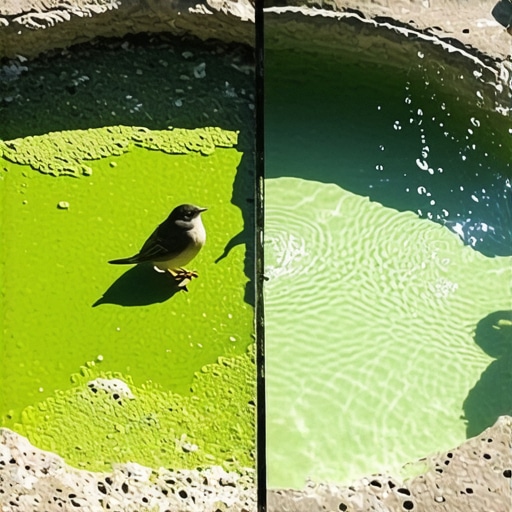
![Build a $200 Solar Pond Fountain [2026 DIY Project]](https://lawnmajesty.com/wp-content/uploads/2026/05/Build-a-200-Solar-Pond-Fountain-2026-DIY-Project.jpeg)