Why Your Pond Filter Fails Every Summer (And the $20 Fix)
The Summer Stagnation: A Forensic Breakdown of Filter Failure
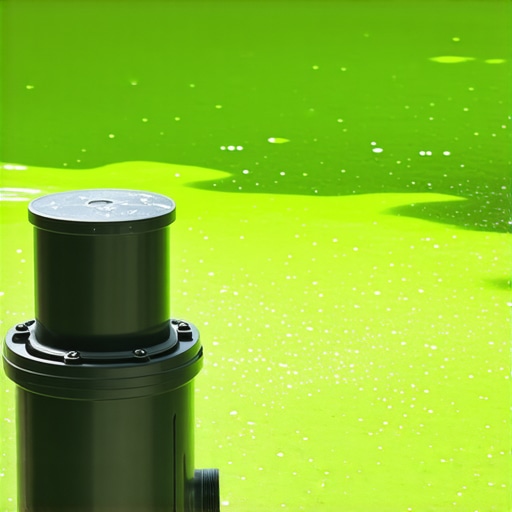
Your pond filter fails in summer because rising water temperatures reduce dissolved oxygen levels, causing beneficial aerobic bacteria to die off while metabolic waste from fish increases. This leads to ammonia spikes and algae blooms that overwhelm mechanical media and stall the biological filtration process entirely. I recently got called out to tear up a $30,000 backyard installation that was sinking and smelling like a sewer because the previous contractor didn’t understand the basic physics of hydrostatic pressure or biological load. The homeowner had spent thousands on fancy lights, but the water was a thick, pea-soup sludge. The pump was cavitating because the intake was choked with anaerobic slime. I spent three hours explaining that their ‘expensive’ filter was essentially a glorified sponge that didn’t have the surface area to handle a high-nitrogen environment in 90-degree heat. If your filter is clogging every two days, you aren’t dealing with a ‘dirty pond’; you are dealing with a failed ecosystem. Most people try to fix this by throwing more chemicals at the water, which only adds to the organic load when the algae dies and rots on the bottom. You have to look at the math of the nitrogen cycle. When water hits 80 degrees, it holds significantly less oxygen than it does at 60 degrees. Without that oxygen, the nitrifying bacteria (Nitrosomonas and Nitrobacter) stop converting toxic ammonia into nitrate. The system crashes. It is a predictable, mechanical failure of biological engineering.
“Maintaining a healthy nitrogen cycle in an ornamental pond requires a surface area for nitrifying bacteria proportional to the total fish biomass and feed input.” – Southern Regional Aquaculture Center (SRAC)
Why is my pond filter clogging every day?
Your pond filter clogs daily because the mechanical media is too fine for the volume of suspended solids being produced by algae and fish waste. This creates a pressure drop across the filter that reduces GPH flow, leading to stagnant pockets and further bacterial death. It is a feedback loop of failure. Don’t skip the cleaning of your pre-filter. If your primary filter is doing all the heavy lifting, it is sized wrong. I tell my crew: if you don’t fix the soil grading around the pond, every rainstorm washes phosphate-heavy lawn fertilizer into the water. That is fuel for the fire. You can have the best filter in the world, but if your yard is sloped toward the pond, you are just feeding the algae.
The Engineering of Water: Flow Rates and Head Height
Proper pond filtration requires a complete water turnover at least once every hour, accounting for the total dynamic head (TDH) which measures the resistance your pump faces from pipe friction and elevation. Most DIY installs fail because they buy a pump rated for 2,000 GPH but use 1-inch pipe, which chokes the flow down to 800 GPH.
| Filter Media Type | Surface Area (sq ft/cu ft) | Maintenance Interval | Primary Function |
|---|---|---|---|
| Lava Rock | 30-50 | Monthly | Biological (Low Efficiency) |
| Matala Mats | 150-250 | Quarterly | Mechanical/Biological |
| K3/K5 Bio Media | 500-800 | Annually | High-Efficiency Bio |
| Filter Sand | 100 | Weekly | Mechanical Polish |
The physics of water movement is non-negotiable. If you have a 2,000-gallon pond, you need 2,000 gallons of actual flow. When the water slows down, debris settles in the pipes. It rots. It creates hydrogen sulfide gas. You smell it. Your fish feel it. I have seen ‘professional’ landscapers install filters under decks where there is no ventilation. The heat builds up, the bacteria bake, and the whole system becomes a toxic soup.
How do I clear up green pond water?
To clear green pond water, you must install a UV-C clarifier rated for at least 10 watts per 1,000 gallons and increase your mechanical filtration to remove the dead algae cells. UV light disrupts the DNA of single-celled algae, but it does not remove the physical mass from the water.
“In pond engineering, the total dynamic head (TDH) must be calculated to ensure the pump operates at its peak efficiency curve, preventing motor burnout under high debris loads.” – Aquatic Systems Engineering Manual
The $20 Fix: The Pre-Filter Mechanical Hack
The $20 fix for a failing summer filter is the installation of a DIY high-volume mechanical pre-filter using a rigid mesh basket and a coarse Matala pad to intercept solids before they reach the fine biological media. This simple bypass prevents the main filter from clogging and preserves oxygen levels for the nitrifying bacteria. You can find these materials at any local irrigation or pond supply shop. It takes ten minutes to build. It saves the pump. It keeps the water moving. Most people think they need a new $1,000 filter when they actually just need to stop the ‘fines’ from reaching their bio-chamber.
- Step 1: Measure your pump intake diameter.
- Step 2: Buy a heavy-duty plastic crate or mesh basket ($10).
- Step 3: Line it with coarse 2-inch poly-flo or Matala matting ($10).
- Step 4: Submerge the pump inside this basket.
- Step 5: Clean this pre-filter weekly instead of tearing apart your main filter.
This is basic engineering. By increasing the surface area of the intake, you reduce the suction velocity at any single point. This prevents the pump from ‘vacuuming’ up every piece of debris and clogging. It works. Period. I have saved dozens of ponds with this exact setup.
The Biology of the Bottom: Why Muck Kills Filtration
Organic muck on the pond floor acts as a nutrient battery that bypasses your filter by leaching phosphates and ammonia directly into the water column. Even the best filter cannot compensate for 4 inches of decomposing leaf litter and fish waste. This is where ‘mow-and-blow’ contractors fail homeowners. They blow clippings into the pond. They don’t check the pH levels. They don’t understand that a pond is a living, breathing organism. You need to use a pond vacuum or a bottom drain. If you don’t have a bottom drain, your pump is only filtering the ‘clean’ water at the top while the bottom stays septic.
How much modified gravel do I need for a pond edge?
For a stable pond edge, you need 3 inches of #2 modified gravel compacted as a base, topped with 2 inches of decorative river rock to prevent liner shifting and soil erosion. Do not use limestone, as it will spike your pH levels and kill your fish. This is the difference between a garden design that lasts and one that washes away in the first summer storm. Use the right stone. Check the chemistry. Stop guessing. “
![Build a $200 Solar Pond Fountain [2026 DIY Project]](https://lawnmajesty.com/wp-content/uploads/2026/05/Build-a-200-Solar-Pond-Fountain-2026-DIY-Project.jpeg)