
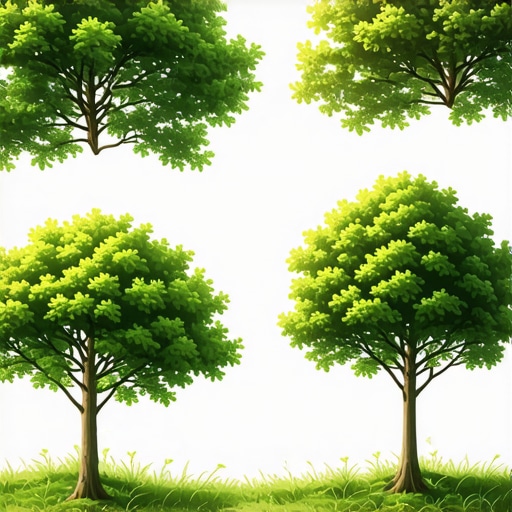
4 Clay-Tolerant Trees for 2026 Suburban Backyards
4 Clay-Tolerant Trees for 2026 Suburban Backyards
I always drill into my new crew members: if you don’t fix the soil grading first, every plant you put in the ground is just expensive compost. Most homeowners see a backyard as a blank canvas, but I see a hydraulic system. In modern suburban developments, especially those built in the last five years, the topsoil has been stripped, sold, and replaced with compacted subsoil that has the drainage capacity of a concrete slab. If you dig a hole in this stuff, drop in a nursery-grown tree, and fill it with bagged peat moss, you haven’t planted a tree; you have built a bathtub. When the autumn rains hit, that root ball will sit in stagnant water until the root hairs die from lack of oxygen. By the time the tree shows stress in July, it is already a dead stick walking. Success in 2026 landscaping requires moving away from aesthetic-first thinking and toward structural biology. You have to pick species that can handle the specific chemical and physical constraints of heavy clay.
The Physics of Clay and Why Most Trees Fail
Clay soil is characterized by microscopic, plate-like particles that bond tightly, trapping water and excluding oxygen. Successful planting requires selecting species with specialized root physiology capable of penetrating heavy soil and tolerating periodic saturation while maintaining structural integrity during summer droughts. These soils have high Cation Exchange Capacity (CEC), meaning they hold nutrients well, but the physical bulk density often exceeds 1.6 grams per cubic centimeter. This density is high enough to physically stop root elongation. You are fighting physics, not just bad luck. In a suburban setting, the compaction from heavy machinery during house construction makes this even worse. This is why we focus on ‘survivor’ species that have evolved in floodplains or riparian zones where they deal with these exact anaerobic conditions naturally.
“Soil compaction is the single most difficult obstacle to the establishment of trees in the urban landscape, reducing pore space and cutting off the essential gas exchange required for root respiration.” – Penn State Department of Plant Science
How do I test if my soil is heavy clay?
The simplest method is the ‘ribbon test.’ Take a handful of moist soil and squeeze it into a ball, then use your thumb to push it out into a ribbon. If you can create a ribbon longer than two inches before it breaks, you are dealing with high-clay content that requires specific species selection and planting techniques to avoid root rot. You can also perform a percolation test: dig a hole 12 inches deep, fill it with water, and let it drain. Fill it again and track how long it takes to empty. If it takes longer than 24 hours, you have a drainage crisis that no amount of fertilizer will fix.
Top 4 Clay-Tolerant Trees for 2026
Selecting trees for clay involves identifying species with high adaptability to low-oxygen environments and the mechanical strength to push through dense soil matrices. The following four species represent the best balance of aesthetic value, suburban scale, and extreme durability against the compaction and drainage issues common in modern housing developments. These aren’t just ‘tough’ plants; they are biological engineers that help improve the soil structure over time by creating deep root channels that eventually allow for better water infiltration.
| Tree Species | Mature Height | USDA Zones | Primary Strength |
|---|---|---|---|
| Swamp White Oak (Quercus bicolor) | 50-60′ | 3-8 | Extreme drought and flood tolerance |
| River Birch (Betula nigra) | 40-70′ | 4-9 | Aggressive lateral root system |
| Bald Cypress (Taxodium distichum) | 50-70′ | 4-9 | Thrives in anaerobic (no oxygen) soil |
| American Hornbeam (Carpinus caroliniana) | 20-30′ | 3-9 | Dense wood and high shade tolerance |
1. Swamp White Oak (Quercus bicolor)
The Swamp White Oak is the undisputed king of the heavy-clay backyard. Unlike the traditional White Oak, which can be finicky about drainage, the bicolor variety thrives in low-lying areas. It features a bicolor leaf (dark green on top, silvery-white underneath) that provides excellent visual contrast in a breeze. In 2026, we are seeing more extreme weather swings; this tree can handle a week of standing water in the spring and a two-month drought in August without dropping its canopy. Its root system is deep and powerful, capable of punching through the heavy subsoil found in suburban lots.
2. River Birch (Betula nigra)
If you need fast growth to screen out a neighbor’s house, the River Birch is your tool. Most birches hate heat and get devastated by the Bronze Birch Borer, but the nigra species is resistant. Its exfoliating bark provides winter interest, peeling back to reveal shades of salmon and cream. From a hardscaping perspective, be careful: these roots are thirsty and aggressive. Keep them at least 20 feet away from your main sewer line or your septic tank. They are excellent for stabilizing slopes in backyards where clay soil tends to slump during heavy rain events.
3. Bald Cypress (Taxodium distichum)
While often associated with southern swamps, the Bald Cypress is surprisingly hardy and thrives in compacted suburban clay as far north as Zone 4. It is a deciduous conifer, meaning it has needles like a pine tree but drops them in the winter. This is a massive advantage in heavy snow areas because it won’t catch the wind or ice like an evergreen would, reducing the risk of limb breakage. Its ability to transport oxygen to its root system in saturated soil makes it nearly immortal in poorly graded yards.
4. American Hornbeam (Carpinus caroliniana)
For smaller suburban lots where a 60-foot oak is too much, the American Hornbeam (or Ironwood) is the professional’s choice. It is a slow-growing, incredibly dense tree with bark that looks like flexed muscle. It is one of the few trees that can handle heavy clay and full shade. If you have a corner of the yard that is always damp and never gets sun, this is the only tree I would trust to survive there. It stays manageable in size, usually topping out around 25 feet, making it perfect for understory planting or small urban gardens.
The Ground-Up Installation Protocol
Successful tree installation in clay requires excavating a hole two to three times the width of the root ball while maintaining a depth that allows the root flare to sit 1-2 inches above the finished grade. This prevent stem girdling and ensures gas exchange in anaerobic soils. I see hacks bury trees too deep every single day. If you don’t see the flare (where the trunk widens at the base), that tree is on a countdown to failure. [IMAGE_PLACEHOLDER_1] The wide hole is non-negotiable because the loose backfill gives the new roots a ‘runway’ to gain momentum before they hit the wall of native clay.
“When planting in heavy clay, backfilling with highly amended soil creates a ‘potting soil’ environment that roots refuse to leave, leading to girdling and long-term instability. Always use at least 50% to 70% native soil in your backfill mix.” – International Society of Arboriculture (ISA)
What is the best way to plant a tree in clay soil?
Avoid using a power auger if possible, as the spinning blade can ‘glaze’ the sides of the hole, creating a smooth, ceramic-like surface that roots cannot penetrate. Use a sharp spade to roughen the edges of the hole. Ensure the root flare is visible and sits slightly above the ground level. Never add gravel to the bottom of the hole; this actually raises the water table within the hole, worsening the drainage. Use 2-3 inches of hardwood mulch, but keep it away from the trunk to prevent bark rot.
- Step 1: Identify the root flare by removing excess soil from the top of the nursery ball.
- Step 2: Dig a hole 3x wider than the root ball but no deeper.
- Step 3: Score the sides of the hole with a shovel to break the clay seal.
- Step 4: Place the tree on undisturbed native soil to prevent settling.
- Step 5: Backfill with native soil, tamping lightly to remove large air pockets but avoiding heavy compaction.
- Step 6: Water deeply immediately to settle the soil around the roots.
Maintenance for the first two years is critical. In clay, you must water less frequently but more deeply. If you spray the surface for five minutes every day, the water will never reach the bottom of the root ball, and the surface will become a crust. You want to apply about 10-15 gallons of water once or twice a week, depending on temperature. This forces the roots to grow downward into the cooler, moister layers of the soil profile. Don’t skip this. A tree is a 50-year investment that can be ruined by 50 days of neglect in its first season.
![5 Deer-Proof Shrubs for 2026 Privacy Hedges [Full Sun]](https://lawnmajesty.com/wp-content/uploads/2026/05/5-Deer-Proof-Shrubs-for-2026-Privacy-Hedges-Full-Sun.jpeg)