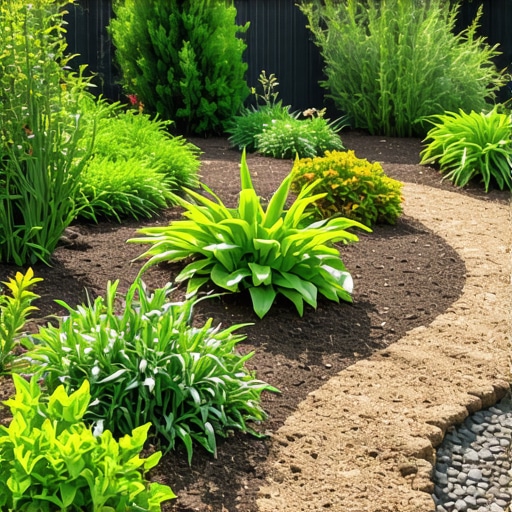
Why You Should Build a Rain Garden to Solve Drainage Issues
Why a Rain Garden is the Ultimate Solution for Stormwater Management
A rain garden is a shallow, engineered depression designed to capture, filter, and infiltrate stormwater runoff from impervious surfaces like roofs, driveways, and patios. By utilizing specific amended soil layers and deep-rooted native plants, these systems recharge local groundwater and mitigate soil erosion more effectively than traditional landscaping drains.
I always drill into my new crew members: if you don’t fix the soil grading first, every plant you put in the ground is just expensive compost. I remember a project in a heavy clay region where the homeowner had spent five figures on fancy perennials and sod, only to have the entire backyard turn into a stagnant pond after the first spring rain. They didn’t understand hydrology. They thought more mulch would soak it up. It won’t. You can’t hide a drainage problem with aesthetics. You have to move the water, or you have to give it a place to go. A rain garden isn’t a hole in the dirt; it is a biological filter. If you don’t calculate the ponding depth versus the infiltration rate of your subsoil, you’re just building a mosquito nursery. Most contractors skip the perc test. We don’t. We measure the drop in inches per hour because the math doesn’t lie.
The Engineering Behind Infiltration and Soil Chemistry
When we talk about hardscaping and lawn care, people forget about hydrostatic pressure. Water is heavy. One inch of rain on a 1,000-square-foot roof produces about 623 gallons of water. If that volume hits a compacted lawn, it shears off the topsoil and carries nitrogen and phosphorus into the storm drains. A rain garden stops this velocity. We use a specific mix of 50 percent sand, 25 percent compost, and 25 percent topsoil to ensure the water moves through the root zone at a rate of roughly 1 to 2 inches per hour. This isn’t just about getting rid of a puddle. It is about soil microbiology. The roots of native grasses like Panicum virgatum (Switchgrass) can reach depths of 10 feet. These roots create macropores in the soil, acting as straws that pull water down into the aquifer.
“A rain garden is a functional landscape feature that uses the chemical, biological, and physical properties of plants, microbes, and soils to remove pollutants from standing water.” – Penn State Agricultural Extension
How deep should a rain garden be?
An effective rain garden should typically have a ponding depth of 4 to 8 inches to ensure that water infiltrates within a 24 to 48-hour window, preventing mosquito breeding and root rot. If the basin is too shallow, it won’t hold the volume; if it is too deep, the lack of oxygen will kill your garden design assets.
| System Type | Primary Function | Maintenance Level | Primary Material |
|---|---|---|---|
| Rain Garden | Infiltration/Filtration | Moderate (Pruning/Weeding) | Amended Soil/Native Plants |
| French Drain | Water Diversion | Low (Cleanouts) | Perforated Pipe/Gravel |
| Dry Well | Subsurface Storage | High (Silt Management) | Plastic Crate/Gravel |
| Bioswale | Conveyance/Pre-treatment | Moderate | Rip-rap/Turf |
The Blueprint for a Ground-Up Rain Garden Build
Eighty percent of the success happens before a single plant is purchased. You start with the perc test. Dig a hole 12 inches deep, fill it with water, and see how long it takes to drain. If it’s still full after 24 hours, you have high clay content and need an underdrain. You aren’t just digging a pit; you are grading a basin with a level bottom. If the bottom isn’t level, the water pools at one end, saturating the roots of plants that might not handle “wet feet” as well as others. Next, you need an overflow strategy. Every rain garden will eventually reach capacity during a 100-year storm event. You need a rip-rap lined notch in the berm to direct excess water away from the house foundation. Don’t skip the shredded hardwood mulch. It stays put better than pine nuggets which float away the second the basin fills up.
- Identify the drainage source (downspout or driveway slope).
- Conduct a soil percolation test to determine infiltration rates.
- Size the garden to 20% of the contributing drainage area.
- Excavate the basin to a depth of 18-24 inches to allow for soil amendments.
- Install a 3-inch layer of double-shredded hardwood mulch.
- Select native plants based on moisture tolerance zones (Center, Slope, Buffer).
“Proper drainage design must account for the peak flow rate and the total volume of runoff to prevent structural failure of the landscape.” – ICPI Hardscape Engineering Standards
What plants are best for rain gardens?
The best plants for a rain garden are native species that can tolerate both extreme saturation and temporary drought, such as Asclepias incarnata (Swamp Milkweed) or Carex species. These plants have evolved to handle the local freeze/thaw cycles and don’t require the synthetic fertilizers that often ruin lawn care profiles.
Don’t be the homeowner who buys plants from a big-box store and expects them to survive a flood. Those plants are often pushed with high-nitrogen fertilizers in a greenhouse and have weak root structures. Go to a local nursery. Look for plants with deep plugs. When you plant them, don’t bury the root flare. If you do, the stem will rot. Keep the mulch an inch away from the base of the plant. In the first year, you’ll need to weed often. Once the native plants establish their canopy, they will shade out the competition. It takes three years for a rain garden to reach its full hydraulic potential. Be patient. Don’t add chemicals. Let the biology do the work. It works.{“type”:”Article”,”mainEntityOfPage”:{“@type”:”WebPage”,”@id”:”https://example.com/rain-garden-drainage”},”headline”:”Why You Should Build a Rain Garden to Solve Drainage Issues”,”description”:”Expert guide on building engineered rain gardens to manage stormwater runoff using horticultural and hardscaping principles.”,”author”:{“@type”:”Person”,”name”:”Veteran Horticulturist”},”publisher”:{“@type”:”Organization”,”name”:”Pro Landscaping Firm”,”logo”:{“@type”:”ImageObject”,”url”:”https://example.com/logo.png”}},”datePublished”:”2023-10-27″}