
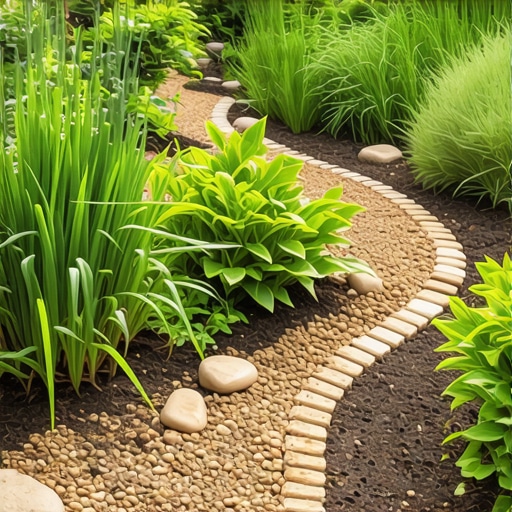
Build a $300 Rain Garden for 2026 Runoff Control
I always drill into my new crew members: if you don’t fix the soil grading first, every plant you put in the ground is just expensive compost. I have spent two decades remediating yards where ‘landscapers’ simply threw mulch at a drainage problem and charged five figures for the privilege. Water is the most destructive force in the residential landscape. It doesn’t care about your aesthetic preferences; it only cares about gravity and the path of least resistance. In 2026, as we face increasingly volatile precipitation patterns, a rain garden isn’t just a garden design choice; it is a critical piece of civil engineering for your property. We are talking about bioretention cells—functional depressions designed to manage the hydrostatic pressure and chemical load of stormwater runoff. Most homeowners think they need a massive budget or a backhoe to fix a soggy yard. They don’t. You can build a professional-grade bioretention system for under $300 if you understand the physics of soil and the biology of native root systems. Stop thinking about flowers and start thinking about infiltration rates.
Siting Your Bioretention Zone
To site a rain garden for 2026 runoff control, locate the basin at least 10 feet from your foundation on a 1% to 5% slope. This positioning prevents hydrostatic pressure from forcing water into your basement while utilizing natural topography to capture stormwater before it reaches municipal sewers. Never place a rain garden over a septic field or directly under the drip line of a mature oak. You will drown the tree or contaminate your leach field. It is a rookie move. Check for underground utilities by calling 811 before you even touch a shovel. One hit on a gas line and your $300 project becomes a $30,000 disaster.
Where is the best place to put a rain garden?
The ideal location is a natural low spot in your yard that receives full to partial sun and is at least 10 feet away from any structure with a basement. It must be positioned to intercept water from a downspout or a paved surface.
“Rain gardens are designed to intercept, infiltrate, and evaporate runoff… to reduce the amount of pollutants reaching local waterways.” – USDA NRCS Technical Note
The Engineering of Infiltration
A functional rain garden requires a specific soil texture that allows for a percolation rate of at least 0.5 inches per hour. If your soil is heavy clay, you aren’t building a rain garden; you are building a bathtub that will breed mosquitoes and rot your plant roots. You must perform a perc test. Dig a hole 12 inches deep, fill it with water, and let it drain completely. Fill it again and clock how long it takes to empty. If it takes longer than 24 hours, you have a compaction problem that needs mechanical aeration or a deeper gravel sump.
“The soil media in a bioretention cell must maintain a high infiltration rate while providing enough organic matter for pollutant sequestration.” – Maryland Department of the Environment
How deep should a rain garden be?
A standard residential rain garden should be excavated to a depth of 6 to 8 inches with a flat bottom to ensure even infiltration. Total depth, including the amended soil and mulch layer, often reaches 18 inches. This depth allows the basin to hold a ‘ponding’ layer of water during a heavy 2026 storm event without overflowing. It must drain within 48 hours. If it doesn’t, the soil biology will shift from aerobic to anaerobic. It will smell. Your plants will die.
| Material | Source | Estimated Cost |
|---|---|---|
| Native Perennial Plugs | Local Nursery | $140 |
| Shredded Hardwood Mulch | Bulk Yard | $40 |
| Sand/Compost Mix | Bulk Yard | $50 |
| 4-inch PVC/Downspout Ext. | Hardware Store | $20 |
| Rental: Manual Sod Cutter | Local Rental | $50 |
The $300 Materials Breakdown
Building a bioretention system on a budget requires strategic sourcing of native plants and bulk aggregates. You skip the big-box stores. Their plants are often pumped with nitrogen and lack the root structure to survive in a fluctuating water table. Go to a wholesale nursery and buy ‘plugs.’ They are cheaper and adapt faster to the local soil chemistry. For your soil mix, you want a ratio of 50% coarse sand, 25% compost, and 25% native topsoil. This creates a high Cation Exchange Capacity (CEC) which filters heavy metals and nitrogen from the runoff. Don’t use dyed mulch. It leaches chemicals. Use double-shredded hardwood mulch. It knits together and won’t float away when the basin fills.
- Step 1: Delineate the perimeter with a garden hose to visualize the 200-300 square foot area.
- Step 2: Remove sod using a manual cutter to preserve the soil profile.
- Step 3: Excavate to 8 inches, keeping the bottom perfectly level.
- Step 4: Install a 4-inch PVC pipe from your downspout to the basin inlet.
- Step 5: Backfill with the amended soil mix, leaving a 3-inch depression.
- Step 6: Plant native species at 12-inch intervals.
- Step 7: Apply 2 inches of hardwood mulch.
Horticultural Selection for 2026 Resilience
In 2026, lawn care and landscaping must prioritize deep-rooted native species that can handle both drought and inundation. We aren’t looking for ‘pretty’—we are looking for ‘workhorses.’ Species like Asclepias incarnata (Swamp Milkweed) and Carex vulpinoidea (Fox Sedge) have root systems that extend 3 to 5 feet into the earth. These roots create macropores in the soil, which increases the infiltration rate over time. As the roots die back and regrow, they pump carbon into the soil, feeding the microbial life that breaks down pollutants like phosphorus. Avoid invasive species at all costs. They might look good for one season, but they will eventually outcompete your functional plants and ruin the local ecology. Planting too deep is the number one killer of nursery stock. Keep the root flare at the soil surface. Don’t create mulch volcanoes. It will rot the stems. Your garden is an engine. Treat it like one. Maintenance in the first year is just weeding and ensuring an inch of water per week. By year three, the system should be self-sustaining. Dig it right the first time. Protect your foundation. Stop the runoff.
![Build a $250 2026 Backyard Waterfall [Step-by-Step]](https://lawnmajesty.com/wp-content/uploads/2026/05/Build-a-250-2026-Backyard-Waterfall-Step-by-Step.jpeg)