Stop Your Pergola from Rotting at the Base
I recently got called out to tear up a $30,000 patio that was sinking because the previous contractor failed to understand the basics of hydrostatic pressure and soil load-bearing capacity. While the pavers were a mess, the real tragedy was the $12,000 custom cedar pergola. The posts were buried deep into the concrete piers, effectively turning the wood into a giant wick for groundwater. After only three years, I could shove a screwdriver six inches into the base of a 6×6 structural post. It was a total loss. This is what happens when you prioritize aesthetics over civil engineering. If you don’t fix the moisture migration at the soil-to-wood interface, your outdoor structure is just expensive firewood waiting to happen.
The Critical Physics of Pergola Base Rot
To stop a pergola from rotting at the base, you must eliminate ground contact by using structural post bases that provide a 1-inch standoff from the concrete pier. This prevents capillary action and allows the wood to remain dry, stopping cellulose-destroying fungi from colonizing the structural fibers. Wood rot is not a mystery; it is a biological process requiring oxygen, a food source (your wood), and a moisture content above 20%. Remove the moisture, and you stop the rot. Most hacks just bury the wood in concrete. That is a crime. Concrete is porous. It holds water against the wood. It creates a coffin for the post.
“A retaining wall doesn’t fail because of the stone; it fails because of the water trapped behind it. The same logic applies to structural timber: it is the trapped moisture, not the wood species, that dictates lifespan.” – Hardscape Engineering Axiom
The Forensic Analysis: Why Your Posts Are Failing
Rot starts where you can’t see it. Below the surface, the wood is subjected to anaerobic conditions and constant saturation. Wood fibers are essentially a bundle of straws. Through capillary action, they suck water up from the bottom of the post. When that water meets the oxygen at the soil line, fungi go to work. They eat the lignin. They break down the cellulose. Your 6×6 post becomes a sponge. You need to understand the frost line. You need to understand soil compaction. If your footer is sitting in a pocket of loose soil, it will hold water. You are essentially building a pool around your post base.
How do I fix a pergola post that is already rotting?
Repairing a rotting pergola post requires temporary structural shoring followed by the removal of the decayed section and the installation of a galvanized steel post-base connector. You must support the header beams with temporary jacks, cut the bottom 12 inches off the rotted post, and pour a new concrete pier that sits 2 inches above the surrounding grade. This is a surgical operation. Do not attempt this without a 20-ton bottle jack and a clear understanding of load paths. If the rot has traveled more than 18 inches up the post, the entire vertical member must be replaced. No wood filler or chemical hardener will restore structural integrity to a weight-bearing post. It won’t work. Replace it.
What is the best wood for pergola posts in wet soil?
The best wood for ground-contact scenarios is Pressure-Treated Southern Yellow Pine rated for Ground Contact (UC4A or higher), though Western Red Cedar and Ipe are superior for above-ground aesthetics. Even the most rot-resistant species like Ipe will eventually succumb if buried directly in soil or concrete. Pressure treatment involves forcing chromated copper arsenate or similar fungicides into the wood cells under high pressure. This makes the wood toxic to fungi and insects. However, when you cut that wood to length, you expose the untreated heartwood. You must treat every end-cut with a copper naphthenate solution. Don’t skip this. It is the only way to maintain the warranty and the lifespan.
| Installation Method | Expected Lifespan | Structural Integrity | Drainage Rating |
|---|---|---|---|
| Direct Burial (Soil) | 5-8 Years | Very Low | F |
| Buried in Concrete | 8-12 Years | Low (Wicking) | D |
| Pier with 1″ Standoff | 25+ Years | High | A+ |
| Wet-Set Bracket | 20+ Years | Medium-High | B |
The Master Landscaper’s Installation Protocol
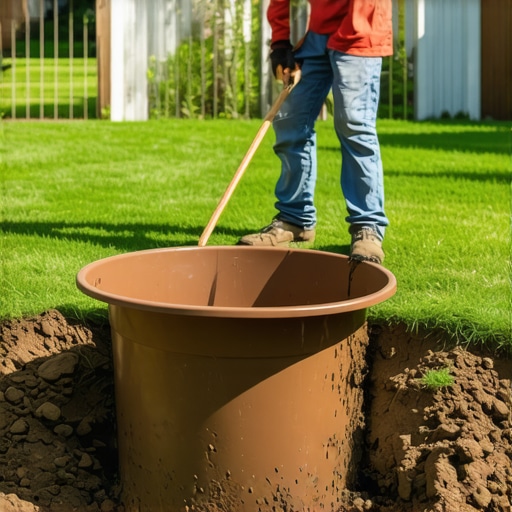
If you want a pergola that outlives your mortgage, follow this sequence. Dig your footer 12 inches below the frost line. For most of the northern US, that is 36 to 42 inches. Fill the bottom 4 inches with compacted 3/4-inch modified gravel. This provides a drainage plane so the concrete pier isn’t sitting in a puddle. Use a Sonotube to form the pier, and ensure the concrete is crowned at the top. This means the center is higher than the edges. Gravity is your friend. It sheds water away from the post base. Use a G90 galvanized steel post base. It elevates the wood 1 inch off the concrete. Air flows underneath. The wood stays dry. The structure stands. It is that simple.
- Excavation: Dig to the local frost line (36″-48″ typically).
- Drainage Base: 4 inches of clean 57 stone for water dissipation.
- Pouring: Use 4,000 PSI concrete mix. High-early strength is fine, but don’t add too much water.
- The Standoff: Install a Simpson Strong-Tie ABA or RPBW bracket.
- End-Cut Sealer: Apply copper naphthenate to the bottom of the post.
“Soil moisture content is the primary driver of fungal decay in structural lumber; maintaining wood-to-concrete separation is the only proven method for long-term survival.” – USDA Forest Products Laboratory Manual
The Micro-Climate Reality
Your local soil matters. If you are dealing with heavy red clay in Georgia or Ohio, your drainage is non-existent. You are essentially building in a bathtub. In these regions, the gravel drainage layer under your concrete pier is not optional. It is the only thing preventing the pier from being pushed up by the freeze-thaw cycle (frost heave). In sandy soils, like Florida or the Jersey shore, drainage is better, but salt spray will eat cheap hardware. You must use 316 Stainless Steel brackets in coastal environments. Zinc-plated steel will fail in five years. I have seen it happen. Use the right hardware for your zip code.