How to Balance pH Levels in Your Koi Pond
Mastering Water Chemistry: How to Balance pH Levels in Your Koi Pond
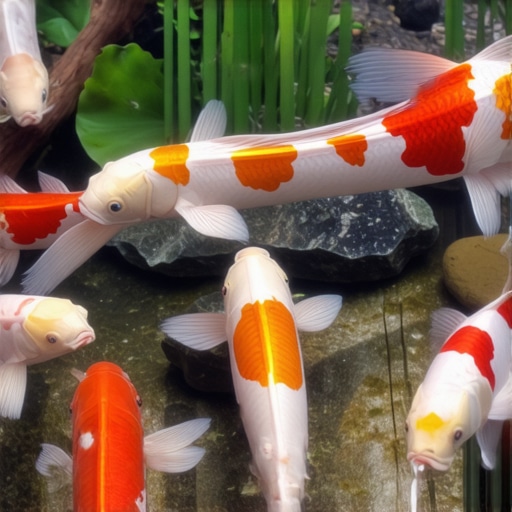
I recently stood on the edge of a custom-built 5,000-gallon pond where the homeowner had effectively created a chemical furnace. A homeowner called me in a panic after they completely torched their front lawn by applying heavy-duty lime to the turf, which then washed directly into the pond during a heavy spring rain. Within forty-eight hours, their prize-winning Kohaku koi were gasping at the surface, their protective slime coats literally dissolving in the alkaline water. This wasn’t a mistake of intention; it was a mistake of engineering and chemistry. Most folks look at a pond and see a decorative feature. I see a closed-loop biological reactor where every decimal point on the pH scale represents a tenfold shift in the environment. If you don’t respect the chemistry, you’re just maintaining an expensive liquid grave.
Understanding the Logarithmic Scale of Pond pH
The pH level of a koi pond measures the concentration of hydrogen ions in the water on a scale of 0 to 14, where 7.0 is neutral. For landscaping professionals and pond owners, the target range is 7.0 to 8.5, as this stability prevents ammonia toxicity and supports the fish’s metabolic functions. Because the scale is logarithmic, a jump from pH 7 to pH 8 means the water is ten times more alkaline. A jump to pH 9 means it is one hundred times more alkaline. Your fish cannot adapt to that speed of change. They will die.
“Water quality is the most critical factor in the health and productivity of aquatic systems; maintaining a stable pH between 6.5 and 9.0 is essential for avoiding physiological stress in fish.” – Texas A&M AgriLife Extension Service
How much modified gravel do I need for a pond edge?
While gravel is vital for hardscaping and pond aesthetics, the type of stone dictates your pH future. You need enough to cover the liner and create a biological shelf, typically calculated by the square footage of the pond’s perimeter. However, using limestone or marble chips is a rookie error. These stones are calcium carbonate-based. They will leach lime into the water forever. This creates a permanent upward pressure on your pH. Use granite, river rock, or slate instead. They are inert. They won’t fight your chemistry.
The Forensic Autopsy: Why pH Swings Kill
In my twenty years of garden design, I’ve found that it’s rarely the pH number itself that kills the fish—it’s the swing. During the day, submerged plants and algae perform photosynthesis, consuming carbon dioxide (CO2). Since CO2 acts as a mild acid in water, its removal causes the pH to spike. At night, the process reverses; plants respire, releasing CO2 and causing the pH to crash. If your water lacks ‘buffering capacity,’ also known as Carbonate Hardness (KH), these swings become wild. Think of KH as the shock absorbers on your truck. Without them, every bump in the road breaks an axle. In a pond, every sunrise and sunset becomes a chemical trauma. We measure KH in parts per million (ppm). You want it at 100-200 ppm to lock that pH in place.
| Material Type | Effect on pH | Recommended Use |
|---|---|---|
| Limestone / Marble | Strong Increase | Avoid in aquatic builds |
| Granite / Basalt | Inert (No Change) | Ideal for hardscaping edges |
| Peat Moss | Decrease | Temporary acidifier for high pH |
| Baking Soda | Increases KH / Stabilizes | Emergency buffering only |
| Concrete Mortar | Strong Increase | Must be sealed or cured |
Remediating High pH: The Landscaper’s Protocol
If you find your pond sitting at a pH of 9.0, do not reach for a bottle of ‘pH Down’ from a big-box store. Those are often dilute acids that provide a temporary fix but cause a massive rebound effect. First, test your KH. If the KH is low, the pH will be erratic. Second, look at your hardscaping. Is there raw concrete or mortar in contact with the water? If so, the lime is leaching out. You must seal the concrete or wait for it to fully cure and then perform multiple water changes. Third, look at your lawn care routine. Are you using high-phosphorus fertilizers near the pond? Runoff triggers algae blooms. Algae blooms drive pH swings. It is a cycle of failure. Stop the runoff at the source.
“The stability of the pH in an intensive pond system is directly related to the total alkalinity; a minimum alkalinity of 50 mg/L is required to prevent extreme fluctuations.” – FAO Fisheries Technical Manual
What is the best pH level for a koi pond?
The ideal pH level for koi is 7.5, though they can thrive anywhere between 7.0 and 8.5 as long as the level remains consistent. Consistency is more important than the specific number. A stable pH of 8.2 is infinitely better for a fish than a pH that bounces between 7.0 and 8.0 every twelve hours. High pH also increases the toxicity of ammonia. At a pH of 8.5, ammonia is significantly more lethal than at 7.0. If you have a biological filter failure and high pH, you have a disaster. Don’t skip the testing. Use a liquid drop kit, not the cheap strips. The strips lie.
The Maintenance Checklist for Aquatic Stability
- Weekly: Test pH at the same time of day (preferably late afternoon when it is at its peak).
- Weekly: Test KH levels; ensure they remain above 100 ppm.
- Monthly: Inspect pond hardscaping for mortar erosion or stone degradation.
- Seasonally: Clean out decaying organic matter from the bottom. Muck lowers pH as it rots.
- After Rain: Check for landscaping runoff entry points and fix soil grading.
The Hardscape Impact: Concrete and Drainage
Many hardscaping contractors don’t understand hydrostatic pressure or chemical leaching. I’ve seen beautiful waterfalls built with stacked stone and standard mortar that killed every fish in the pond within a week. The lime in the mortar raises the pH to 10 or 11. You must use pond-safe sealants or specialized low-lime mortars for aquatic builds. Furthermore, the garden design must include a mechanical barrier—a raised berm or a French drain—to ensure that lawn care chemicals and fertilizers never enter the pond. One inch of contaminated runoff can ruin 2,000 gallons of pristine water. Grading is the most ignored aspect of pond building. If your yard slopes toward the pond, you’re doing it wrong. Fix the grade or lose the fish. It is that simple. There are no shortcuts in civil engineering.
How to lower pH in a koi pond naturally?
The safest way to lower pH is to address the source of alkalinity and introduce organic tannins. Adding high-quality peat moss in a mesh bag to your filter system will slowly release humic and tannic acids. This provides a gentle downward pressure on the pH without the shock of liquid acids. You can also increase aeration. While aeration drives off CO2 (which can technically raise pH), it is vital for the nitrifying bacteria that process fish waste. These bacteria produce acid as a byproduct of the nitrogen cycle. A healthy, working bio-filter naturally wants to pull the pH down. If your pH is constantly climbing, your filter might be undersized or clogged with muck. Clean it. Maintain the flow. The biology will do the work for you if you provide the infrastructure.
![Why Your 2026 Pond Pump Keeps Clogging [Fix]](https://lawnmajesty.com/wp-content/uploads/2026/06/Why-Your-2026-Pond-Pump-Keeps-Clogging-Fix.jpeg)