
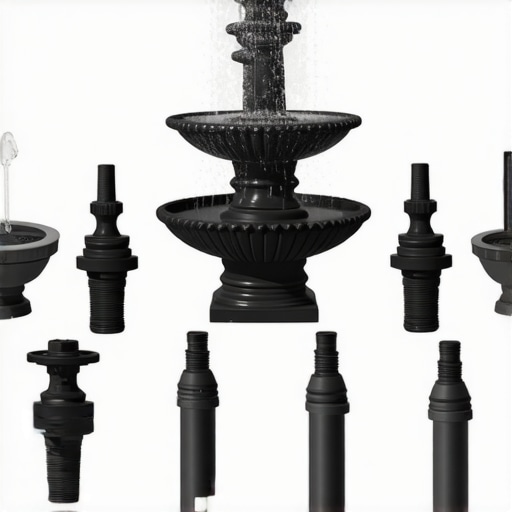
Choosing the Right Pump for a Tiered Fountain
The Hardscape Autopsy: Why Most Tiered Fountains Fail Within Two Years
I recently performed a forensic teardown on a $22,000 tiered granite fountain that had stopped flowing entirely just eighteen months after installation. The homeowner was furious, blaming the stone manufacturer, but the autopsy revealed a much grittier reality: a total systemic failure caused by an undersized, cheap direct-drive pump and a complete lack of hydraulic understanding. The previous contractor had used 1/2-inch flexible vinyl tubing for a 7-foot vertical lift, ignoring the massive friction loss and the fact that the pump was operating at the very edge of its performance curve every single second. The motor eventually cooked itself because it couldn’t dissipate heat against the backpressure. This isn’t just about moving water; it is about managing weight, pressure, and electrical efficiency. If you do not calculate your vertical lift and friction loss before buying a pump, you are just throwing money into a wet hole in the ground. Real hardscaping requires engineering, not guesswork. It will fail. Every time.
Understanding Gallons Per Hour (GPH) Requirements for Tiered Structures
To calculate the correct Gallons Per Hour (GPH) for a tiered fountain, you must measure the diameter of the topmost tier and provide 50 to 100 GPH per inch of width depending on whether you want a delicate trickle or a heavy sheet of falling water. This flow rate must be measured at the actual height of the outlet, not at the pump base. Determining the desired visual effect is the first step in hydrological design. For a 4-inch top tier, a minimum of 200 GPH reaching the top is required for a standard splash. However, most people buy a 200 GPH pump and forget that gravity exists. You need to look at the pump curve. A pump rated for 500 GPH at zero feet might only push 150 GPH at a 5-foot height. Always over-spec your pump and use a ball valve to dial back the flow. You can always restrict a pump, but you can never force it to do more than its motor allows.
How much modified gravel do I need for a fountain base?
A stable fountain base requires a minimum of 6 inches of compacted 21A or 3/4-inch modified gravel topped with a 1-inch leveling layer of coarse sand or stone dust. This prevents the tiers from shifting, which would otherwise cause the water to spill unevenly and ruin the 360-degree flow.
What size pump do I need for a 4-foot tiered fountain?
For a fountain with a 4-foot vertical lift and a 5-inch wide top spillway, you should select a pump rated for at least 800 to 1,000 GPH at zero head to ensure it delivers the necessary 250 to 500 GPH at the 4-foot mark after accounting for friction.
The Science of Total Dynamic Head (TDH) and Friction Loss
Total Dynamic Head (TDH) is the sum of the vertical distance the water must travel plus the resistance caused by the pipe walls, elbows, and valves, measured in equivalent feet of head. Every 10 feet of horizontal pipe or a single 90-degree elbow adds approximately one foot of friction head to your calculation.
“A water feature pump’s longevity is inversely proportional to the head pressure it must overcome without proper pipe sizing.” – International City/County Management Association (ICMA) Hardscape Guidelines
If you use a pipe diameter that is too small, you increase the velocity of the water, which creates massive friction. For flows over 500 GPH, you should never use anything smaller than 3/4-inch ID (inner diameter) tubing. If you’re pushing 1,000 GPH or more, move to 1-inch or 1.5-inch Schedule 40 PVC. Reducing the pipe size to save five dollars on a fitting is the fastest way to burn out a magnetic drive motor. The pump has to work twice as hard to squeeze that water through a needle, and the heat buildup will degrade the internal seals.
Comparing Pump Technologies: Mag-Drive vs. Direct-Drive
| Feature | Magnetic Drive (Mag-Drive) | Direct-Drive | | :— | :— | :— | | Energy Efficiency | Extremely High | Moderate to Low | | Maintenance | Low (one moving part) | High (requires oil/seals) | | Longevity | 3 to 5 years | 1 to 3 years | | Best Use | Continuous tiered flow | High-pressure sprays/Nozzles | | Cost | Moderate | High | | Oil Leaks | Impossible | Potential Risk |
Critical Checklist for Fountain Pump Installation
- Verify GFCI Protection: Ensure the pump is plugged into a Class A Ground Fault Circuit Interrupter to prevent electrocution.
- Level the Basin: Use a 4-foot level to ensure the base tier is perfectly horizontal; 1/8 of an inch off-level will ruin the water sheet.
- Install a Pre-Filter: Even clear-looking water has debris. A pre-filter prevents the impeller from clogging with hair, algae, or grit.
- Check Tubing Kinks: Use braided vinyl or rigid PVC. Standard clear vinyl often kinks when it gets warm, cutting flow by 90 percent.
- Submerge Fully: Most fountain pumps are water-cooled. Running them partially submerged will melt the housing.
Thermal Overload and Mechanical Resilience
The biggest enemy of a tiered fountain pump is heat. In many designs, the pump sits in a small reservoir that can run dry due to evaporation. Without water to cool the motor, the internal temperature spikes. Professional-grade pumps include a thermal cutoff switch that kills power before the copper windings melt. If your pump keeps turning off and on, you have a head pressure or an aeration problem.
“The hydraulic efficiency of a centrifugal pump is dictated by the relationship between impeller velocity and the resistance of the discharge line.” – Journal of Agricultural Engineering Research
Do not ignore the sound of the pump. If it is humming loudly or vibrating against the stone, you are experiencing cavitation. This happens when the pump is trying to move more water than it can pull in, or when it’s fighting too much backpressure. Use rubber vibration pads under the pump to save the motor and your sanity. Don’t skip the winterization process either. If you live in a freeze-thaw zone, pull the pump in October. A single night of frozen water inside the volute will crack the plastic housing. Store it in a bucket of water in the garage to keep the seals from drying out. These are the details that separate a master landscaper from a weekend warrior with a shovel.
How to prevent fountain pump burnout?
Prevent pump burnout by maintaining a consistent water level with an auto-fill valve and ensuring the pump’s GPH rating is roughly 1.5 times the calculated requirement at your specific head height to reduce mechanical strain.

![Build a $200 Solar Pond Fountain [2026 DIY Project]](https://lawnmajesty.com/wp-content/uploads/2026/05/Build-a-200-Solar-Pond-Fountain-2026-DIY-Project.jpeg)