The Secret to Growing Massive Hydrangeas
The Foundation of Giant Blooms: Why Soil Physics Beats Luck
To grow massive hydrangeas, you must prioritize soil structure and cation exchange capacity over generic fertilizers, ensuring a drainage-first environment that allows Hydrangea macrophylla roots to expand without anaerobic stress or root rot. Most failures stem from poor pore space and compaction.
I always drill into my new crew members: if you don’t fix the soil grading first, every plant you put in the ground is just expensive compost. I’ve seen $50,000 garden design projects turn into a graveyard of wilted stalks because the installer didn’t understand hydrostatic pressure or the basic soil-water-air ratio. We aren’t just digging holes; we are engineering biological reactors. If that soil doesn’t percolate at a rate of at least one inch per hour, your hydrangea will never reach its genetic potential. It will sit there, stunted, with yellowing leaves and microscopic blooms, while you dump 10-10-10 on it in a desperate, failing attempt to fix a structural problem with chemistry.
“A retaining wall doesn’t fail because of the stone; it fails because of the water trapped behind it.” – Hardscape Engineering Axiom
The same logic applies to your root zone. If the drainage isn’t there, the water sits. If the water sits, the oxygen is pushed out. No oxygen means no ATP production in the roots, and no ATP means no monster blooms. You need to think about the soil horizons. Most residential yards have two inches of loam over compressed subsoil that has the bulk density of concrete. You have to break that pan layer.
The Chemistry of Pigmentation and Flower Volume
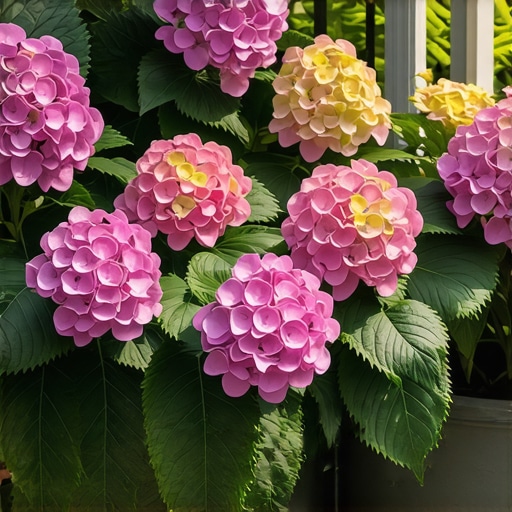
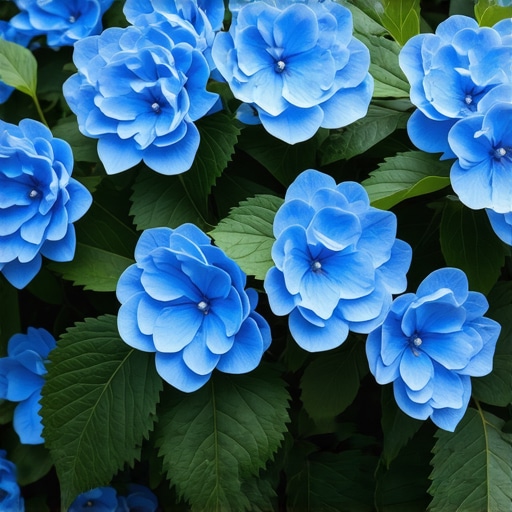
Massive hydrangea blooms are achieved by manipulating aluminum ion availability through soil pH management and increasing organic matter content to support heavy moisture retention without saturation. A pH of 5.2 to 5.5 is the critical threshold for blue pigmentation in macrophylla varieties.
You want those dinner-plate sized heads? You need to understand delphinidin-3-glucoside. This is the anthocyanin responsible for the color, but it only works if aluminum can move from the soil into the plant. In alkaline soils (pH 7.0+), aluminum is locked up. It’s there, but the plant can’t touch it. You can dump aluminum sulfate until you’re blue in the face, but if your base saturation is off, it won’t matter. You need to acidify the substrate using elemental sulfur or ferrous sulfate months before you expect results. It’s a long-game engineering problem, not a quick-fix task.
How much water do hydrangeas need daily?
For optimal biomass production, hydrangeas require 1 inch of water per week delivered in deep, infrequent cycles to encourage geotropic root growth. During transpiration stress (above 85°F), they may require supplemental irrigation of 0.5 gallons per day depending on evapotranspiration rates and mulch depth.
| Amendment Type | Function in Soil | Application Rate (per 100 sq ft) |
|---|---|---|
| Elemental Sulfur | Lowering pH for Blue Blooms | 5 lbs (in sandy loam) |
| Pine Bark Fines | Improving Pore Space | 3-4 inch layer tilled to 8 inches |
| Aluminum Sulfate | Rapid Acidification/Color Shift | Follow label strictly (avoid salt burn) |
| Mycorrhizal Fungi | Increasing Root Absorption | Inoculate at planting hole |
[IMAGE_PLACEHOLDER]
The Hardscape Interface: Heat Sinks and Microclimates
In high-end landscaping, the relationship between hardscaping and plant health is often ignored. A retaining wall or paver patio acts as a thermal mass, radiating heat long after the sun goes down. If you plant your hydrangeas against a limestone wall, the reflected heat will scorch the leaves and the calcium carbonate leaching from the mortar joints will spike your soil pH, turning your blue flowers a muddy pink.
You must maintain a buffer zone. I recommend a minimum of 24 inches between any masonry structure and the root flare of the plant. This allows for air circulation and prevents the rhizosphere from overheating. We often install drip-line irrigation with pressure-compensating emitters specifically in these zones to combat the desiccation caused by hardscape radiation.
“Hydrangea color is not just a genetic trait; it is a bio-chemical response to the cation exchange capacity of the host substrate.” – Agronomy Research Manual
What is the best fertilizer for monster blooms?
The best fertilizer for massive growth is a slow-release 15-30-15 (High Phosphorus) formula applied at the drip line as buds set, supplemented with liquid seaweed for micronutrient availability. High nitrogen (over 20%) will produce excessive foliage but weak stems that flop under the weight of the flowers.
The Ground-Up Installation Checklist
Stop treating your plants like annuals. If you want them to live 30 years and grow to 6 feet, follow this site-prep protocol. Don’t skip these steps. It will rot if you do.
- Perform a Perc Test: Dig a 12-inch hole, fill with water. If it hasn’t drained in 4 hours, install a French drain or raised bed.
- Check the Root Flare: Never bury the stem base. The root flare must be 1 inch above the finished grade to prevent stem girdling.
- Excavate the Hole: Make the hole three times wider than the root ball but no deeper. We want lateral root expansion.
- Amend the Backfill: Mix 70% native soil with 30% composted organic matter. Do not use 100% bagged potting soil or you’ll create a perched water table.
- The Tamping Rule: Use your hands, not your boots. Compacting the soil with your body weight destroys macropores.
- Mulching: Apply 3 inches of triple-shredded hardwood mulch. Keep it 2 inches away from the main stem to prevent fungal infection.
Pruning for Structural Integrity
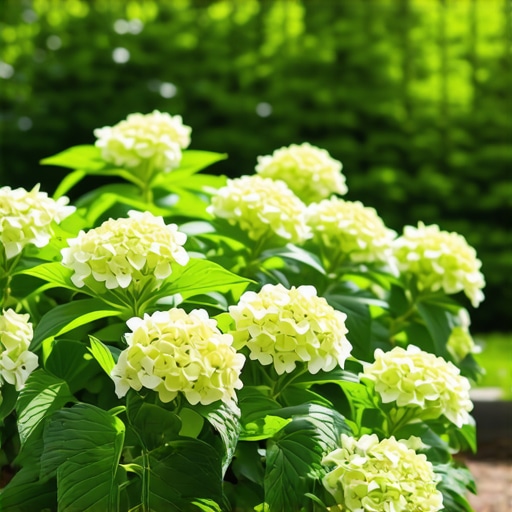
Most lawn care hacks scalp hydrangeas at the wrong time. If you have a Macrophylla or Quercifolia (Oakleaf), they bloom on old wood. If you prune them in the spring, you are literally cutting off this year’s flower embryos. You prune these immediately after the bloom fades in late summer. If you have Paniculatas (like Limelight), they bloom on new wood. You can take a chainsaw to those in late winter and they’ll still come back beaming. Know your species before you grab the shears. I’ve seen gardeners lose three years of growth because they didn’t know the difference between terminal buds and lateral shoots.
![Stop Winter Salt Damage on 2026 Roadside Hedges [Fix]](https://lawnmajesty.com/wp-content/uploads/2026/05/Stop-Winter-Salt-Damage-on-2026-Roadside-Hedges-Fix.jpeg)