The Best Low-Maintenance Shrubs for Small Side Yards
Developing a High-Performance Side Yard Ecosystem
The best low-maintenance shrubs for small side yards must possess specific genetic traits: compact growth habits, high tolerance for shade or reflected heat, and non-aggressive root systems. Selecting Ilex glabra or Taxus x media ensures structural integrity without the need for constant pruning or chemical intervention. I always drill into my new crew members: if you don’t fix the soil grading first, every plant you put in the ground is just expensive compost. I have seen countless homeowners waste thousands of dollars on nursery stock only to have it die within six months because they ignored the hydrostatic pressure and soil compaction issues common in narrow corridors between houses. Side yards are frequently the most neglected zones in landscaping, serving as the primary drainage route for the entire property. When you combine poor drainage with the ‘canyon effect’ of two adjacent walls, you create a biological death trap for standard garden center plants. To succeed, you must think like an engineer before you think like a gardener.
“Soil compaction is the single most common cause of plant failure in urban landscapes, as it restricts pore space and prevents the gas exchange necessary for root respiration.” – Penn State Extension
The Physics of Side Yard Drainage and Soil Preparation
Preparing a side yard for garden design requires a 2-percent minimum slope away from the foundation to prevent basement seepage and root rot. Professionals utilize a percolation test to determine the infiltration rate of the soil before selecting species like Physocarpus opulifolius. Most side yards suffer from ‘B-horizon’ soil exposure, which is heavy clay stripped of organic matter. You cannot simply dig a hole in this ‘bathtub’ and expect a shrub to thrive. You must break the compaction pan. We use a broadfork or a mechanical aerator to reach a depth of 12 inches, then incorporate 3 inches of leaf mulch or aged compost to jumpstart the soil microbiology. This process increases the Cation Exchange Capacity (CEC), allowing the soil to hold onto nutrients rather than letting them leach into the groundwater. Don’t skip the soil test. A pH imbalance will lock out micronutrients, making your expensive shrubs look chlorotic regardless of how much fertilizer you throw at them.
How do I test drainage in a narrow side yard?
To test drainage, dig a hole 12 inches deep and fill it with water; if it takes longer than 4 hours to drain, you have a compaction issue or a high water table. In these cases, you must install a French drain or a dry creek bed before planting to protect the root flares of your shrubs.
Top Shrub Selections for Restricted Footprints
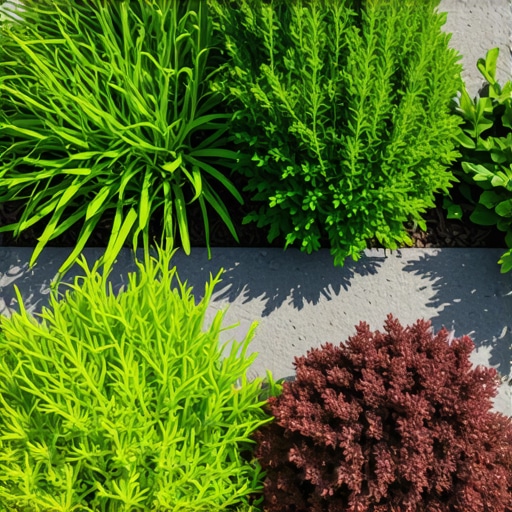
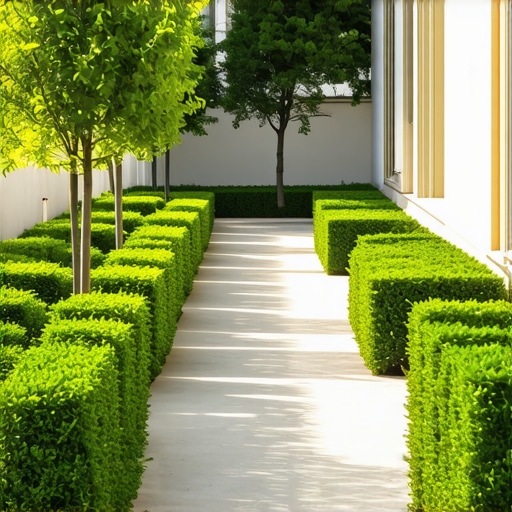
Choosing the right species for lawn care and side yard borders requires balancing aesthetics with growth rate. Dwarf Boxwoods (Buxus microphylla) are a staple for a reason: they are predictably slow-growing and tolerate the shearing required in 3-foot wide paths. However, for a more resilient, native-focused approach, I recommend Inkberry Holly (Ilex glabra ‘Shamrock’). It provides the same evergreen structure but handles ‘wet feet’ significantly better than Boxwood. If your side yard is a sun-scorched alleyway, look toward Dwarf Ninebark or Potentilla. These species have evolved to survive high-stress environments. For the deep shade found under eaves, Japanese Yews (Taxus) remain the gold standard. They are virtually indestructible if they have adequate drainage. Avoid invasive species like Japanese Barberry, which may seem low-maintenance but will eventually choke out local ecosystems and harbor tick populations.
[image_placeholder]
| Shrub Species | Mature Width | Light Requirement | Growth Rate |
|---|---|---|---|
| Ilex glabra ‘Shamrock’ | 3-4 ft | Full Sun to Part Shade | Slow/Moderate |
| Buxus ‘Green Velvet’ | 2-3 ft | Part Sun to Part Shade | Very Slow |
| Taxus x media ‘Densiformis’ | 4-6 ft (sheared) | Full Shade to Full Sun | Moderate |
| Hydrangea quercifolia ‘Pee Wee’ | 3 ft | Part Shade | Moderate |
| Physocarpus ‘Tiny Wine’ | 3-4 ft | Full Sun | Moderate |
The Engineering of Planting: Root Flares and Soil PSI
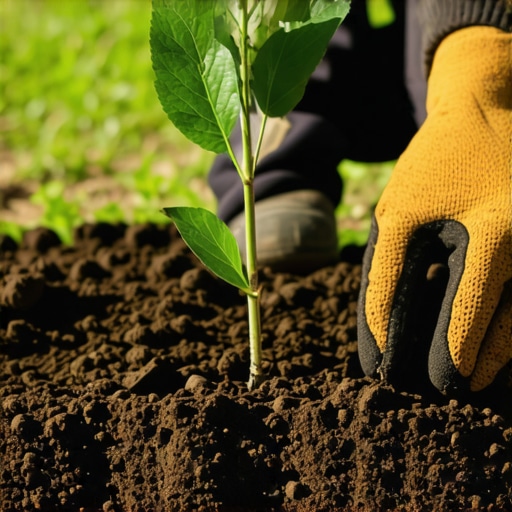
Installation is where most hardscaping contractors fail when they try to do ‘softscaping.’ The root flare—the point where the trunk widens at the base—must be 1 inch above the surrounding grade. Planting too deep causes bark rot and prevents oxygen from reaching the feeder roots. We use a hand tamper to firm the soil around the base, but we never exceed 15-20 PSI of pressure; over-tamping destroys the soil structure you just worked to build. After the shrub is set, apply a 2-inch layer of double-shredded hardwood mulch, but keep it 3 inches away from the stem. Creating a ‘mulch volcano’ is a death sentence for shrubs, as it invites borers and fungal pathogens. For irrigation, ditch the overhead sprinklers. They promote leaf spot. Install a drip irrigation line with emitters rated for 0.5 to 1.0 gallons per hour. This delivers water directly to the rhizosphere, reducing evaporation and keeping the foliage dry.
“A retaining wall doesn’t fail because of the stone; it fails because of the water trapped behind it, which is why integrated drainage is the priority in any side yard build.” – Hardscape Engineering Axiom
How much modified gravel do I need for a patio base next to shrubs?
For a stable hardscaping project near shrubs, you need a minimum of 6 inches of compacted 2A modified gravel. This provides the structural load-bearing capacity while the gaps between the stones allow for minor lateral water movement, preventing the soil under your shrubs from becoming an anaerobic swamp.
The Long-Term Maintenance Blueprint
Low-maintenance does not mean ‘no maintenance.’ The first two years are the ‘establishment phase.’ During this time, your shrubs need 1 inch of water per week, delivered in one or two deep soakings rather than daily light mists. This forces the roots to grow downward, making the plant drought-resistant in the long run. Pruning should be corrective, not cosmetic. Remove the ‘three Ds’: dead, damaged, or diseased wood. If you selected the right cultivar, you should only need to prune once a year to maintain the walkway clearance. Monitor your NPK ratios annually with a professional soil test. Most lawn care companies will try to sell you high-nitrogen fertilizers that cause a flush of weak, sappy growth that attracts aphids. Stick to a slow-release organic fertilizer in early spring to support steady, lignified wood development. Your side yard should be an asset, not a chore.
- Conduct a 24-hour percolation test to identify drainage barriers.
- Grade the soil at a 2% slope away from all structural foundations.
- De-compact the soil to a depth of 12 inches using a broadfork.
- Select shrubs based on mature width to avoid ‘over-planting’ the space.
- Identify the root flare and ensure it is visible after backfilling the hole.
- Install a 1-gph drip irrigation system on a smart timer.
- Apply 2 inches of mulch, avoiding contact with the shrub stems.
- Monitor for pests like scale or mites during the heat of July.
![4 Fragrant 2026 Night-Blooming Plants [Zone 7]](https://lawnmajesty.com/wp-content/uploads/2026/06/4-Fragrant-2026-Night-Blooming-Plants-Zone-7.jpeg)