Creating a Pet-Friendly Yard Without Grass
The Myth of the Perfect Dog Lawn
Pet-friendly landscaping requires a fundamental shift from traditional garden design to a focus on civil engineering and soil microbiology. To successfully eliminate grass, homeowners must address the core issues of compaction, nitrogen toxicity from urine, and hydrostatic pressure in high-traffic zones to prevent the yard from becoming a mud pit.
I recently got called out to tear up a $30,000 patio that was sinking because the previous contractor failed to account for the specific drainage needs of a multi-dog household. They had laid pavers on a standard sand bed without considering that three German Shepherds would be sprinting across the same two-foot radius every single day. Within six months, the base layer had shifted, the polymeric sand was gone, and the yard smelled like a neglected kennel. The homeowner was furious, but the math didn’t lie. You cannot fight physics with a pretty picture. We had to excavate eight inches deep, install a true permeable aggregate system, and rethink the entire site’s grading. It was a forensic lesson in why grass is the weakest link in a high-energy pet environment. Grass is a biological engine that needs consistency, and dogs are the definition of chaos.
“A retaining wall doesn’t fail because of the stone; it fails because of the water trapped behind it.” – Hardscape Engineering Axiom
The Engineering Behind Grass-Free Surfaces
Hardscaping for pets involves selecting materials that provide structural stability, thermal regulation, and liquid permeability to manage waste and wear. Surfaces like decomposed granite, micro-clover, or permeable pavers allow for rapid drainage and prevent the soil compaction that leads to surface runoff and erosion.
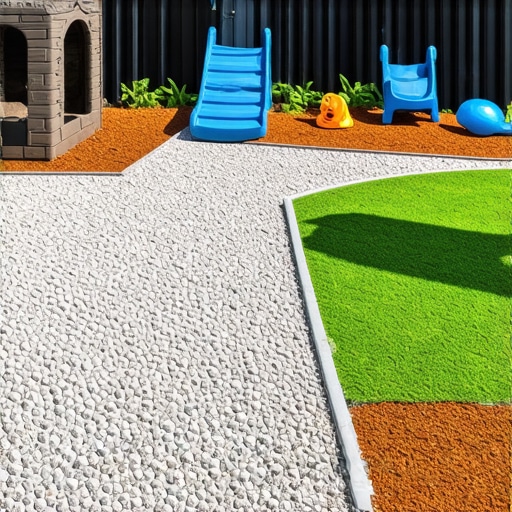
When you remove turf, you are removing a massive sponge. You must replace it with something more efficient. For most of my clients, I recommend an open-graded aggregate system. This isn’t your standard driveway gravel. We are talking about #57 stone for the base, followed by a #8 stone for the setting bed. This creates a high void space ratio. When your dog relieves themselves, the urine doesn’t sit on the surface and cook in the sun; it flushes through the aggregate layers into the subgrade. If you have heavy clay soil, you must install a French drain or a catch basin to move that liquid away from the foundation. Don’t skip the geotextile fabric. Without a high-quality non-woven fabric between the soil and your stone, the dirt will eventually migrate upward and choke your drainage. It is a slow death for your yard. [IMAGE_PLACEHOLDER]
How much modified gravel do I need for a patio base?
To calculate your base material, multiply the square footage of the area by the depth of the excavation (at least 4-6 inches for pets). For a 200-square-foot dog run at a 6-inch depth, you will need approximately 3.7 cubic yards of compacted aggregate. Factor in a 20 percent compaction rate for 21A modified stone. Accuracy in these measurements prevents project failure.
| Material | Durability | Drainage Rate | Heat Retention | Estimated Cost (per sq ft) |
|---|---|---|---|---|
| Decomposed Granite | High | Moderate | Medium | $2.00 – $5.00 |
| Pea Gravel | Moderate | Excellent | High | $1.50 – $4.00 |
| Permeable Pavers | Extreme | Superior | Low | $15.00 – $25.00 |
| Micro-Clover | Low | High | Very Low | $0.50 – $1.00 |
Managing Nitrogen and Soil Chemistry
The primary enemy of lawn care in pet-dense areas is urea nitrogen, which reaches levels of 46-0-0 in canine urine, causing osmotic stress and root death. By transitioning to hardscaping or pet-safe mulch, you mitigate the chemical burn on vegetation while managing the pH levels of the remaining soil through strategic irrigation and amendments.
People think the yellow spots in a yard are from acid. They aren’t. It is salt and nitrogen. It is literally too much of a good thing. When you switch to a grass-free yard, you still have to manage these chemicals. If you use wood chips, realize they will break down faster in high-nitrogen environments. This is carbon-to-nitrogen ratio science at work. The urine speeds up the decomposition of the wood. You need to use a durable, cedar mulch or hemlock because they contain natural resins that resist rot longer than cheap triple-shredded hardwood. Avoid cocoa mulch at all costs; it contains theobromine, which is toxic to dogs. Stick to the basics. Go for a 3-inch depth. Any deeper and you risk fungal growth that could irritate your dog’s paws.
“Successful turf management requires maintaining a balance between soil oxygen, moisture, and nutrient availability, a balance easily disrupted by high animal traffic.” – Penn State Extension
Are wood chips safe for dogs’ paws?
Standard engineered wood fiber (EWF) is the safest choice for dogs because it is processed to remove sharp slivers and is often used in playgrounds. Avoid dyed mulches, which can contain CCA (Chromated Copper Arsenate) or other chemical stabilizers that may cause allergic reactions or toxicity if ingested during play. Always check the source of your mulch before installation.
Selecting Resilient Flora and Arboriculture
In a grass-free garden design, plants must be selected for physical resilience and non-toxicity to ensure pet safety and landscape longevity. Focus on native species with high traffic tolerance and ensure all root flares are exposed to prevent girdling roots in high-use pet zones.
Stop planting delicate perennials where your dog runs. They will be crushed. Use ornamental grasses like Switchgrass (Panicum virgatum) or Karl Foerster if you want height and texture; they are tough as nails and can handle a bump from a 100-pound Lab. If you are planting trees, watch your mulch volcanoes. I see this every day: homeowners piling mulch against the trunk. It will rot the cambium layer. Your dog will pee on that mulch, the nitrogen will concentrate against the bark, and you will have a dead tree in three years. Keep the root flare visible. Give the tree a drip-line irrigation system that flushes the soil regularly to keep the salinity down.
- Install a perimeter path: Dogs naturally patrol fences. Use crushed stone or rubber mulch in a 2-foot wide strip along the boundary.
- Use raised beds: Protect your edible garden from contaminants by keeping it 18-24 inches off the ground.
- Select paw-friendly textures: Avoid lava rock or jagged crushed limestone which can cut pads.
- Establish designated digging zones: A sand pit filled with play sand can save the rest of your landscaping from destructive behavior.
- Monitor soil moisture: Use a tensiometer to ensure your drainage system is actually moving water away from the surface.
Maintaining the Grass-Free Ecosystem
Maintenance for a hardscape-heavy pet yard focuses on sanitation, sediment control, and weed suppression. Regular pressure washing of stone surfaces and the replenishment of polymeric sand or aggregate fines are necessary to prevent organic matter buildup and keep the permeability high.
Do not think that no-grass means no-work. You have to be proactive. If you have decomposed granite, you will need to rake it occasionally to prevent surface crusting. If you have permeable pavers, you need to vacuum the joints once a year to remove the hair and skin cells that dogs shed. Yes, dog dander can clog geotextile fabric over time. It is a biological reality. Use an enzymatic cleaner that specifically breaks down uric acid crystals. Do not just spray it with a hose; that just pushes the salt deeper into your subgrade. You need the enzymes to eat the organic compounds. Keep your grading sharp. A 2 percent slope away from the house is the industry standard for a reason. If you lose that pitch, you lose the yard. Keep it dry, keep it clean, and keep the engineering in mind. Your yard isn’t just a place for the dog to go; it is a managed ecosystem that requires a firm hand and a technical approach. Forget the mow-and-blow mindset. This is asset management for your property value.