Stop 2026 Soil Leaching: 3 Fertilizer Rules
The Chemical Nightmare: A Forensic Autopsy of a Torched Landscape
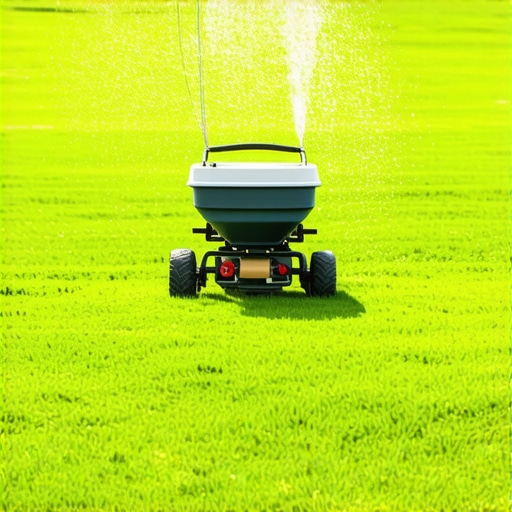
I recently stepped onto a property where the front lawn looked like a blue-tinted moonscape, smelling of sharp ammonia and desperation. The homeowner, trying to get a jump on the 2026 growing season, had dumped over 150 pounds of high-nitrogen synthetic pellets onto a dormant fescue lawn just before a three-day rain event. By the time I arrived, the nitrogen hadnt just burned the crown of the grass; it had leached through the sandy loam and into the local storm drain, leaving the soil sterile and the turf dead. This is the reality of improper fertilization. It is not a vitamin boost; it is a chemical intervention that, when botched, destroys soil biology and wastes hundreds of dollars in runoff. Most homeowners and ‘mow-and-blow’ crews treat fertilizer like salt on a steak, but in reality, it is more like fuel injection in a high-performance engine. If the timing or the mixture is off, the system stalls.
[IMAGE_PLACEHOLDER]
What is Soil Leaching?
Soil leaching is the downward movement of dissolved nutrients, particularly nitrates and sulfates, below the root zone where plants can no longer access them. This process occurs when irrigation or rainfall exceeds the soils water-holding capacity, pulling vital minerals into the groundwater and leaving the rhizosphere depleted of essential elements for chlorophyll production and root development.
Rule 1: Master the NPK Ratios and Controlled-Solubility Technology
NPK ratios represent the percentage of nitrogen, phosphorus, and potassium in a bag, and for 2026 soil management, using water-soluble, quick-release nitrogen is a recipe for failure. To stop leaching, you must switch to controlled-release fertilizers (CRF) or polymer-coated urea that relies on temperature and microbial activity to break down rather than just water. Nitrogen is highly mobile because the nitrate molecule carries a negative charge, just like soil particles. Since opposites attract and likes repel, the soil literally pushes the nitrate away, allowing it to wash down through the profile. By using slow-release tech, you ensure the nitrogen is metered out at a rate the plant can actually ingest. If you see ‘urea’ listed as the primary source without a coating, put the bag back on the shelf. You want IBDU (Isobutylidene diurea) or sulfur-coated urea to ensure the nutrients stay in the top 6 inches of the soil profile where the roots live. Stop feeding the water table and start feeding the plant.
“Leaching is a primary pathway for nitrogen loss in turfgrass systems, particularly in sandy soils where the cation exchange capacity is low and macropore flow is high.” – Penn State Center for Turfgrass Science
How do I stop fertilizer from washing away in heavy rain?
To prevent fertilizer runoff, apply nutrients only when the soil is slightly moist but not saturated, and avoid applications 48 hours before a predicted heavy rain event. Using granulated slow-release formulas rather than liquid applications provides a physical buffer that keeps nutrients in the root zone longer.
Rule 2: Synchronize with Soil Microbiology and pH Levels
Soil pH dictates the availability of every nutrient you put in the ground; if your pH is 5.5, you can dump nitrogen all day and the plant will still starve because the chemical bonds wont break. Before you buy a single pound of fertilizer, you need a soil test to measure your Cation Exchange Capacity (CEC). CEC is essentially your soils ability to hold onto positively charged ions like potassium, calcium, and magnesium. Sandy soils have a low CEC, meaning they have very little ‘grip’ on nutrients. To combat this, we integrate organic matter, such as leaf compost or humic acid, to increase the number of binding sites in the soil. This creates a biological net that catches the fertilizer before it leaches. Don’t listen to the big-box store clerk who tells you to just ‘lime it’ every year. Over-liming can lead to phosphorus lockout, which is just as damaging as high acidity. Precision is the only way to maintain a professional-grade lawn.
| Fertilizer Type | Release Mechanism | Leaching Risk | Recommended Use |
|---|---|---|---|
| Quick-Release Synthetic | Water Dissolution | Very High | Fast green-up (Rarely recommended) |
| Sulfur-Coated Urea | Microbial/Water | Moderate | General lawn maintenance |
| Polymer-Coated | Osmosis/Temperature | Very Low | High-end residential turf |
| Milorganite/Organic | Microbial Breakdown | Low | Long-term soil health |
Rule 3: Implement Deep-Core Aeration and Organic Buffers
Deep-core aeration is the process of removing 3-inch soil plugs to alleviate compaction and allow nutrients to penetrate the subsoil without washing off the surface. If your soil is compacted, it acts like concrete; the fertilizer sits on top and eventually washes into the street. By pulling cores, you create vertical channels for the nutrients to settle in. Furthermore, we must address the thatch layer. A thatch layer thicker than half an inch acts as a hydrophobic barrier, preventing water and fertilizer from reaching the soil. This forces the nutrients to move laterally across the lawn rather than vertically into the root system. My crew never fertilizes a compacted lawn without aerating first. It is a waste of my time and the clients money. You have to open the earth to feed the earth. It is that simple.
“A retaining wall doesn’t fail because of the stone; it fails because of the water trapped behind it, much like a lawn fails when the drainage profile isn’t managed to retain the nutrients it needs.” – Hardscape Engineering Axiom
How much fertilizer do I need for a 5000 sq ft lawn?
Most standard lawns require 1 pound of actual nitrogen per 1,000 square feet per application. For a 5,000 sq ft lawn, if you are using a 20-0-0 fertilizer, you would need exactly 25 pounds of product spread evenly across the surface using a calibrated broadcast spreader.
2026 Soil Preservation Checklist
- Conduct a soil test through a university lab to determine NPK and pH levels.
- Identify your soil texture (Sand, Silt, or Clay) to calculate your leaching risk.
- Calibrate your spreader to ensure an even application rate across the entire turf area.
- Monitor the 10-day weather forecast to avoid heavy precipitation events.
- Top-dress with 1/4 inch of organic compost to boost the Cation Exchange Capacity.
The Long-Term Management Protocol
Stop looking for a quick fix. If you want a lawn that stays green through the August heat without dumping chemicals every two weeks, you have to build the soil. This means mowing high—at least 3.5 to 4 inches—to encourage deep root growth. It means watering deeply and infrequently, exactly one inch per week, to force those roots to chase the moisture down into the profile. When you have deep roots and high organic matter, leaching becomes a non-issue because the biological system is robust enough to hold onto what it is given. Don’t be the homeowner with the blue pellets. Be the one with the soil that actually works. It will rot if you don’t manage the drainage, and it will burn if you don’t respect the chemistry. Stick to the rules, or get off the mower.