5 Shade-Loving Plants That Bloom All Summer Long
5 Shade-Loving Plants That Bloom All Summer Long
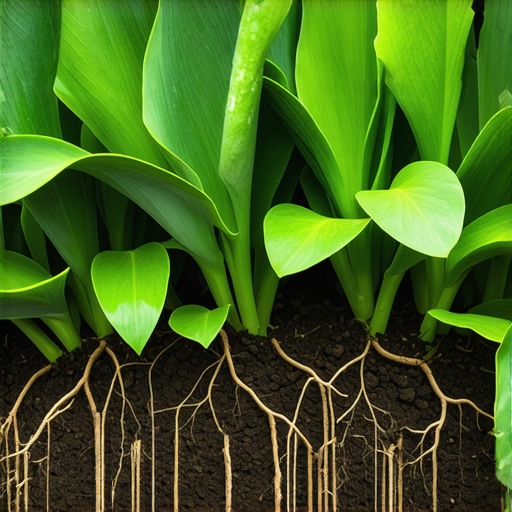
Planning a shade garden requires more than just picking plants that don’t die in the dark; it requires an understanding of photosynthetic active radiation (PAR) and the specific soil microbiology of low-light environments. I always drill into my new crew members: if you don’t fix the soil grading first, every plant you put in the ground is just expensive compost. Most homeowners fail because they assume shade means the ground stays wet. In reality, large canopy trees often create a ‘rain shadow,’ meaning your shade garden might actually be a desert at the root level. Before you buy a single 3-gallon pot, you need to check your bulk density of the soil and ensure your CEC (Cation Exchange Capacity) is high enough to support sustained flowering from May through September.
“Organic matter content in shade soils must be maintained above 5% to support the slow nutrient cycling common in low-light environments.” – Penn State Agricultural Extension
The Engineering of a High-Performance Shade Garden
Successful shade-loving plant installations depend on soil structure, drainage remediation, and the selection of cultivars engineered for extended bloom cycles. To achieve 180 days of color, you cannot rely on native species alone; you must integrate hybrids bred for reblooming capabilities while managing the nitrogen-to-phosphorus ratio to prevent excessive leaf growth at the expense of flowers.
How do I make my shade garden bloom more?
To maximize flowering in shade, you must provide consistent moisture without saturation and use slow-release fertilizers with a higher middle number (Phosphorus). Pruning spent blooms—a process known as deadheading—is mandatory to prevent the plant from shifting energy into seed production, effectively forcing a second or third bloom flush.
1. Tuberous Begonias (Begonia x tuberhybrida)
Tuberous begonias are the heavy lifters of the deep shade world, producing saturated color in environments with less than 2 hours of direct sun. These aren’t your grandmother’s wax begonias; we are talking about cultivars that produce 4-inch wide blooms. The engineering challenge here is hydrostatic pressure in the soil. These tubers will rot if the drainage pore space is insufficient. I recommend a planting medium with at least 20% perlite or coarse sand. Measure your soil pH; these plants prefer a slightly acidic range of 5.8 to 6.2 to optimize nutrient uptake.
2. Reblooming Hydrangeas (Hydrangea macrophylla)
Specifically, the ‘Endless Summer’ or ‘Tuff Stuff’ series are the only way to go for all-summer performance. These plants bloom on both old wood and new wood. If a late frost kills the buds on the old wood, the new growth will still push flowers by July. Do not ignore the root flare. Planting a hydrangea too deep is a death sentence. It causes stem girdling roots and suffocates the plant. Watch your aluminum sulfate levels if you want blue flowers; however, remember that phosphorus can block aluminum uptake, so don’t over-fertilize with high-P bloom boosters if you are chasing that deep blue hue.
3. Astilbe (Astilbe chinensis)
While many Astilbe varieties burn out by July, the chinensis species is a tank. It handles heat better and has a rhizomatous root system that can tolerate slightly drier conditions. These plants are heavy feeders. I recommend a top-dressing of composted leaf mold every spring. The feathery plumes provide a vertical architectural element that most shade plants lack. If the leaf margins start to turn brown and crispy, your evapotranspiration rate is exceeding your irrigation supply. It is that simple. Increase the frequency of your drip-line cycles.
4. Yellow Corydalis (Corydalis lutea)
This is the most underrated plant in landscape design. It is a literal blooming machine that starts in May and doesn’t stop until the first hard frost in November. It thrives in limestone-rich soils and even grows in the cracks of hardscape retaining walls. It is self-seeding but not invasive. If you have a dry shade problem under a maple tree, this is your solution. It prefers well-drained soil; if it sits in standing water for more than 4 hours, the crown will disintegrate. Check your micro-grading to ensure water moves away from the planting site.
“A retaining wall doesn’t fail because of the stone; it fails because of the water trapped behind it.” – Hardscape Engineering Axiom
5. Fuchsia (Hardy Cultivars)
Forget the hanging baskets that die the first time you miss a watering. Use hardy Fuchsia varieties like ‘Magellanica’ directly in the ground. These are woody shrubs in warmer zones and perennial emitters of pendulous, high-contrast flowers. They require high atmospheric humidity and consistent soil moisture tension. From a horticultural engineering standpoint, you should mulch these with 3 inches of double-shredded hardwood mulch to regulate soil temperature. Cold roots equal more flowers.
What is the best fertilizer for shade flowers?
Use a controlled-release fertilizer (CRF) with a 10-20-10 analysis. Shade plants have slower metabolic rates due to lower light, so hitting them with high-nitrogen ‘turf’ style fertilizers will only result in weak, leggy growth that is susceptible to powdery mildew and aphid infestations.
| Plant Name | Light Requirement (Hours) | Soil Moisture Level | Growth Habit |
|---|---|---|---|
| Tuberous Begonia | 0-2 Hours | Consistently Moist | Mounded |
| Reblooming Hydrangea | 3-4 Hours (Morning Sun) | High | Shrub |
| Astilbe Chinensis | 2-4 Hours | High | Vertical Plumes |
| Corydalis Lutea | 1-4 Hours | Moderate/Dry | Fern-like |
| Hardy Fuchsia | 2-4 Hours | Consistently Moist | Arching Shrub |
The Professional Installation Checklist
- Utility Marking: Always call 811 before excavating for hardscaping or large-scale planting.
- Soil Perc Test: Dig a 12-inch hole, fill with water, and ensure it drains within 2 hours.
- Amending: Incorporate 3 inches of organic matter into the top 8 inches of the soil profile.
- Drip Irrigation: Install 0.9 GPH emitters at the drip line of each plant, not the trunk.
- Mulching: Apply a 2-3 inch layer, keeping it 2 inches away from the plant crown to prevent rot.
Landscape success isn’t about luck. It is about compaction ratios, moisture management, and species selection. Don’t buy the cheap plants at the big-box store that have been sitting on a concrete pad for three weeks. Go to a production nursery where the plants are hardened off. If you follow the engineering specs for your soil and choose these five workhorses, your shade garden will outperform every lawn in the neighborhood. Done right, it won’t just survive. It will dominate.