Stop Using Plastic Weed Barriers: Use This Cardboard Trick Instead
Why Traditional Landscape Fabric is a Failure of Engineering
Sheet mulching with cardboard provides a superior weed barrier because it suppresses weeds through light deprivation while eventually decomposing into organic matter that improves soil structure. Unlike plastic, it allows for gas exchange and moisture penetration, fostering a healthy rhizosphere essential for plant longevity and soil biology.
I always drill into my new crew members: if you don’t fix the soil grading and biology first, every plant you put in the ground is just expensive compost. Most rookie contractors and DIY homeowners reach for that rolls of black plastic or non-woven geotextile fabric the moment they clear a bed. They think they are building a fortress against weeds. In reality, they are building a tomb for the soil. After twenty years in this industry, I have seen the same story play out a thousand times. Underneath that plastic, the soil becomes anaerobic. Earthworms flee because they cannot breathe or reach the surface. The soil compacts until it is as hard as a sidewalk. When the plants inevitably struggle, the homeowner adds more water, but the plastic has become clogged with fine silt, creating a hydrophobic barrier that sends the water running off into the driveway instead of down to the roots.
“The use of landscape fabrics can lead to soil compaction and reduced oxygen levels, which negatively impacts the root respiration of ornamental plants.” – Penn State Extension, Department of Horticulture
The Engineering Reality of Plastic Barriers
Plastic weed barriers fail because they ignore the fundamental laws of biology. Soil is a living breathing organism. It requires a constant exchange of gases. When you seal it off with polypropylene, you trap carbon dioxide and limit oxygen. This shifts the microbial population from aerobic to anaerobic, which often leads to root rot and the buildup of toxic gases. Furthermore, weeds will eventually grow on top of the fabric. Dust and organic matter blow in, settle in the mulch, and create a perfect germinating medium. The weed roots then grow down through the fabric. When you try to pull them, you rip the fabric, or worse, you find the roots have become inextricably tangled in the mesh. It is a maintenance nightmare that offers zero long-term benefit.
The Cardboard Trick: Sheet Mulching for Long-Term Soil Health
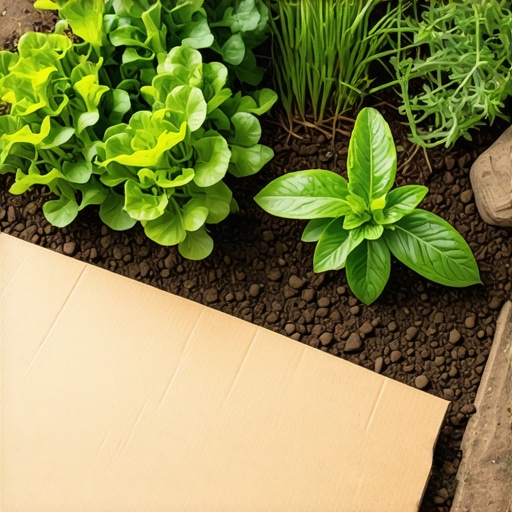
The cardboard trick, technically known as sheet mulching, involves layering recycled corrugated cardboard over the soil to block sunlight from weed seeds while providing a carbon source for soil microbes. This method mimics the natural forest floor, where organic matter slowly breaks down to feed the earth below.
When we design a high-end garden, we focus on the carbon-to-nitrogen (C:N) ratio. Cardboard is almost pure carbon. As it breaks down, it invites Lumbricus terrestris (the common earthworm) to do the tilling for you. The worms eat the cardboard and the decaying weeds beneath it, tunneling through the soil and creating macro-pores. These pores allow for better water infiltration and air circulation. You are not just stopping weeds; you are engineering a superior soil structure. It is a biological solution to a physical problem. Don’t skip the preparation phase. Remove any woody invasive species first, but leave the small weeds. They will die and become nitrogen for your new plantings.
Materials Breakdown: Cardboard vs. Plastic
| Feature | Plastic/Geotextile Fabric | Cardboard (Sheet Mulching) | |||
|---|---|---|---|---|---|
| Gas Exchange | Poor (becomes clogged) | Excellent (permeable) | Water Infiltration | Low (hydrophobic over time) | High (absorbent) |
| Soil Health | Promotes compaction | Adds organic matter | |||
| Cost | $0.50 – $1.50 per sq ft | Free (recycled) | |||
| Durability | Permanent (becomes trash) | Temporary (becomes soil) |
How long does cardboard take to decompose under mulch?
In most temperate climates with adequate moisture, cardboard will completely break down in 6 to 8 months. During this time, it serves as a functional weed barrier. By the time it has vanished, your desired plants should have established a canopy that naturally shades the ground, further reducing weed pressure. In arid regions, this process can take up to a year, but the moisture-retention benefits are even more critical there.
Can I use cardboard with glossy ink in my garden?
Avoid glossy, wax-coated, or heavily printed cardboard. These coatings often contain heavy metals or plastic polymers that do not belong in your soil. Stick to standard brown corrugated boxes. You must also remove all plastic packing tape and staples. Those will not decompose and will remain as litter in your garden beds for decades. If you can’t peel the tape, cut that section of the box out and toss it.
Step-by-Step Guide to Professional Sheet Mulching
Success in landscaping is 80% preparation and 20% execution. Follow this checklist to ensure your new garden bed thrives without the need for chemical intervention or plastic waste.
- Mow the area as short as possible to reduce the bulk of existing vegetation.
- Flag your irrigation heads and utility lines by calling 811 before you dig or plant.
- Overlap cardboard edges by at least 6 to 8 inches to prevent weeds from finding a light gap.
- Thoroughly soak the cardboard with water until it is heavy and pliable.
- Apply 3 to 4 inches of high-quality organic mulch, such as double-ground hardwood.
- Cut small ‘X’ shapes through the cardboard only where you intend to install a plant.
“Soil organic matter is the foundation of soil health; increasing it improves water holding capacity and nutrient cycling.” – USDA Natural Resources Conservation Service
The Ground-Up Build: Installation and Year One Maintenance
The installation phase is where the