How to Build a Dry Well to Manage Yard Runoff Problems
The Hardscape Autopsy: Why Most Drainage Systems Fail
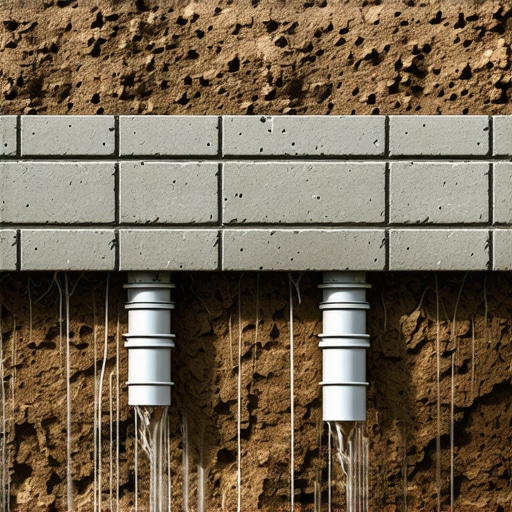
I recently got called out to tear up a $30,000 bluestone patio that was sinking because the previous contractor failed to account for basic hydrostatic pressure. The homeowner thought it was a settling issue. It wasn’t. It was a water issue. The contractor had installed a beautiful surface but ignored the subterranean reality. Every time it rained, the subgrade saturated, the soil lost its load-bearing capacity, and that expensive stone started swimming. Water doesn’t negotiate. It always wins. If you don’t give runoff a place to go, it will find its own path, usually through your foundation or under your hardscape. This is where a professional-grade dry well becomes the most critical piece of civil engineering in your yard.
What is a Dry Well and How Does it Manage Yard Runoff?
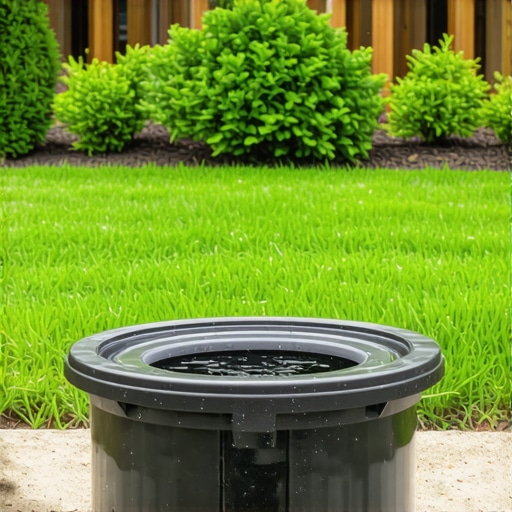
A dry well is an underground structural chamber or gravel-filled pit designed to collect and infiltrate stormwater runoff directly into the subsoil. By managing hydrostatic pressure and preventing surface erosion, a dry well protects your home’s foundation and prevents turf saturation during heavy rain events. It is a passive system that relies on gravity and soil permeability to return water to the local aquifer. Don’t confuse this with a French drain. A French drain moves water; a dry well disposes of it.
“A retaining wall doesn’t fail because of the stone; it fails because of the water trapped behind it.” – Hardscape Engineering Axiom
The Physics of Infiltration
Before you pick up a shovel, you need to understand your soil’s perc rate. If you have heavy red clay with high plasticity, a dry well might just become a subterranean pond. You need to perform a percolation test. Dig a hole 2 feet deep, fill it with water, and see how fast it drains. If it takes more than 24 hours to empty, you have a soil mechanics problem that a simple dry well won’t fix. You’ll likely need to amend the area or increase the well’s surface area significantly. Most residential dry wells fail because the installer didn’t calculate the void space of the backfill. 3/4 inch washed stone typically provides about 40% void space. This means for every 100 gallons of water you need to store, you need at least 250 gallons of total pit volume if you are using a stone-only well.
How much modified gravel do I need for a dry well base?
For a standard residential dry well, you need a minimum of 6 to 12 inches of 3/4 inch washed clean stone as a leveling base beneath the structural tank. This base prevents the well from settling and provides the initial infiltration interface with the subgrade soil. Never use ‘crusher run’ or ‘modified’ stone with fines here. The fines will clog the soil pores and kill the system’s efficiency within a year. Use only clean, washed aggregate.
| Dry Well Component | Recommended Material | Purpose |
|---|---|---|
| Main Chamber | NDS Flo-Well or Pre-cast Concrete | Structural water storage |
| Backfill Aggregate | 3/4 inch Washed Round Stone | Void space and filtration |
| Filter Fabric | 8oz Non-Woven Geotextile | Preventing soil migration |
| Inlet Piping | 4 inch Schedule 40 or SDR 35 | High-velocity water transport |
| Overflow Valve | Pop-up Emitter | Emergency relief for heavy storms |
The Blueprint: Step-by-Step Installation
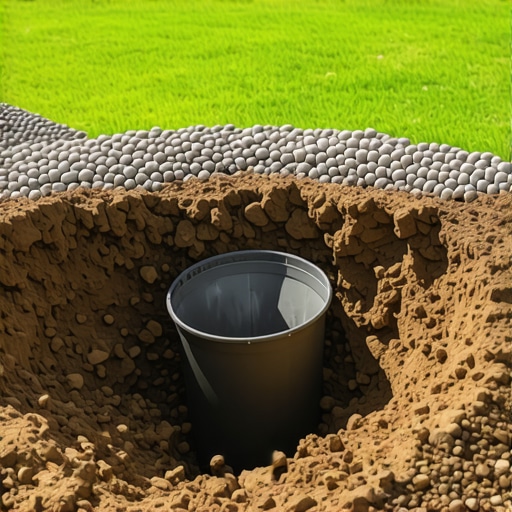
Phase one is location. You must be at least 10 feet away from any foundation to prevent hydrostatic loading against your basement walls. Call 811. Do not skip this. If you hit a gas line because you were too lazy to wait for a mark-out, that is on you. Once clear, excavate a hole approximately 4 feet wide and 4 or 5 feet deep. This is labor-intensive. Use a mini-excavator if you value your lower back.
Line the entire pit with non-woven geotextile fabric. This is a non-negotiable step. If you use a woven fabric or cheap weed barrier from a big-box store, the system will fail. Woven fabric is for stabilization; non-woven is for filtration. You need the water to pass through while keeping the surrounding soil out of your stone. Wrap it like a burrito with plenty of overlap. If soil gets into your stone, the void space disappears, and you just have a hole filled with mud.
Do I need a permit for a dry well?
Municipal codes vary wildly, but most jurisdictions require a permit if you are disturbing more than a certain square footage of earth or if you are connecting impervious surface runoff (like your roof) directly into a subterranean system. Many cities also have MS4 requirements regarding where you can discharge overflow. Check with your local building department. Ignoring this can lead to massive fines and a mandatory tear-out during a home sale.
“Effective stormwater management is 10% capacity and 90% maintenance of the infiltration interface.” – USDA NRCS Technical Manual
- Perc Test: Verify soil drainage speed before digging.
- Excavation: Dig 1 foot wider than your well tank on all sides.
- Fabric Lining: Use 8oz non-woven geotextile to prevent siltation.
- Base Stone: Pour 6-12 inches of washed stone and level it.
- Assembly: Install the dry well tank and connect the 4-inch SDR-35 pipe.
- Backfill: Fill the perimeter with stone and wrap the fabric over the top.
- Topsoil: Cover with 6 inches of soil and restore your turf.
The connection from the house is where I see most ‘mow-and-blow’ guys mess up. They use that cheap, black corrugated pipe. It’s garbage. It collapses, clogs, and is impossible to clean out with a snake. Use Schedule 40 PVC or SDR-35. It’s rigid, it’s durable, and it will last 50 years. Ensure you have a minimum 2% slope (1/4 inch per foot) from the house to the well. Gravity is your only pump. Don’t fight it. [image placeholder]
Maintenance and Long-Term Viability
A dry well is not ‘set it and forget it.’ You need a silt basin or a catch basin with a debris screen before the water even enters the pipe. If leaves and shingle grit get into the dry well, they will settle at the bottom and create an impermeable layer of muck. Clean your gutters. Flush your silt basins every spring and fall. If you treat the system like a trash can, it will behave like one. A properly engineered and maintained dry well will solve 90% of your standing water issues. It keeps your lawn firm and your basement dry. Do the work once, do it right, and stop worrying about the rain.