Building a 2026 Natural Stone Edge for Flower Beds
The Hardscape Autopsy: Why Your Garden Edging Fails
I recently got called out to tear up a $30,000 patio that was sinking because the previous contractor thought two inches of uncompacted sand was a sufficient base. It was not. It was a sponge. When we talk about building a 2026 natural stone edge for flower beds, we are not just talking about laying rocks in a row. We are performing civil engineering on a micro-scale. Most homeowners see a leaning stone and blame the rock. I blame the physics. If you do not account for hydrostatic pressure and soil expansion, your garden border will be a jumbled mess of expensive rubble within three seasons. It will fail. You must treat the perimeter of your garden design as a structural retaining element. We are managing the interface between high-density turf and the rhizosphere of your ornamental beds. This requires a 3/4-minus gravel base and a deep understanding of soil compaction. Don’t skip the prep work. If you do, you are just making expensive compost.
The Physics of Flower Bed Edging and Soil Management
A professional natural stone edge serves as a structural barrier that prevents turf encroachment and manages surface runoff by creating a distinct grade separation between the lawn care area and the planting zone. By using high-density stone like granite or basalt, you create a thermal mass that stabilizes root zone temperatures while preventing the migration of rhizomatous weeds into your high-value landscaping beds. The goal is to create a permanent mowing strip that can withstand the weight of a commercial zero-turn mower without shifting a single millimeter. This requires a foundation. You are essentially building a road for your garden. If the base moves, the stone moves.
“A retaining wall doesn’t fail because of the stone; it fails because of the water trapped behind it.” – Hardscape Engineering Axiom
How deep should a stone edge trench be?
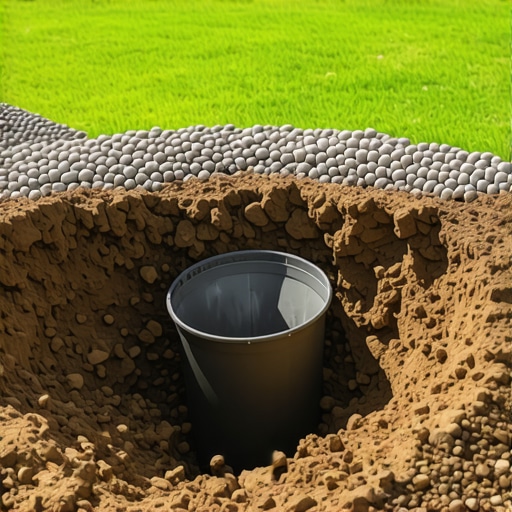
For a standard natural stone edge, you must excavate a trench at least 8 to 10 inches deep to accommodate 4 to 6 inches of compacted aggregate base and the bottom half of your stone. This depth ensures the structure sits below the organic layer of the soil, preventing frost heave from lifting the stones during winter freeze-thaw cycles. Do not just place stones on top of the grass. They will sink. They will tilt. You must reach the subsoil.
What is the best stone for garden borders?
The best material for a 2026 hardscaping project is a low-porosity natural stone such as granite, basalt, or quartzite because these materials resist spalling and chemical breakdown from fertilizers. Avoid soft limestones in high-acid soils, as the stone will literally dissolve over a decade, altering the soil pH and harming your acid-loving plants like azaleas. Look for stones with a high compressive strength and low water absorption rates.
| Stone Type | Density (lbs/cu ft) | Water Absorption | Best Use Case |
|---|---|---|---|
| Granite | 165-175 | <0.5% | Extreme climates and high-traffic edges |
| Limestone | 150-160 | 1-3% | Neutralizing acidic soil runoff |
| Sandstone | 140-150 | 3-6% | Arid climates; prone to frost damage |
| Basalt | 180-190 | <0.2% | Ultra-durable modern designs |
The Engineering Protocol: From Grade to Grain
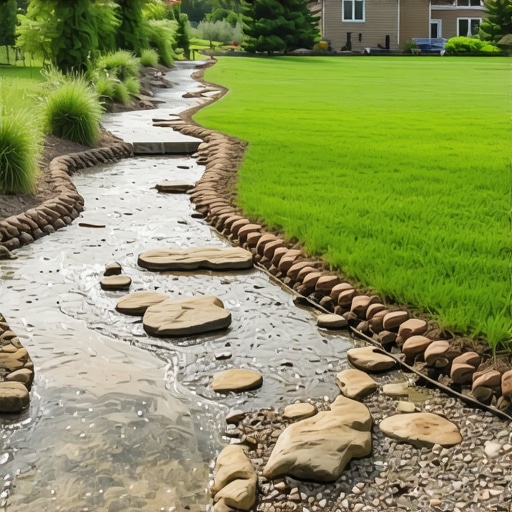
Before you touch a shovel, you need to understand soil texture. If you have heavy clay, your trench becomes a bathtub that holds water and rots roots. In clay-heavy regions, you must install a perforated drain pipe or a French drain behind the stone edge to move water away. We utilize non-woven geotextile fabric to separate the subsoil from our gravel base. This prevents the stone from being swallowed by the mud over time. This is the difference between a contractor and a hack. The hack skips the fabric. Three years later, the stone is gone. Compaction is king. I demand my crews hit 95% Standard Proctor Density on the base. We use a vibratory plate compactor. A hand tamper is for amateurs. If the tamper does not bounce off the gravel, it is not ready. You should be able to drive a truck over the base without leaving a rut.
- Marking Paint: Layout the curves with high-visibility fluorescent paint.
- Square-Blade Spade: For clean, vertical trench walls.
- 3/4-Minus Crushed Rock: The essential base material for stability.
- Plate Compactor: Do not rent the small one; get the heavy-duty unit.
- Dead Blow Mallet: For setting stones without cracking the face.
- Polymeric Sand: To lock the joints and prevent weed germination.
[image_placeholder]
Horticultural Impact: Why Edging Saves Your Soil
Proper landscaping is about more than looks; it is about soil microbiology. When you have a clean natural stone edge, you prevent nitrogen-heavy lawn fertilizers from leaching into your flower beds where they can cause foliar burn on delicate perennials. It also allows for mulch retention. A 3-inch layer of hardwood mulch is useless if it washes onto the lawn every time it rains. The stone edge acts as a dam. It keeps the organic matter where it belongs, feeding the mycorrhizal fungi and earthworms that drive plant health. Furthermore, a deep edge cuts the roots of invasive grasses. Grass is a predator. It wants your flower bed nutrients. The stone edge is your infantry. It holds the line. You also avoid root girdling by ensuring that the root flare of nearby trees isn’t buried under migrating soil or mulch. Every inch matters in the nitrogen cycle.
“Soil structure is the silent partner in plant productivity; without physical stability, chemical inputs are wasted.” – USDA Agronomy Manual
When setting the stone, we use a technique called “batter.” This means we tilt the stone slightly back toward the flower bed, about 1 inch for every foot of height. This uses gravity to fight the active earth pressure. If you set the stone perfectly vertical, the weight of the wet soil behind it will eventually push it outward. Physics never sleeps. Use polymeric sand in the joints. This is a high-tech mix of sand and polymers that hardens when wet. It stops ants from mining the base and prevents weeds from taking root in the gaps. It is the final seal on a professional job. Once it sets, the edge is a monolithic structure. It won’t budge. Your 2026 garden deserves a foundation that lasts until 2050. Don’t settle for big-box store plastic strips. Build it once. Build it right.