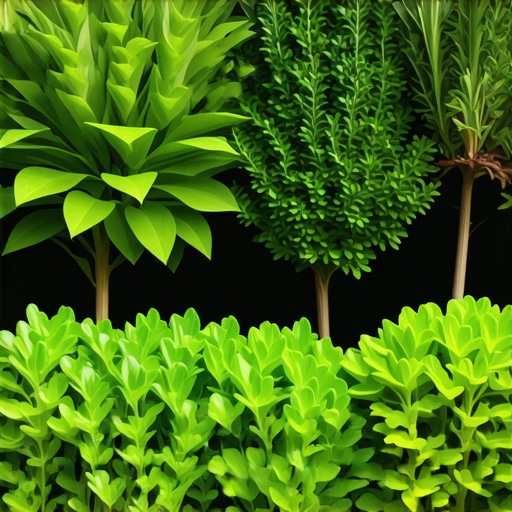
5 Native Shrubs for Zero-Water Privacy Screens in 2026
The Engineering of a Zero-Water Privacy Screen
Building a privacy screen that survives on zero supplemental water in 2026 is not about luck: it is about civil engineering and biological foresight. Native shrubs for zero-water privacy screens function by establishing deep taproots and mycorrhizal associations that allow them to extract moisture from deep soil horizons during extreme drought. By selecting regionally adapted species, you eliminate the need for permanent irrigation infrastructure while creating a functional, 4-season landscape barrier.
I always drill into my new crew members: if you don’t fix the soil grading first, every plant you put in the ground is just expensive compost. I once saw a rookie crew install $12,000 worth of Mountain Mahogany into a site with 98 percent soil compaction. Within three months, those plants were literally drowning in dry dirt because the water could not penetrate the 1.8 g/cm3 bulk density of the clay. We had to excavate the entire line, break the glazing on the planting holes, and re-grade the site to ensure the rhizosphere actually had oxygen. If the roots cannot breathe, the plant cannot drink. It is that simple.
“The establishment period for xeric shrubs is critical, as root systems must reach deep soil horizons before supplemental irrigation is withdrawn.” – Texas A&M AgriLife Extension
How do I plant shrubs for maximum privacy?
To achieve a dense privacy screen, you must calculate the mature spread of the shrub and space them so the edges overlap by 10 percent. For instance, if a Texas Sage has a 6-foot mature width, you space the center of the trunks 5.4 feet apart to ensure a seamless visual barrier without overcrowding the root flares.
Top 5 Native Shrubs for Zero-Water Buffers
Drought-tolerant landscaping relies on plants that have evolved specific physiological traits like small, waxy leaves or silver pubescence to reflect heat and reduce transpiration rates. These five species represent the gold standard for high-performance, low-input garden design in 2026.
| Shrub Species | USDA Zone | Mature Height | Growth Rate |
|---|---|---|---|
| Curl-leaf Mountain Mahogany | 3-8 | 12-15 ft | Slow |
| Texas Sage (Cenizo) | 8-11 | 6-8 ft | Medium |
| Toyon (Christmas Berry) | 7-10 | 10-15 ft | Moderate |
| Bigberry Manzanita | 7-10 | 8-12 ft | Slow |
| Sugar Sumac | 7-10 | 10-15 ft | Fast |
1. Curl-leaf Mountain Mahogany (Cercocarpus ledifolius)
This is the tank of the shrub world. It can live for 100 years and thrives in rocky, nitrogen-poor soils. The secret to its success is its ability to fix nitrogen through its roots. It provides a dense, evergreen screen that requires zero pruning if you give it enough space. It is impervious to cold and heat once the roots hit the 24-inch depth mark.
2. Texas Sage (Leucophyllum frutescens)
Often called the ‘Barometer Bush,’ this shrub blooms in response to humidity changes. It features silver-gray foliage that reflects intense UV radiation, keeping the internal plant temperature 5 to 10 degrees cooler than green-leafed competitors. It needs perfectly drained soil: if its ‘feet’ get wet, it will rot in 48 hours. Use a 50/50 mix of native soil and crushed 1/4 inch minus gravel for the backfill.
3. Toyon (Heteromeles arbutifolia)
A California native that handles the 2026 heat domes with ease. It produces white flower clusters followed by bright red berries. The leaves are leathery and serrated, designed to channel morning dew directly toward the root flare. This is a crucial adaptation for surviving 100-day dry spells without a drop of rain.
4. Bigberry Manzanita (Arctostaphylos manzanita)
Manzanitas are the elite choice for high-end hardscaping projects. Their mahogany-colored, peeling bark adds structural beauty in winter. They are sensitive to root disturbance, so when you plant them, you must be careful not to break the root ball. Set the root flare 1 inch above the soil grade to prevent crown rot.
5. Sugar Sumac (Rhus ovata)
If you need a screen fast, Sugar Sumac is the answer. It is a rapid grower with deep green, taco-shaped leaves that catch moisture. It is fire-resistant, making it a critical choice for WUI (Wildland-Urban Interface) zones. It develops a thick canopy that effectively baffles wind and noise.
“Planting depth is the single most common cause of premature shrub mortality in urban landscapes; always expose the root flare.” – ANSI A300 Standards
The Installation Protocol: Step-by-Step
Successful landscaping is 90 percent preparation and 10 percent planting. Follow this checklist to ensure 100 percent survival rates for your privacy screen.
- Site Analysis: Test soil pH. Most xeric natives prefer a pH between 6.5 and 8.0.
- Excavation: Dig the hole twice as wide as the root ball but no deeper.
- Scarification: Use a pickaxe to roughen the sides of the hole. If the sides are smooth (glazed), the roots will circle like they are in a plastic pot.
- Hydration: Fill the empty hole with water and time the drainage. If it takes more than 2 hours to empty, you have a drainage crisis.
- Positioning: Ensure the root flare (the point where the trunk widens at the base) is visible above the soil line.
- Backfilling: Do not add heavy fertilizers. Native shrubs prefer lean soil. Use native soil to avoid creating a ‘bathtub effect.’
When is the best time to plant drought-tolerant hedges?
The optimal window is late autumn. Planting in the fall allows the shrub to focus all its energy on root development during the winter months while the top-growth is dormant. By the time the first 100-degree day of summer hits, the root system is deep enough to survive without a garden hose. Skip the spring planting if you want a truly zero-water system.
Maintaining the Barrier: The First 24 Months
Zero-water does not mean ‘zero water on day one.’ You must provide 1 inch of water per week for the first two growing seasons. This is the establishment phase. We use temporary drip irrigation with 2-gallon-per-hour emitters. After the second summer, we cut the lines. The shrubs are now on their own. Do not use high-nitrogen lawn fertilizers near these shrubs. Excessive nitrogen creates ‘soft’ growth that is delicious to pests and highly susceptible to drought stress. Aim for slow, lignified wood development. That is how you build a screen that lasts a lifetime. [image placeholder]
![5 Drought-Proof Perennials for 2026 Clay Soil [Tested]](https://lawnmajesty.com/wp-content/uploads/2026/05/5-Drought-Proof-Perennials-for-2026-Clay-Soil-Tested.jpeg)
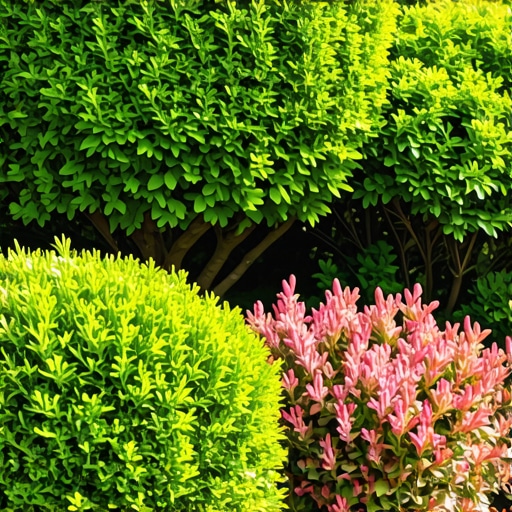
![5 Native Shrubs for Zero-Water Privacy in 2026 [Zone 8]](https://lawnmajesty.com/wp-content/uploads/2026/05/5-Native-Shrubs-for-Zero-Water-Privacy-in-2026-Zone-8.jpeg)