Fix Your 2026 Uneven Paver Patio for Under $40
The Sinking Stone: A Forensic Look at Patio Failure
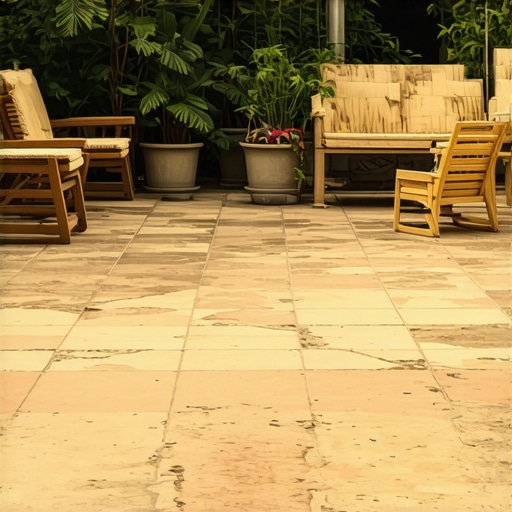
Uneven paver patios usually fail because of sub-base compromise or hydrostatic pressure that forces ASTM C33 sand to migrate out of the joints, leading to differential settlement and trip hazards. To fix this for under $40, you must perform a surgical extraction of the affected stones and reinforce the bedding layer using coarse masonry sand and polymeric joint stabilizer. I recently got called out to tear up a $30,000 patio that was sinking because the previous contractor skipped the geotextile fabric and used stone dust instead of a modified gravel base. The stones were literally swimming in a soup of wet silt. It was a mess. The homeowner thought they needed a total replacement, but the failure was localized to the downspout discharge zone. We didn’t need a backhoe; we needed a level and a bucket of 3/4-inch minus aggregate. This is the reality of hardscaping. Most failures aren’t due to the stone itself; they are failures of the invisible engineering beneath the surface.
“A retaining wall doesn’t fail because of the stone; it fails because of the water trapped behind it.” – Hardscape Engineering Axiom
How much modified gravel do I need for a patio base?
For a standard residential paver patio, you require a minimum of 4 to 6 inches of compacted 21A or 57 stone to ensure structural integrity and proper drainage. This base must be mechanically compacted in 2-inch lifts to achieve a 95% Standard Proctor Density. Without this density, the cyclic loading of foot traffic will cause the pavers to shift. Don’t eyeball it. Use a plate compactor. If you are doing a small repair for under $40, you are likely only looking at 1-2 bags of leveling sand and a small bag of crushed stone to fill the voids where the earth has settled.
The $40 Surgery: Localized Remediation vs. Total Failure
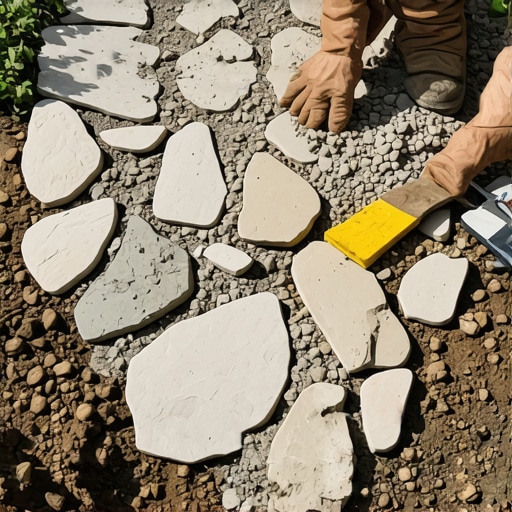
Fixing uneven pavers on a budget requires a surgical approach where you only disturb the settled units while preserving the interlocking friction of the surrounding hardscape field. By spending $40 on high-strength polymeric sand and a bag of leveling aggregate, you can arrest paver migration before it necessitates a multi-thousand-dollar excavation. You need a flathead screwdriver or a paver extractor tool. Pull the stones. It will be hard. The polymeric sand has likely turned into a hard plastic-like bond. You have to break that bond without chipping the edges of the pavers. If you chip the stone, the repair looks like amateur hour. It will rot if you don’t clear the debris out of the gap. Clean the sides of the pavers with a wire brush. This is non-negotiable. Sand-to-stone contact is what creates the friction that holds your patio together.
| Material | Estimated Cost | Purpose |
|---|---|---|
| ASTM C33 Leveling Sand | $6.00 | Provides the 1-inch bedding layer for paver seating. |
| High-Performance Polymeric Sand | $28.00 | Locks joints to prevent weed growth and washout. |
| 3/4″ Crushed Stone (Small Bag) | $5.00 | Fills deep voids or low spots in the sub-base. |
Is it possible to level pavers without removing them?
No, you cannot effectively level sunken pavers by pouring sand over the top; the bedding layer must be physically reconstructed from underneath to provide vertical support. Poured sand will simply wash away during the first heavy rain event, leading to further base erosion and potential structural collapse of the edge restraints. You have to get under the stone. I see guys trying to ‘shim’ pavers with pieces of wood or plastic. Stop it. Use mineral-based aggregates. Wood rots. Dirt settles. Stone stays. It is basic civil engineering applied to your backyard.
The Hardscape Foreman’s Precision Checklist
- Identify the Cause: Check for nearby gutter leaks or soil saturation.
- Extract Cleanly: Use two thin blades to lift the stone without prying against neighbors.
- Level the Base: Add crushed stone and tamp manually until it is rock hard.
- Screed the Sand: Apply exactly 1 inch of coarse sand—no more, no less.
- Reset and Bond: Place the paver, mallet it flush, and sweep in polymeric sand.
- Activate: Lightly mist the sand to trigger the polymer binders.
“Uniformity in the sub-grade is more critical than the thickness of the pavers themselves when preventing long-term rutting.” – ICPI Tech Spec No. 2
The Physics of Base Compaction
Compaction force is the only thing standing between your patio and the freeze-thaw cycle that ruins landscaping projects every spring. When water gets into the base material, it expands as it freezes, pushing the stone upward—this is frost heave. If your base isn’t well-graded aggregate, the water has nowhere to go. You need void space for the water to move, but you need particle interlock for the weight. This is why stone dust is garbage. It holds water like a sponge. It fails every time. Use open-graded stone or modified gravel. Your $40 fix depends on you getting the compaction right in that small hole. Use a heavy sledgehammer over a scrap piece of 4×4 lumber to simulate the PSI of a mechanical tamper. If the ground feels soft, keep hitting it. Don’t skip this. If you put a stone on soft dirt, it will be uneven again by July. This isn’t just garden design; it’s soil science. Every horticulturist knows that if you don’t fix the soil grading first, every plant or stone you put in the ground is just expensive compost. Take the time to do the forensic repair correctly the first time. Your 2026 self will thank you for not being a hack in 2024. Keep the polymeric sand dry until the very end. If it gets wet before it’s in the joint, it’s ruined. It becomes a sticky mess that stains the surface of the pavers. Precision matters.