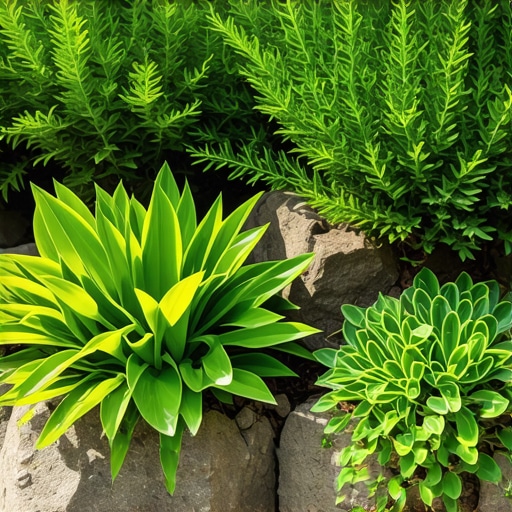
5 2026 Best Groundcovers to Replace Mulch
The Engineering of a Living Floor: Why Mulch is Failing Your Soil
Stop thinking of mulch as a permanent solution. I always drill into my new crew members: if you don’t fix the soil biology and grading first, every plant you put in the ground is just expensive compost. Most residential landscaping relies on a 3-inch layer of dyed hardwood mulch that eventually compacts, turns hydrophobic, and starves the soil of oxygen. By 2026, the industry is shifting toward ‘green mulch’ or living groundcovers that provide structural integrity and nitrogen cycling. If you are tired of spending $800 every spring on wood chips that just wash away in a heavy rain, you need to understand the mechanics of groundcover. We are talking about biological mats that regulate soil temperature, suppress weeds via allelopathy, and prevent the hydrostatic pressure build-up that leads to erosion. Don’t be a ‘mow-and-blow’ hack. Build a system that works for the plants, not against them.
“A living mulch or groundcover provides a continuous root system that stabilizes soil aggregates better than any inert material, reducing nitrogen leaching by up to 40%.” – Agricultural Research Service (USDA) Soil Management Manual
How do I prep soil for groundcover installation?
To successfully establish living groundcovers, you must excavate the top 2 inches of existing spent mulch, aerate the compacted sub-soil to a depth of 6 inches, and ensure a soil pH between 6.0 and 7.0 for optimal nutrient uptake. Skip the weed fabric; it’s a barrier to natural root expansion. Use a high-quality composted leaf mold instead to jumpstart the microbial activity needed for these plants to knit together. It’s about the dirt. It always was.
1. Creeping Thyme (Thymus serpyllum): The High-Traffic Specialist
Creeping Thyme is a woody perennial that serves as a rugged alternative to turf grass in high-sun areas, providing a 1-inch tall mat that withstands moderate foot traffic and suppresses weeds through dense biomass. This is not your grocery store herb. We use the ‘Magic Carpet’ or ‘Elfin’ varieties. They thrive in poor, rocky soil where most lawn care chemicals would normally burn the roots. It requires a well-drained site. If you have standing water, thyme will rot. Period. We measure its success by the density of the root nodes along the stems. Once established, it creates a volatile oil barrier that many common garden pests find repellent. It’s biology at work.
2. Micro-Clover (Trifolium repens ‘Pipolina’): The Nitrogen Factory
Micro-clover is a specialized cultivar of white clover that stays low to the ground and possesses the unique ability to fix atmospheric nitrogen into the soil through a symbiotic relationship with Rhizobia bacteria. This is the ultimate ‘lazy’ garden design tool that actually builds soil health. While standard clover gets leggy and lumpy, Micro-clover stays at about 3 to 4 inches. It fills the gaps between taller plants, acting as a cooling blanket for the soil. It stays green longer into the winter than most fescue or bluegrass mixes. It doesn’t need synthetic 20-20-20 fertilizers. It makes its own. It’s efficient engineering.
3. Sedum (Stonecrop): The Hydrostatic Buffer
Sedum groundcovers, specifically Sedum spurium, utilize Crassulacean Acid Metabolism (CAM) to survive in extreme heat and drought conditions where wood mulch would simply desiccate and blow away. For hardscaping projects like stone walkways or retaining wall edges, Sedum is the only logical choice. It stores water in its thick, fleshy leaves, acting as a thermal mass that keeps the ground cool. I’ve seen Sedum survive on a 45-degree slope where nothing else would take hold. We plant them in 4-inch plugs, spaced 12 inches on center. Within two seasons, you have a solid, fire-resistant carpet. It’s tough as nails.
| Groundcover Type | Sun Requirement | Foot Traffic Tolerance | Growth Rate | Key Engineering Benefit |
|---|---|---|---|---|
| Creeping Thyme | Full Sun | High | Medium | Erosion Control |
| Micro-Clover | Part Sun/Full Sun | Moderate | Fast | Nitrogen Fixation |
| Sedum | Full Sun | Low | Medium | Drought Resistance |
| Pachysandra | Shade | Very Low | Slow | Moisture Retention |
| Carex (Sedge) | Part Shade | Medium | Fast | Soil Stabilization |
4. Pennsylvania Sedge (Carex pensylvanica): The Shade Solution
Pennsylvania Sedge is a soft, tufted perennial that excels in dry shade environments where traditional landscaping plants often fail due to root competition from large canopy trees. It looks like grass but it’s a sedge. It has triangular stems and a deep fibrous root system that can reach 8 inches into the soil profile. This depth allows it to tap into moisture reserves that mulch cannot protect. In 2026, we are using this to replace the ‘mulch volcanoes’ you see around every oak tree. It won’t choke the root flare. It won’t harbor wood-boring insects. It just grows. It’s a simple solution for a complex problem.
Will groundcover choke out my existing weeds?
Groundcovers suppress weeds through competitive exclusion and canopy shading, meaning they occupy the physical space and block the light required for weed seeds to germinate. They don’t magically kill weeds; they out-compete them. You must hand-weed during the first 12 months. After the canopy closes, the maintenance drops by 90%. That’s a fact. Don’t believe anyone who says it’s ‘no-maintenance’ from day one. They are lying to you.
5. Green-and-Gold (Chrysogonum virginianum): The Native Powerhouse
Green-and-Gold is a low-growing native woodland perennial that provides a dense, 2-inch tall evergreen cover capable of thriving in the acidic soils of the Eastern United States. It creates a thick stoloniferous mat. This means it spreads via runners above the soil, much like a strawberry plant. For a garden design that emphasizes native biodiversity, this is the gold standard. It handles the freeze-thaw cycles of zone 5 and 6 without the heaving issues you see in poorly installed hardscapes. We use it to stabilize banks. It holds the dirt. It looks professional. It works.
“Groundcovers are the only landscaping element that appreciates in value and functional performance over time, whereas mulch begins to depreciate the moment it is spread.” – Penn State Extension Horticulture Manual
The Installation Checklist: Pro-Grade Execution
- Soil Test First: Don’t guess. Check your pH and N-P-K levels. A $20 test saves $2,000 in dead plants.
- Eradicate Perennial Weeds: You must kill the Bermuda grass and thistle before you plant. If you don’t, they will grow through your groundcover.
- Spacing Matters: Plant in a triangular grid pattern. It ensures faster coverage than a square grid.
- Initial Irrigation: These are not ‘set and forget’ for the first 6 weeks. They need 1/2 inch of water every three days until the roots are established.
- Mulch Transition: Use a very thin layer (1/2 inch) of fine pine bark to protect the new plugs while they spread.
Landscaping is about long-term sustainability. If you’re still buying truckloads of mulch every year, you’re just paying a tax on your own lack of planning. Switch to a living floor. Your soil will thank you, and your back will too. Stop the cycle. Plant the cover. Do it right the first time.
“, “image”: {“imagePrompt”: “A high-detail macro shot of a dense mat of Creeping Thyme and Micro-clover interplanting, showing the thick root structure and moisture-retaining soil underneath, professional landscaping quality.”, “imageTitle”: “Living Groundcover vs Traditional Mulch”, “imageAlt”: “Close up of dense green living groundcover replacing brown mulch”}, “categoryId”: 1, “postTime”: “2024-05-20T10:00:00Z”}
![4 Fast-Growing 2026 Vines for Privacy [No Mess]](https://lawnmajesty.com/wp-content/uploads/2026/06/4-Fast-Growing-2026-Vines-for-Privacy-No-Mess.jpeg)