
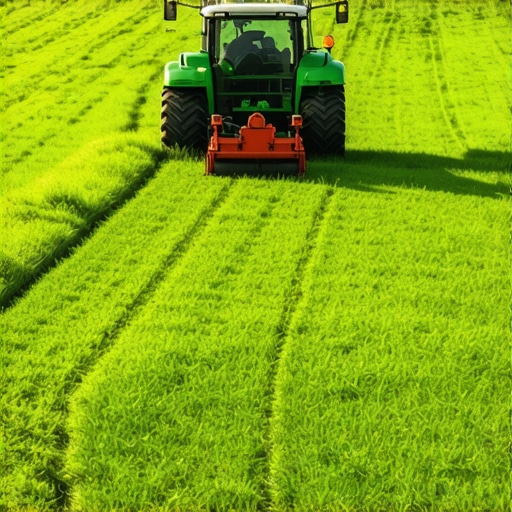
Stop 2026 Grass Blight with This Mowing Change
The Forensic Autopsy of a Dying Lawn
I recently walked onto a property that looked like a biological crime scene. The homeowner had spent thousands on high-end garden design and landscaping, but the turf was a mosaic of slimy, brown, and straw-colored patches. This wasn’t a random act of nature; it was a self-inflicted chemical nightmare. The owner had applied a massive dose of quick-release nitrogen fertilizer during a heatwave while simultaneously scalping the lawn at a measly 1.5 inches. The grass was essentially suffocating while the nitrogen scorched the remaining basal crowns. It was a textbook case of how bad lawn care habits invite catastrophe. If we don’t change how we mow, the 2026 grass blight projections will turn your yard into a wasteland of Rhizoctonia solani and dollar spot pathogens.
The Microscopic Reality of Turf Blight
Stopping the 2026 grass blight requires a fundamental shift in mowing height to preserve leaf tissue integrity and soil microbiology. By maintaining a taller canopy, you protect the basal crowns from heat stress and ensure the root system has enough carbohydrate reserves to fight off opportunistic fungal pathogens during high-humidity cycles.
When you cut grass too short, you are performing a radical amputation of the plant’s primary energy-producing organ. Grass blades are solar panels. If you strip away 70% of the leaf surface, the plant must divert all its energy from root development to emergency leaf repair. This leaves the root system shallow and weak. In the world of high-end hardscaping, we know that a structure is only as good as its base. In turf management, your base is the soil-root interface. A shallow root system cannot access deep-soil moisture, making the plant susceptible to the microscopic cracks that allow blight spores to enter. Every cut you make with a dull blade is an open invitation for infection. A jagged tear has ten times the surface area of a clean cut. It leaks moisture. It leaks nutrients. It is a buffet for spores.
“Increasing mowing height is the single most effective cultural practice for reducing weed competition and improving turfgrass health, as it encourages deeper rooting and provides more shade to the soil surface.” – Penn State Extension Agronomy Manual
The Mowing Height Revolution: Why 4 Inches is the New Standard
The core change to prevent the 2026 blight is raising your deck height to a minimum of 3.5 to 4 inches for cool-season grasses. This cultural control method suppresses weed germination by blocking sunlight from reaching the soil and reduces evapotranspiration rates, keeping the plant hydrated and resilient against fungal invasion.
We are seeing more aggressive fungal strains every year. The “mow-and-blow” hacks will tell you that a short lawn looks “cleaner.” They are lying. A short lawn is a dying lawn. By keeping the grass at 4 inches, you create a micro-climate at the soil level that is significantly cooler than the ambient air temperature. This temperature regulation is critical. Fungal pathogens like Large Patch thrive when soil temperatures fluctuate wildly. A thick, tall canopy acts as a biological insulator. It also prevents the guttation fluid (the dew-like drops on grass tips) from sitting too long on the soil surface, which is a primary vector for spore transport.
How much grass should I cut off at once?
You must adhere strictly to the one-third rule: never remove more than one-third of the total leaf height in a single mowing session. Removing more than this triggers a physiological shock that halts root growth for up to 14 days, leaving the plant defenseless against blight and drought.
| Grass Species | Minimum Height (Inches) | Blight Resistance Level | Drought Tolerance |
|---|---|---|---|
| Tall Fescue | 3.5 – 4.0 | High | Excellent |
| Kentucky Bluegrass | 3.0 – 3.5 | Moderate | Moderate |
| Perennial Ryegrass | 3.0 – 3.5 | Low | Low |
| Fine Fescue | 3.0 – 4.0 | High | High |
What is the best mowing height for fescue and bluegrass?
For a mixture of Kentucky Bluegrass and Tall Fescue, the optimal height to prevent 2026 blight is 3.75 inches. This height maximizes photosynthetic capacity while ensuring the thatch layer remains dry and less hospitable to mycelium growth which precedes visible fungal outbreaks.
The Engineering of a Clean Cut
In hardscaping, we talk about PSI and compaction. In mowing, we talk about tip speed and blade sharpness. If your mower blades haven’t been sharpened in the last 25 hours of use, you aren’t mowing; you’re bludgeoning. A bludgeoned blade of grass develops a white, tan, or shredded tip within 24 hours. This is the visual signal of a failed defense system. Those shredded fibers are the entry points for the 2026 blight. We are seeing pathogens that can enter a shredded tip in under six hours. You need a surgical cut.
“Structural integrity in the landscape begins with moisture management; whether it is water behind a retaining wall or water within a grass blade, control is the key to longevity.” – Hardscape Engineering Axiom
Furthermore, don’t ignore the soil pH. If your soil is too acidic, the grass cannot uptake the micronutrients like manganese and zinc that are vital for cell wall strength. A weak cell wall is easily penetrated by fungal hyphae. Get a professional soil test. Don’t guess. Don’t use big-box store “miracle” fixes. They are often loaded with high salts that kill beneficial soil microbes. Your soil is a living organism. Treat it like one.
2026 Blight Prevention Checklist
- Sharpen Blades: Every 20-25 hours of mowing time. No exceptions.
- Check Soil pH: Maintain a level between 6.2 and 7.0 for optimal nutrient uptake.
- Mow Dry: Never mow when the grass is wet; this spreads spores across the entire lawn.
- Vary Mowing Pattern: Change direction every week to prevent soil compaction and turf leaning.
- Clean the Deck: Scrape out old clippings from under the mower to prevent cross-contamination of pathogens.
The Recovery Process: Remediating a Scalped Lawn
If you’ve already scalped your lawn, you need to start a remediation protocol immediately. Stop all nitrogen fertilization. Excessive nitrogen creates succulent growth, which is thin-walled and highly susceptible to blight. Instead, apply a potassium-heavy supplement to strengthen the cell walls. Gradually raise your mower height over three weeks. Don’t just jump from 2 inches to 4 inches in one day, or you’ll create a thatch nightmare. It takes time for the plant to adjust its auxin levels and redistribute energy to the taller stalks.
Watch the drainage. In landscaping, we say water is the enemy. If you have standing water or soggy areas, the blight will find them first. Consider a French drain or regrading the soil if you have chronic low spots. The 2026 blight thrives in anaerobic conditions. Your soil needs to breathe. If you can’t stick a screwdriver 6 inches into your soil without a hammer, your soil is too compacted. Aerate it. Core aeration is the only way to break up the hydrostatic pressure of compacted clay and get oxygen to the roots. It will rot if you don’t. Don’t skip the basics. Professional lawn care is 10% product and 90% timing and technique. Raise the deck. Sharpen the blade. Save your lawn.
![Why Your 2026 Zoysia Lawn is Patchy [3 Soil Fixes]](https://lawnmajesty.com/wp-content/uploads/2026/05/Why-Your-2026-Zoysia-Lawn-is-Patchy-3-Soil-Fixes.jpeg)