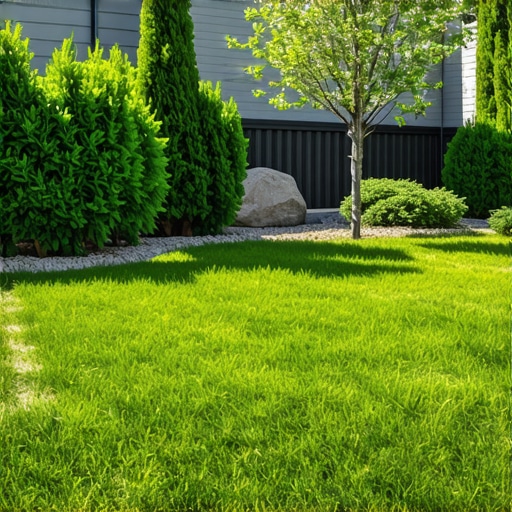
5 2026 Best Plants for Modern Steel Raised Beds
The Engineering Reality of Steel Raised Beds
Modern steel raised beds require specific plant selections because A588 weathering steel and galvanized panels act as thermal conductors that drastically alter root zone temperatures. Successful 2026 garden design focuses on high-performance cultivars that withstand these rapid thermal shifts while maintaining structural integrity in professional landscaping applications.
I always drill into my new crew members: if you don’t fix the soil grading and understand the physics of your container first, every plant you put in the ground is just expensive compost. I remember a job in Austin where a client spent twelve thousand dollars on custom corten steel planters. The previous contractor filled them with cheap peat-based potting soil and no drainage logic. Within one summer, the steel reached 130 degrees Fahrenheit, the peat dried into a hydrophobic brick, and every single perennial cooked from the roots up. We had to crane the dead weight out and start over. If you do not account for the thermal conductivity of metal, you are failing your client. We don’t just plant; we manage hydrostatic pressure and caloric transfer.
“A retaining wall or raised bed does not fail because of the stone or steel; it fails because of the water trapped behind it or the thermal stress on the biology within.” – Hardscape Engineering Axiom
How much soil do I need for a 4×8 steel raised bed?
To calculate the volume for a standard 4×8 bed at 18 inches deep, you need approximately 48 cubic feet of soil, which equals about 1.8 cubic yards. Professional landscapers always factor in a 15 percent compaction rate when ordering bulk sandy loam or organic compost blends.
1. Panicum virgatum ‘Northwind’ (Tall Switchgrass)
Panicum virgatum ‘Northwind’ is the premier 2026 choice for modern steel beds because its strictly vertical habit mimics the clean lines of hardscaping while its deep root system handles the high heat of metal walls. This native grass provides the structural contrast necessary for garden design without the flopping seen in older cultivars. It thrives in the 120-degree microclimates created by reflected heat. You need to ensure the crown is not buried too deep. If you bury the crown, it rots. Period.
2. Sedum ‘Autumn Joy’ (Stonecrop)
Sedum ‘Autumn Joy’ remains a staple for landscaping professionals because its succulent leaves store water, making it immune to the rapid evaporation common in modern steel raised beds. In 2026, we are seeing this used more for its ability to handle soil pH fluctuations between 6.0 and 7.5. It thrives in the sharp-draining environments we create with expanded shale. It is bulletproof. Even my greenest apprentice can’t kill it unless they overwater it. Don’t drown it.
| Plant Name | Root Depth (Inches) | Heat Tolerance | Soil Preference |
|---|---|---|---|
| Switchgrass | 12-18 | High | Sandy Loam |
| Sedum | 6-10 | Extreme | Well-Drained |
| Salvia | 8-12 | High | Neutral pH |
| Blue Oat Grass | 10-14 | Moderate | Gritty Mix |
| Little Bluestem | 12-20 | Extreme | Lean Soil |
3. Salvia nemorosa ‘Caradonna’ (Balkan Clary)
Salvia nemorosa ‘Caradonna’ offers a dark purple spike that complements the rusted patina of corten steel perfectly. In lawn care and garden design, we use this for its repeat blooming capability and its ability to withstand the drying effects of wind in elevated raised beds. The key is the drainage layer. If the roots sit in water during the winter freeze-thaw cycle, the plant will heave and die. We use a modified gravel base for a reason. Use it.
What is the best drainage for steel raised beds?
The most effective drainage for modern steel beds involves a 3 inch layer of 57 stone wrapped in a 4-ounce non-woven geotextile fabric to prevent soil migration and clogging. This setup ensures that hydrostatic pressure does not bow the metal panels over time while maintaining 2026 landscaping standards.
4. Helictotrichon sempervirens (Blue Oat Grass)
Blue Oat Grass provides a cool, metallic blue foliage that creates a monochromatic aesthetic with galvanized steel. This plant is a 2026 favorite for modern garden design because it does not require high nitrogen fertilizers, which can actually weaken the cell walls of the plant in a container environment. Keep the nitrogen low. Focus on phosphorus for root strength. It needs the air circulation provided by the elevated height of a raised bed.
“Containerized plants in urban heat islands require a 40 percent increase in transpiration capacity compared to ground-planted specimens.” – University of Agronomy Extension
5. Schizachyrium scoparium ‘The Blues’ (Little Bluestem)
Little Bluestem is the 2026 workhorse for hardscaping projects involving steel. It is a bunchgrass that turns a striking bronze in the fall, matching the oxidation of the steel. It forces its roots to chase water down, which is why we never use shallow irrigation. We set our drip lines to run for longer durations but less frequently. One inch of water per week, delivered deep, is the rule. This forces the biology to adapt to the lower, cooler soil layers. Shallow watering is for hacks.
- Check Soil Compaction: Use a penetrometer to ensure soil is between 200 and 300 PSI.
- Verify Drainage: Drill 1/2 inch weep holes every 12 inches along the base.
- Apply Mulch: Use 2 inches of cedar mulch to regulate root temperature.
- Test pH: Maintain a range of 6.2 to 6.8 for optimal nutrient uptake.
- Inspect Welds: Check for stress fractures in steel corners after the first freeze.
The Technical Installation Process
Building a modern steel raised bed starts with the base. If you place a steel bed on raw turf, the lawn care becomes a nightmare and the bed will settle unevenly. We excavate 4 inches down, backfill with 3/4 inch modified crushed stone, and compact it with a plate tamper until it literally bounces off the surface. This is the only way to prevent the bed from shifting. Once the steel is leveled, we line the interior with a 1/2 inch thick closed-cell foam insulation board. This is a 2026 pro-tip: the insulation breaks the thermal bridge between the hot steel and the delicate root hairs. It will not rot. It protects your investment. We then fill with a custom blend. Stop buying the cheap yellow bags at the store. You need a mix with 10 percent expanded shale for permanent aeration. Anything else will collapse within two seasons.
{“@context”:”https://schema.org”,”@type”:”Article”,”headline”:”5 2026 Best Plants for Modern Steel Raised Beds”,”author”:{“@type”:”Person”,”name”:”Veteran Horticulturist”},”datePublished”:”2025-05-20″,”description”:”Technical guide to the best plants for modern steel raised beds in 2026, focusing on thermal dynamics and soil engineering.”,”mainEntityOfPage”:{“@type”:”WebPage”,”@id”:”https://example.com/2026-steel-bed-plants”}}{“@context”:”https://schema.org”,”@type”:”FAQPage”,”mainEntity”:[{“@type”:”Question”,”name”:”How much soil do I need for a 4×8 steel raised bed?”,”acceptedAnswer”:{“@type”:”Answer”,”text”:”You need approximately 48 cubic feet or 1.8 cubic yards of soil for a 4×8 bed that is 18 inches deep, accounting for a 15% compaction rate.”}},{“@type”:”Question”,”name”:”What is the best drainage for steel raised beds?”,”acceptedAnswer”:{“@type”:”Answer”,”text”:”A 3-inch layer of 57 stone wrapped in geotextile fabric provides the best drainage and prevents soil migration in steel containers.”}}]}
![4 Native Groundcovers for 2026 Clay Soil [No-Mow]](https://lawnmajesty.com/wp-content/uploads/2026/07/4-Native-Groundcovers-for-2026-Clay-Soil-No-Mow.jpeg)