Build a $200 2026 Gravel Path for Modern Yards
The Engineering Reality of a Low-Budget Gravel Path
A professional-grade gravel path for under $200 requires a shift from aesthetic fluff to structural engineering, focusing on soil compaction, sub-base stability, and hydrostatic drainage. By utilizing crushed stone and geotextile fabrics, a homeowner can prevent lateral migration of aggregate and ensure a decade-long lifespan without the $15-per-square-foot contractor price tag. Most DIY attempts fail because they treat gravel as mulch. It is not mulch; it is a structural wear layer.
I recently got called out to tear up a $30,000 patio that was sinking because the previous contractor thought 2 inches of sand was a ‘good enough’ base. It wasn’t. Within three years, the pavers were tilting like a sinking ship because water trapped in the subgrade turned the clay into soup. If a $30,000 project fails for lack of a $500 drainage solution, your $200 path will vanish into the mud in six months if you don’t respect the dirt. I see it every week: homeowners buying ‘pretty’ stones from big-box stores and dumping them on top of grass. That is not landscaping; that is creating a future weeding nightmare and a trip hazard.
“A retaining wall doesn’t fail because of the stone; it fails because of the water trapped behind it.” – Hardscape Engineering Axiom
How much modified gravel do I need for a path base?
Calculating base material volume is the difference between a stable path and a muddy mess. For a standard 25-foot path at 36 inches wide, you need approximately 0.5 to 0.75 cubic yards of compactible aggregate like #2A modified stone or crusher run. This ensures a 2-inch compacted lift that prevents the finish gravel from migrating into the native soil. Don’t eyeball it. Use a calculator.
The Anatomy of a $200 Professional Path
Building a gravel path starts with excavation to a depth of at least 4 inches to accommodate the sub-base, separation layer, and finish aggregate. This hardscaping approach focuses on soil mechanics rather than just surface appearance, ensuring the path remains permeable yet firm underfoot. You are building a road, just smaller.
| Material Component | Spec / Technical Name | Approximate Cost | Function |
|---|---|---|---|
| Sub-base | #2A Modified / Crusher Run | $45 – $60 (Bulk) | Structural Foundation |
| Separation Layer | Non-Woven Geotextile | $30 – $45 (Roll) | Prevents Fines Migration |
| Finish Stone | 3/8″ Pea Gravel or Decomposed Granite | $60 – $80 (Bulk) | Wear Surface |
| Edging | Pressure Treated 2×4 or Steel Edging | $40 – $60 | Lateral Retention |
Skip the plastic weed barrier. It is useless. It tears under the weight of stone and clogs with silt, creating a petri dish for weeds. You need non-woven geotextile fabric. This material allows water to pass through at a rate of 90 gallons per minute per square foot while keeping your expensive gravel from sinking into the subgrade. If the stone touches the dirt, the dirt wins. Every time.
Step-by-Step Installation Protocol
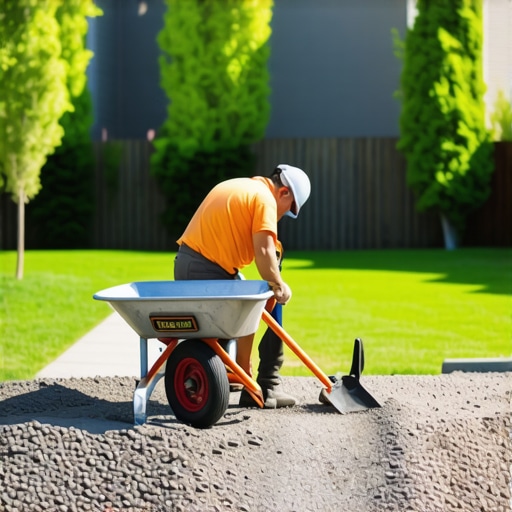
1. Excavation and Grading: Cut your path 4 inches deep. Use a flathead shovel for clean sidewalls. Ensure a 2% cross-slope to direct water away from house foundations. 2. Compaction: Rent a manual tamper. Hit the bare dirt until the tool literally bounces off the surface. If the dirt is soft, your path will fail. 3. Fabric Placement: Lay the geotextile. Overlap seams by 12 inches. 4. The Structural Base: Spread 2 inches of crushed stone. Mist it with water to lubricate the particles, then tamp again. 5. Edging: Secure your edging with 10-inch spikes. 6. The Top Layer: Apply 1.5 to 2 inches of your chosen aggregate. No more. If it is too deep, it feels like walking through beach sand.
What is the best gravel for a low-maintenance walkway?
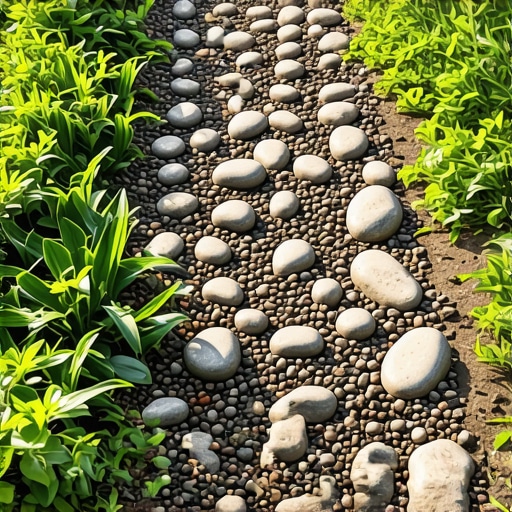
The best gravel for garden design and walkway longevity is angular crushed stone or decomposed granite with fines because the jagged edges lock together under pressure. While pea gravel is popular, its rounded shape means it never truly stabilizes, leading to a ‘rolling’ effect under foot traffic. For a $200 budget, 3/8-inch minus screenings offer the highest stability-to-cost ratio.
“Soil moisture and compaction density are the primary determinants of subgrade California Bearing Ratio (CBR) values in residential hardscaping.” – USDA Soil Engineering Manual
Check your lawn care routine once the path is in. Do not let grass clippings accumulate on the gravel. Organic matter decomposes and turns into soil, which is where weed seeds germinating from the air will take root. Use a leaf blower. Keep it clean. A gravel path is a filter; don’t let it get clogged with yard waste. Landscaping success is 10% installation and 90% preventing biology from taking back the ground.