![Stop 2026 Leaf Rust on Hydrangea Shrubs [Fix]](https://lawnmajesty.com/wp-content/uploads/2026/07/Stop-2026-Leaf-Rust-on-Hydrangea-Shrubs-Fix.jpeg)
Stop 2026 Leaf Rust on Hydrangea Shrubs [Fix]
The Forensic Autopsy of a Dying Hydrangea
You see the orange pustules and the premature defoliation and you think it is just a bit of seasonal spotting. It is not. To stop 2026 leaf rust on hydrangea shrubs, you must eliminate the moisture-heavy micro-climate by increasing airflow and switching to drip irrigation. This fungal pathogen, often Pucciniastrum hydrangeae, thrives on wet foliage and requires immediate removal of infected biological material to prevent spore migration. I have spent two decades digging in the dirt, and I have seen entire garden designs worth fifty thousand dollars get liquidated because someone thought overhead sprinklers were ‘good enough’ for Hydrangea arborescens. It makes my blood boil. These plants are not difficult; they are just misunderstood by contractors who do not respect the relationship between humidity and fungal biology.
The Apprentice Lesson: Soil Grading and Spore Splash
I always drill into my new crew members: if you don’t fix the soil grading first, every plant you put in the ground is just expensive compost. I remember an apprentice, kid named Mike, who thought he could skip the final grade on a North-facing hydrangea bed. Within three months, the lack of drainage led to standing humidity. The rust did not just appear; it exploded. We had to rip out twenty mature ‘Annabelle’ shrubs because the spores had established a permanent colony in the stagnant air of that low spot. If the water doesn’t move, the spores don’t leave. Rust is an obligate parasite. It needs a living host to survive, but its spores are incredibly resilient, traveling on the slightest breeze or, more commonly, hitching a ride on water droplets splashing off the soil. Stop the splash, stop the rust.
What exactly is Hydrangea Leaf Rust?
Hydrangea leaf rust is a fungal infection caused primarily by the pathogen Pucciniastrum hydrangeae, manifesting as orange or yellow spores on the leaf undersides. This infection disrupts the plant’s photosynthetic capacity, leading to weakened structural integrity and potential dormancy failure. It is a specific type of fungus that often requires an alternate host, like the hemlock tree, to complete its life cycle. If you have hemlocks nearby, you are in a high-risk zone. You need to look for the urediniospores. These are the powdery orange masses. They are the reproductive engines of the fungus. One leaf can produce millions of them. They are microscopic. They are relentless. They do not care about your ‘picturesque’ garden goals.
“Fungal rusts are among the most specialized plant pathogens, often requiring two unrelated host plants to complete their complex life cycle, making environmental management as critical as chemical intervention.” – Compendium of Ornamental Plant Diseases
How do I identify rust on hydrangea leaves?
Check the underside of the leaves for small, orange-to-yellow raised spots called pustules. Unlike Cercospora leaf spot, which creates circular brown spots with purple halos, rust looks like someone dusted the bottom of the leaf with cinnamon or rust-colored flour. By the time the top of the leaf shows yellow chlorosis, the infection is already systemic in that tissue. Rub your thumb across the spot. If it leaves an orange smudge on your skin, you have a rust problem. It is a diagnostic slam dunk. Don’t guess. Know.
The Physics of Fungal Spread and Micro-Climates
Airflow is the enemy of rust. Most ‘mow-and-blow’ landscapers jam hydrangeas tight against a foundation wall because it looks ‘full’ on day one. That is a death sentence. You need at least 24 to 36 inches of clearance for air to circulate. When the air stays still, the relative humidity at the leaf surface spikes. This creates a thin film of water—the ‘boundary layer’—where spores germinate in as little as two hours. We use Horticultural Engineering to fight this. This means thinning out the interior of the shrub. Take out 20% of the old wood every year. Open up the canopy. Let the wind do the work for you. It is cheaper than fungicide and far more effective.
How much airflow do hydrangeas actually need?
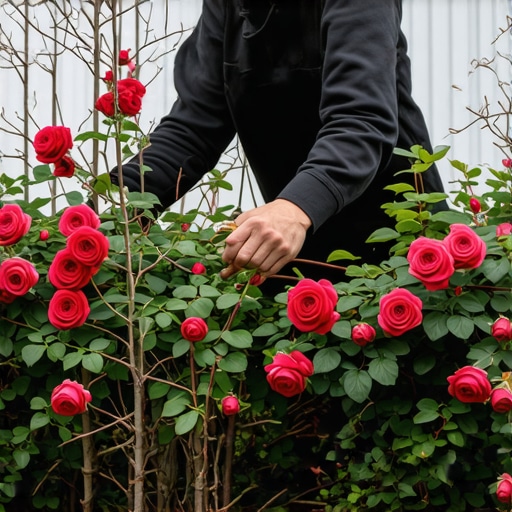
For a mature hydrangea, you should be able to see dappled light through the center of the plant during the height of summer. If the center is a dark, tangled mass of dead twigs and crossing branches, you have built a fungal incubator. Pruning is not just for aesthetics; it is a life-saving medical procedure for the plant. Use bypass pruners. Sanitize them with 70% isopropyl alcohol between every single cut. If you don’t, you are just a high-speed vector for the very disease you are trying to stop.
The 2026 Remediation Protocol
If you have found rust, you need a forensic approach to cleanup. Do not just spray and pray. The following table outlines the efficacy of various treatments based on my field experience and agricultural standards.
| Treatment Method | Active Agent | Efficacy Rating | Application Frequency |
|---|---|---|---|
| Bio-Fungicides | Bacillus subtilis | Moderate (Preventative) | Every 7 days |
| Copper Fungicide | Copper Octanoate | High (Curative) | Every 10-14 days |
| Sulfur Dust | Elemental Sulfur | High (Preventative) | Post-rain application |
| Neem Oil | Azadirachtin | Low (Organic) | Every 5 days |
Copper is the heavy hitter. It denatures the fungal proteins. But be careful; if you apply copper when it is over 85 degrees, you will scorch the leaves. This is called phytotoxicity. You solve one problem and create another. That is rookie behavior. Apply in the early morning so the product can dry before the sun hits the zenith.
The Step-by-Step Fix Checklist
- Immediate Defoliation: Strip every leaf that shows more than 10% infection. Bag them. Do not compost them. Composting rust is just storing it for next year.
- Ground Clearing: Remove all old mulch. Spores live in the organic debris. Replace it with fresh, high-quality hardwood mulch, keeping it 3 inches away from the root flare.
- Irrigation Audit: Rip out the spray heads. Install Netafim drip tubing. The leaves should never get wet from the hose.
- Soil Testing: Check your pH. Hydrangeas stressed by improper pH (too alkaline or too acidic for the specific cultivar) have weakened immune systems. Aim for a 6.0 to 6.5 range for general health.
- Nitrogen Management: Stop using high-nitrogen ‘lawn’ fertilizers near your shrubs. Excess nitrogen creates ‘soft’ growth that fungal hyphae can penetrate easily.
“Excessive nitrogen fertilization can increase the susceptibility of woody ornamentals to various pathogens by stimulating succulent growth that lacks a thickened cuticle.” – Penn State Agricultural Extension
Can hydrangeas recover from leaf rust?
Yes, but they will not ‘heal’ existing leaves. Once a leaf is rusted, that tissue is compromised. Your goal is to protect the new growth. If you follow the remediation protocol, the new flush of leaves in 2026 will be clean. If you don’t change the environment, the rust will return the moment the dew point hits 60 degrees. It is a biological certainty.
Hardscaping and Drainage: The Structural Solution
In the world of professional landscaping, we look at the ‘hard’ side of the yard to solve ‘soft’ plant problems. If your hydrangeas are rusting, check your downspouts. A gutter dumping five gallons a minute into a hydrangea bed during a summer storm creates a humidity bomb. We install French drains or 4-inch N-12 corrugated pipe to move that water 20 feet away from the planting beds. Soil compaction is another silent killer. If the soil is compacted to 90% Proctor density because of construction equipment, the water can’t infiltrate. It sits on the surface, evaporates, and coats the leaves in moisture. Use a broadfork to aerate the soil around the drip line. Give the roots some oxygen. Dry feet, dry leaves, no rust.
Final Maintenance Schedule
You cannot be lazy with Pucciniastrum. In the late fall, once the plant hits dormancy, do a ‘clean sweep.’ Remove every single piece of leaf litter from the base of the plant. Spray the bare canes with a dormant oil or a lime-sulfur wash. This kills the overwintering spores (teliospores). In the spring, apply a 3-inch layer of fresh mulch to create a physical barrier between the soil and the new leaves. This is how pros do it. We don’t hope for the best. We engineer the environment so the fungus cannot win. It is a war of attrition. You have the tools now. Go win it.
![Stop Killing 2026 Lavender: Drainage Rules [Zone 8]](https://lawnmajesty.com/wp-content/uploads/2026/06/Stop-Killing-2026-Lavender-Drainage-Rules-Zone-8.jpeg)