Build a $400 2026 Brick Walkway for Garden Paths
The Engineering Reality of a $400 Walkway
Building a brick walkway for $400 in 2026 requires more than just laying pavers on dirt; it demands a deep understanding of subgrade compaction, hydrostatic pressure, and material sourcing. To hit this budget without sacrificing structural integrity, you must trade your sweat for the engineering failures commonly seen in amateur hardscaping projects. A walkway is not a decoration; it is a rigid system designed to manage water and distribute weight across the earth’s surface. Skip the prep, and you are just buying expensive trash for the next homeowner to dig up. I recently got called out to tear up a $30,000 patio that was sinking because the previous contractor thought he could skip the geotextile fabric and use ‘fill dirt’ as a base. It was a swamp of shifting pavers and cracked mortar within two seasons. Do not be that person. Even with a 15-foot path, the physics of the ground do not change. If the base is soft, the path is doomed.
How deep should I dig for a brick walkway base?
For a standard garden path, you must excavate to a depth of at least 7 to 9 inches to accommodate 4 inches of compacted 21A modified stone, 1 inch of bedding sand, and the 2.25-inch thickness of the clay bricks. This depth ensures that the subgrade is protected from frost heave and seasonal soil expansion.
“A retaining wall or pavement system doesn’t fail because of the stone; it fails because of the water trapped behind or beneath it.” – Hardscape Engineering Axiom
The Science of the Subgrade and Geotextiles
The success of your $400 project hinges on the soil you cannot see. Most DIYers fail because they ignore the CBR (California Bearing Ratio) of their native soil. If you have heavy clay, your path will ‘swim’ as the clay absorbs water. This is where non-woven geotextile fabric becomes your best friend. This fabric acts as a separation layer. It prevents your expensive crushed stone from being swallowed by the soft mud below. It costs about $40 for a small roll, but it effectively doubles the life of your walkway. You need to strip away all organic matter. If you see roots or black topsoil, keep digging. You need to hit the mineral soil. This is the foundation. It must be bone-dry and packed down until it feels like concrete before the first piece of stone even hits the ground.
What is the best base material for a brick path?
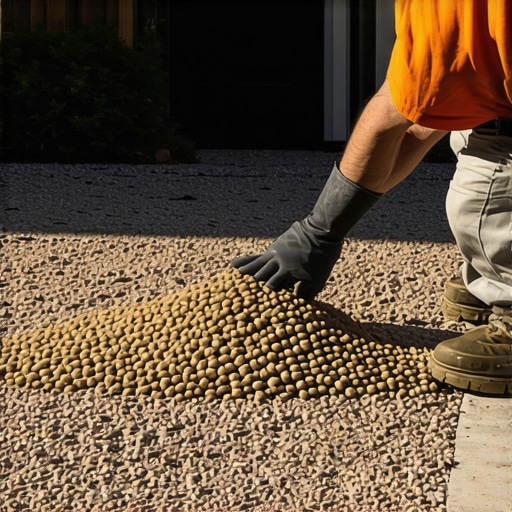
The gold standard for hardscaping is crushed stone with fines, often sold as 21A or 3/4-inch minus. The varied sizes of the stone allow them to lock together under mechanical compaction, creating a solid, non-shifting platform that still allows for vertical drainage.
The 2026 Budget Breakdown: Where to Spend and Save
To stay under $400, you cannot buy premium pavers from a boutique landscape supply yard. You have to hunt for reclaimed clay bricks or overstock from masonry yards. In 2026, material costs are volatile, so sourcing is 70% of the battle.
| Material | Quantity | Estimated Cost (2026) |
|---|---|---|
| Reclaimed Clay Bricks | ~250 units | $150 – $200 |
| 21A Crushed Stone | 1.5 Tons | $60 |
| Concrete Sand | 0.5 Tons | $30 |
| Geotextile Fabric | 1 Roll | $40 |
| Polymeric Sand | 1 Bag | $45 |
| Edge Restraints | 30 Linear Ft | $25 |
Notice the budget does not include tool rental. If you do not own a plate compactor, you must rent one. A hand tamper is a lie. It will not achieve the 95% Proctor density required to keep the bricks from wobbling. Do not skip the rental.
The Installation: Screeding and Compaction Physics
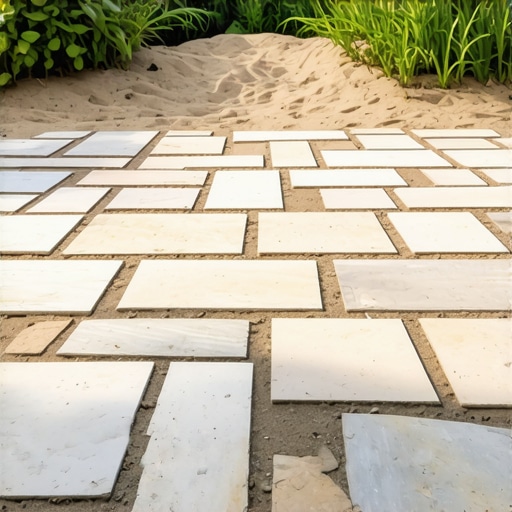
Once your base is in and compacted in 2-inch ‘lifts’ (layers), you move to the bedding sand. This is a 1-inch layer of coarse concrete sand. Do not use play sand. Play sand is rounded and acts like ball bearings; concrete sand is angular and locks together. Use two 1-inch outside-diameter screed pipes to level this layer. When you pull your board across those pipes, the sand should be perfectly flat. This is the only way to get a professional finish. When you lay the bricks, drop them straight down. Do not slide them, or you will ruin your sand bed. Leave a 1/8-inch gap between them. This gap is the ‘joint’ that will be filled with polymeric sand. This sand contains specialized polymers that harden when wet, turning your individual bricks into a monolithic slab that resists weed growth and ant hills.
“Properly installed interlocking pavements rely on the friction between the units and the jointing sand to transfer loads horizontally across the surface.” – ICPI Technical Manual
How do I stop my brick walkway from spreading?
You must install rigid edge restraints, usually made of heavy-duty plastic or aluminum, secured with 10-inch steel spikes every 12 inches. Without these, the lateral pressure of people walking on the path will push the bricks outward into the lawn.
Checklist for a Professional Grade Path
- Call 811 to mark underground utility lines before digging.
- Excavate 6 inches wider than the path on both sides for edge stability.
- Compact the subgrade until it shows no visible deflection under your weight.
- Install geotextile fabric with a 12-inch overlap at seams.
- Use a string line and a line level to maintain a 2% slope away from your house.
- Sweep polymeric sand into joints when the bricks are 100% bone dry.
- Vibrate the bricks with the plate compactor (using a protective mat) to set them into the sand.
Maintenance and Longevity
Your path is a living structure. Over the first year, the bricks will ‘settle’ into their final position. If you see joints opening up, add more sand. Do not use a pressure washer on high power or you will blow out the polymers. A simple garden hose and a soft brush are all you need. If you follow this engineering-first approach, your $400 walkway will last thirty years. If you cut corners, you will be redoing it in three. It is that simple. Hardscaping is a game of patience and physics. Don’t fight the earth; build on top of it correctly.
![Why Your 2026 Concrete Driveway is Cracking [Fix]](https://lawnmajesty.com/wp-content/uploads/2026/06/Why-Your-2026-Concrete-Driveway-is-Cracking-Fix.jpeg)