3 Reasons Your Compost Pile Isn’t Heating Up
Why Your Compost Pile Is Stone Cold: A Forensic Breakdown of Microbial Failure
I always drill into my new crew members: if you don’t fix the soil grading first, every plant you put in the ground is just expensive compost. But here is the kicker: most homeowners can not even make the compost correctly in the first place. I have walked onto multi-million dollar estates where the garden design is impeccable, yet the compost bin in the back is just a stagnant pile of rotting kitchen scraps and dry leaves. It is not just an eyesore; it is a failure of basic biological engineering. If your pile is not hitting temperatures between 131 and 160 degrees Fahrenheit, you are not composting; you are just watching things rot very slowly. Real composting is a controlled burn. It is an exothermic reaction fueled by billions of specialized bacteria. When that pile stays cold, it means those workers are dead or dormant. Fix the biology, or stop wasting your time.
The Carbon to Nitrogen Ratio is Mathematically Broken
A cold compost pile usually results from a carbon-to-nitrogen ratio that exceeds 30:1. Without sufficient nitrogen-rich greens to fuel microbial metabolism, the bacteria responsible for thermophilic decomposition cannot multiply, leaving your organic matter to sit stagnant instead of reaching the 131F to 160F range required. It is pure chemistry. Carbon is the energy source, but nitrogen is the protein building block for the microbes. If you dump three bags of shredded oak leaves (high carbon) into a bin and only toss in a handful of grass clippings (nitrogen), the microbes will starve for protein. They cannot build the population density required to generate heat. You need to aim for a 25:1 or 30:1 ratio by volume. If the pile is cold and dry, you have too much carbon. If it is cold and slimy, you have too much nitrogen and no air. Balance them. It is not a suggestion; it is a requirement.
“Composting is the biological decomposition of organic matter under controlled aerobic conditions… The process is managed to optimize the activity of microbes.” – Penn State Agricultural Extension
How do I make my compost pile get hot fast?
To jumpstart a cold pile, you must inject high-nitrogen catalysts such as fresh grass clippings, blood meal, or urea. Incorporate these materials into the center of the pile where the thermophilic activity is highest, ensuring you provide enough moisture to maintain the consistency of a wrung-out sponge. Stop overthinking the ‘natural’ aspect and start thinking about the fuel. You are running a reactor. If you want heat, you need to provide the high-octane nitrogen that bacteria crave.
Insufficient Aeration and the Anaerobic Death Spiral
Decomposition is an aerobic process requiring oxygen to sustain thermophilic bacteria. When a pile is too dense or lacks structural browns, it becomes anaerobic, leading to a drop in internal temperature, a foul rotten egg smell, and a complete stall in the breakdown of organic materials. I see this constantly in lawn care applications where people pile up wet grass clippings. The weight of the water and the fine texture of the grass cause the pile to collapse on itself. This squeezes out the oxygen. The ‘good’ bacteria die off, and the ‘bad’ anaerobic bacteria take over. These guys do not produce heat. They produce methane and organic acids. It smells like a swamp and stays as cold as the ground. You need ‘bulking agents.’ Think wood chips, straw, or coarse corn stalks. These create the structural ‘lungs’ of the pile. Turn it. Get air into the center. Do it today.
| Material Type | C:N Ratio (Approximate) | Role in the Pile |
|---|---|---|
| Fresh Grass Clippings | 15:1 | Green (Nitrogen/Fuel) |
| Vegetable Scraps | 12:1 to 20:1 | Green (Nitrogen/Fuel) |
| Dry Leaves (Oak/Maple) | 60:1 | Brown (Carbon/Structure) |
| Straw | 80:1 | Brown (Carbon/Structure) |
| Wood Chips/Sawdust | 400:1 | Brown (High Carbon) |
Critical Mass and the Physics of Heat Retention
A compost pile needs a minimum volume of 3x3x3 feet to insulate its core and retain heat. If the pile is too small or the moisture content falls below 40%, the microbial community goes dormant, preventing the thermal spike necessary to kill weed seeds and pathogens. This is basic thermodynamics. A small pile loses heat to the atmosphere faster than the microbes can generate it. I see DIYers trying to compost in small plastic buckets. It will not work. You need at least one cubic yard of material to create a self-insulating mass. Furthermore, water is the medium for life. If your pile is dusty, the microbes cannot move, eat, or reproduce. Conversely, if it is sodden, you have the oxygen issue mentioned earlier. It must be damp. If you squeeze a handful of compost and no water comes out, but your hand feels damp, you are in the 50% moisture sweet spot. Any less and the fire goes out.
“A retaining wall doesn’t fail because of the stone; it fails because of the water trapped behind it.” – Hardscape Engineering Axiom
While that quote refers to hardscaping, the principle of water management applies here too. Too much water in your compost creates hydrostatic pressure that collapses air pockets. You need drainage at the base. Build your pile on a 6-inch layer of brush or coarse branches to allow air to enter from the bottom. This is the chimney effect. Without it, you are just making a wet mess.
What is the best green to brown ratio for compost?
The gold standard for a rapidly heating compost pile is a 3-parts brown to 1-part green ratio by volume. This ratio ensures that there is enough carbon for energy and enough structural porosity to allow oxygen to penetrate, while the 1-part nitrogen provides the necessary microbial protein to drive temperatures above 140F. Do not wing it. Measure your buckets. If you are using heavy clay-based soil nearby, keep it out of the pile. It will clog the works. Stick to organic matter and let the biology do the heavy lifting.
- Check the Moisture: Squeeze a handful; it should feel like a damp sponge.
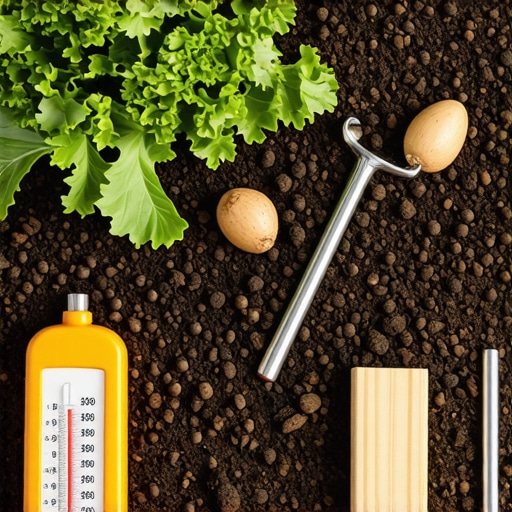
- Monitor the Core: Use a long-stem compost thermometer. If it is under 110F, it is failing.
- Increase Volume: Ensure the pile is at least 3 feet tall and 3 feet wide.
- Turn the Pile: Move the outside materials to the center every 3 to 5 days.
- Add a Catalyst: Throw in a shovelful of active garden soil or finished compost to inoculate it.