
Why Your Lawn Fertilization is Causing Runoff into the Street
The Forensic Autopsy of a Chemical Lawn Disaster
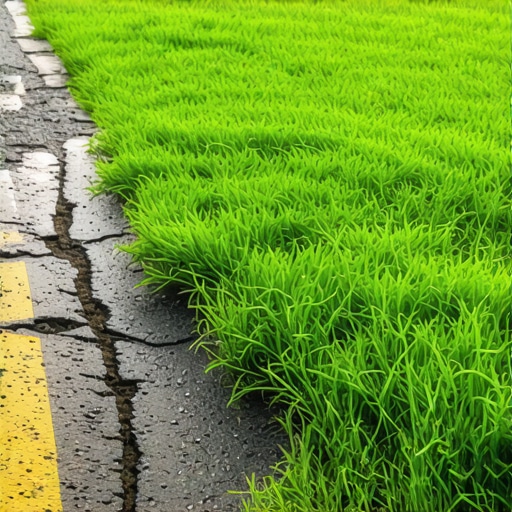
A homeowner called me in a panic last spring after they completely torched their front lawn by applying three times the recommended rate of a high-nitrogen synthetic fertilizer right before a four-inch rainstorm. Not only was the grass yellowing from literal chemical burn, but the sidewalk was stained a rusty orange and the local storm drain was foaming. This is the reality of amateur lawn care. Most people treat their yard like a carpet, but it is a biological filter. When you dump synthetic salts onto compacted soil, you are not feeding plants; you are polluting the local watershed. Most of that expensive nitrogen never even touches a root hair. It just rides the water film straight into the gutter.
Understanding the Physics of Nutrient Runoff and Soil Saturation
Lawn fertilization runoff occurs when the rate of water application exceeds the infiltration capacity of the soil, causing nitrogen and phosphorus to move laterally across the surface. This process is driven by hydrostatic pressure and the cation exchange capacity of your specific soil profile. If your soil is compacted, the water cannot move vertically, so it moves horizontally, taking your investment with it.
“A retaining wall doesn’t fail because of the stone; it fails because of the water trapped behind it.” – Hardscape Engineering Axiom
How much nitrogen actually reaches the roots?
In a poorly managed landscaping environment with heavy compaction, as little as 40 percent of applied synthetic nitrogen may actually be utilized by the turfgrass. The remainder is lost to volatilization into the atmosphere or leaching into the groundwater and surface runoff. This is a massive waste of resources and a failure of basic agronomy.
The Role of Soil Bulk Density in Fertilizer Failure
High soil bulk density is the primary enemy of successful garden design and turf management. When your soil is as hard as concrete, there are no macropores for water and nutrients to enter. Hardscaping elements like driveways and patios often exacerbate this by creating impervious surfaces that funnel high-velocity water onto the grass. This water gains momentum and strips the top layer of fertilizer pellets away. You must address the soil grading and compaction before you ever pull a spreader out of the garage. Core aeration is not optional; it is a structural requirement for nutrient delivery.
| Fertilizer Type | Release Mechanism | Runoff Risk Level | Soil Interaction |
|---|---|---|---|
| Synthetic Prills | Water-soluble salts | High | Rapid dissolve, high mobility |
| Organic Pellets | Microbial breakdown | Low | Requires soil life to activate |
| Liquid Foliar | Direct absorption | Medium | Fast uptake, high wash-out risk |
| Polymer Coated | Osmotic pressure | Very Low | Controlled release over 90 days |
How do I stop fertilizer from washing away in heavy rain?
To prevent fertilizer runoff, you must ensure your soil has the porosity to accept water and that you are using slow-release nitrogen sources. Avoid applications before predicted heavy rain events of more than 0.5 inches. Utilize buffer strips of native plantings or ornamental grasses at the edge of your property to trap sediment and nutrients before they reach the pavement.
“Surface runoff in urban environments is significantly increased when the soil infiltration rate falls below 0.5 inches per hour, a common occurrence in compacted residential lawns.” – Penn State Center for Turfgrass Science
The Engineering Fix: Grading and Buffer Zones
Effective landscaping requires an understanding of civil engineering. If your yard slopes toward the street at a grade of more than 2 percent, you have a high-velocity runoff problem. You might need to integrate a French drain or a bioswale to catch that water. I often see garden design plans that ignore the flow of water, leading to siltation and nutrient loss. We use modified gravel bases under hardscapes to allow for some percolation, but the turf itself needs to be the primary sponge. If you have heavy red clay, your infiltration rate is naturally low. You need to top-dress with compost to break up those clay platelets and improve the structure. It takes time. There is no magic bottle of green liquid that fixes a structural soil failure.
The Professional Remediation Checklist
Follow these steps to ensure your nutrients stay in the root zone where they belong:
- Conduct a Soil Test: Stop guessing. Determine your pH and existing nutrient levels to avoid over-application.
- Calibrate Your Equipment: Ensure your spreader is putting out the exact pounds per thousand square feet required.
- Mechanical Aeration: Pull 3-inch cores to reduce bulk density and create channels for nutrient entry.
- Time Your Applications: Check the 48-hour forecast. You want a light drizzle to wash the fertilizer into the thatch, not a deluge.
- Establish No-Mow Zones: Use native plants with deep root systems near the street to act as a biological filter.
Precision is everything. If you are just throwing pellets and hoping for the best, you are part of the problem. Your lawn should be a sink for nutrients, not a source of pollution. Check your grade. Test your soil. Stop the runoff. It is that simple.



![Stop Overwatering 2026 Fescue Lawns [Soil Fix]](https://lawnmajesty.com/wp-content/uploads/2026/06/Stop-Overwatering-2026-Fescue-Lawns-Soil-Fix.jpeg)
![Why Fertilizer Alone Won't Fix Your Yellow Fescue [Soil Secrets]](https://lawnmajesty.com/wp-content/uploads/2026/05/Why-Fertilizer-Alone-Wont-Fix-Your-Yellow-Fescue-Soil-Secrets.jpeg)