5 Vertical Garden Ideas for Privacy on Your Deck
5 Vertical Garden Ideas for Privacy on Your Deck
I always drill into my new crew members: if you don’t fix the soil grading first, every plant you put in the ground is just expensive compost. This applies double to deck-based vertical gardens. People think they can just throw a few pots on a wooden structure and call it privacy. They forget about dead loads, live loads, and the physics of water retention. A gallon of water weighs 8.34 pounds. When you saturate 50 gallons of potting soil in a vertical trough, you are adding over 400 pounds of static weight to your deck’s joists. If you haven’t checked your carriage bolts or post-to-beam connections lately, that ‘privacy screen’ might just become a structural liability. I have spent 20 years fixing ‘mow-and-blow’ hack jobs where contractors ignored the engineering of a green wall. Landscaping is not interior decorating; it is civil engineering with living organisms. You need to understand the hydrostatic pressure of wet soil and the shear strength of the lag bolts holding your planters to the railing.
The Structural Foundation of Deck Privacy
Vertical deck gardens provide privacy by using structural frameworks and biological barriers to block sightlines while managing weight distribution and drainage runoff. Successful installs require selecting USDA Hardiness Zone appropriate species and ensuring that the supportive hardware can withstand 100+ MPH wind loads when fully foliated.
“A retaining wall doesn’t fail because of the stone; it fails because of the water trapped behind it.” – Hardscape Engineering Axiom
1. The Heavy-Duty Cedar Trough System
Forget the flimsy plastic bins from big-box stores. Real privacy requires volume. I build my vertical screens using 2 inch thick Western Red Cedar. Cedar contains natural oils that resist rot, but you still need a heavy-duty pond liner to protect the wood from constant soil contact. You want a trough at least 12 inches deep and 10 inches wide. This volume allows for a stable root zone temperature, preventing the ‘cooking’ effect that occurs in smaller plastic pots during July. For privacy, we use Ilex glabra (Inkberry) or Taxus x media (Yew). These aren’t just ‘bushes.’ They are evergreen structural blocks. You must drill 1/2 inch drainage holes every 6 inches and use a gravel ‘feet’ system to elevate the trough so water doesn’t sit on your deck boards and rot the grain.
2. The Stainless Steel Cable Trellis
When weight is a concern, we go with 316-grade stainless steel cables. This is an espalier approach. We anchor the cables into the deck posts using heavy-duty eye bolts. Do not use zinc-plated hardware; it will rust and streak your wood in two seasons. For the plants, we avoid invasive species like English Ivy or Wisteria sinensis which can literally pull a deck apart. Instead, we use Campsis radicans (Trumpet Vine) or Hydrangea anomala petiolaris. You have to train these vines. I tell my guys to use soft rubber ties, not wire. Wire girdles the vascular tissue of the plant, cutting off the flow of nutrients from the roots to the leaves. You are aiming for a leaf area index high enough to block a neighbor’s view without creating a sail that will catch the wind and snap your railing.
3. The Modular Felt Pocket Green Wall
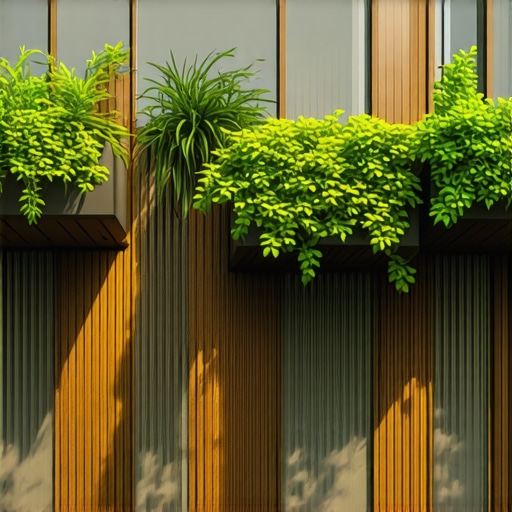
This is the most technically demanding system. These utilize synthetic felt layers that wick water through capillary action. The danger here is hydrostatic pressure and mold. You cannot mount these directly to your house siding or deck railings without a 1/2 inch air gap. Use stainless steel standoffs. We install a dedicated 1/4 inch drip irrigation line to every single pocket. Hand-watering these is a fool’s errand; the top dries out while the bottom drowns. We use a high-porosity mix: 60% perlite, 20% vermiculite, and 20% peat moss. This keeps the weight low while maintaining cation exchange capacity. For plants, think Heuchera or Carex species. They provide a dense, overlapping texture that functions like living shingles.
4. Repurposed Hardscape Block Planters
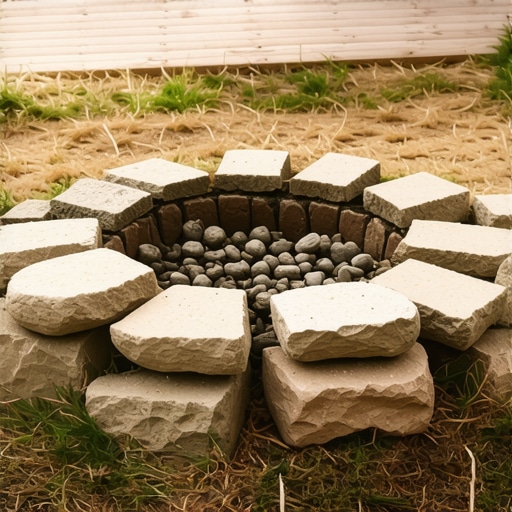
If your deck is at ground level or reinforced with concrete piers, we can use segmental retaining wall (SRW) units. We stack these in a staggered pattern to create ‘pockets.’ This brings a hardscape element to the deck design. The key is the base. You need 6 inches of compacted 21A or #57 crushed stone. If you stack these on top of deck boards, you will experience structural deflection. I’ve seen 4×4 posts snap under the weight of ‘pretty’ stone planters. In these pockets, we plant sedums and sempervivum for low-maintenance, but for privacy, we integrate Pennisetum alopecuroides (Ornamental Grass). The stalks provide a visual and auditory screen as they rustle in the wind.
5. The Retractable Green Screen
This is for the homeowner who wants privacy during a dinner party but an open view in the morning. We use heavy-duty rolling planters made of powder-coated aluminum. Inside, we install Thuja occidentalis ‘Emerald Green’. These must be kept in at least 20-gallon containers. The common mistake is planting them too deep. You must find the root flare—the point where the trunk expands at the base—and keep it level with the soil surface. Planting too deep causes stem girdling roots and slow death. These mobile units allow you to shift your landscape architecture on the fly.
| Western Red Cedar | 15+ Years | High | Moderate (Sealing) |
| Stainless Steel Cable | 25+ Years | Low | High (Pruning) |
| Synthetic Felt pockets | 5-7 Years | Medium | Very High (Irrigation) |
| Aluminum Mobile Bins | 20+ Years | Medium | Low |
How much soil depth do vertical gardens need?
For most privacy plants and screen-forming shrubs, a minimum of 12 to 18 inches of soil depth is required to prevent root desiccation and provide enough nutrient density. Smaller perennials can survive in 6 inches, but they will require twice the irrigation frequency during peak evapotranspiration periods.
Which plants provide the fastest deck privacy?
Clematis and Hops (Humulus lupulus) are the fastest-growing vines, often reaching 10 to 20 feet in a single season. However, for year-round screening, evergreen conifers or broadleaf evergreens like Skip Laurel are superior, though they have a slower growth rate of roughly 6 to 12 inches per year in containers.
- Check deck load capacity before installation.
- Install a dedicated drip irrigation system with a backflow preventer.
- Use professional-grade potting media, not topsoil or ‘garden soil.’
- Monitor soil pH levels quarterly; container salts build up quickly.
- Verify utility lines via 811 if anchoring any posts into the ground near the deck.
“Proper container drainage requires 10-15% of applied water to leach through the bottom to prevent salt buildup.” – Texas A&M AgriLife Extension
Do not be a hack. Landscaping is a science of site-specific variables. If you ignore the biology of the root system or the physics of the weight, your vertical garden will fail. It is that simple. Use the right hardware, choose the right species for your microclimate, and keep your drainage clear. That is how you build privacy that lasts longer than a single season.
![Why Your 2026 Deck Stain is Peeling [Preparation]](https://lawnmajesty.com/wp-content/uploads/2026/06/Why-Your-2026-Deck-Stain-is-Peeling-Preparation.jpeg)