4 Shade-Tolerant Grasses That Actually Stay Green
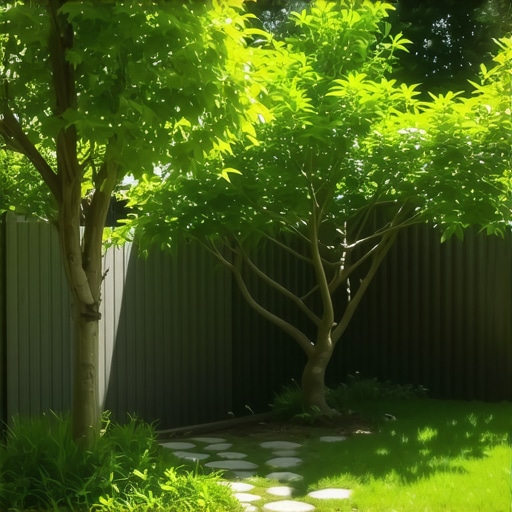
I recently walked onto a property where the homeowner had effectively committed horticultural homicide. They had a massive, 80-year-old White Oak casting a 60-foot shadow, and they tried to ‘fix’ the thinning turf by dumping fifty pounds of high-nitrogen 46-0-0 Urea fertilizer directly into the shade. Within three days, the lawn was a chemical graveyard. The grass didn’t need more nitrogen; it needed a different biological engine. This is a common mistake I see among ‘mow-and-blow’ outfits that don’t understand the compensatory point of photosynthesis. In the shade, a plant’s metabolic rate drops. If you force-feed it nitrogen without enough light to process it, you create weak, succulent tissue that Rhizoctonia solani fungus will devour in forty-eight hours. Most contractors will just tell you to mulch it or throw down some ‘Sun and Shade’ mix from a big-box store, but that is a temporary band-aid. You need specific cultivars that can survive on four hours of filtered light and soil that hasn’t been compacted into a brick by decades of root growth. We are looking at soil pH, bulk density, and the Red to Far-Red light ratio. If you do not get those right, you are just throwing money into a compost pile.
The Biological Reality of Growing Turf in the Dark
Growing shade-tolerant grass requires balancing photosynthetic efficiency with soil nitrogen management because most shaded lawns fail due to nitrate toxicity or fungal pathogens in low-light environments. When a tree canopy filters sunlight, it doesn’t just reduce the intensity; it changes the quality of the light. Trees absorb the blue and red wavelengths, leaving only the ‘far-red’ light for the grass below. This triggers ‘shade avoidance syndrome’ in cheap grass types, causing them to grow tall, thin, and spindly until they exhaust their carbohydrate reserves and die. To succeed, we must select species that have a lower light compensation point, meaning they can produce more energy with less fuel.
“Turfgrasses growing in shade have lower non-structural carbohydrate levels, thinner leaves, and reduced root mass compared to plants in full sun, making them significantly more susceptible to environmental stress and traffic.” – Penn State Center for Turfgrass Science
How many hours of sun does shade-tolerant grass need?
Most shade-tolerant grass species require a minimum of four hours of direct sunlight or six to eight hours of filtered dappled light to maintain root density. If your site receives less than three hours of light, no amount of fertilizer or aeration will keep the turf alive long-term.
1. Fine Fescue: The Micro-Blade Champion
Fine fescues are the undisputed kings of the northern shade. This group includes Creeping Red, Chewings, and Hard Fescue. These grasses have the lowest light requirements of any cool-season turf. Their blades are needle-thin, which reduces the surface area for transpiration but increases the density of the canopy. I typically recommend a blend of these three to ensure genetic diversity. Fine fescue thrives in well-drained, acidic soil with a pH between 5.5 and 6.5. If your soil is heavy clay, you must amend it with organic matter to increase the macropore space. These grasses do not like ‘wet feet.’ If you over-water them in the shade, they will develop root rot faster than you can pull the hose in. You have to be careful with nitrogen here. I never apply more than two pounds of actual nitrogen per 1,000 square feet per year on fescue. Any more and you are just asking for a leaf spot outbreak. They are delicate underfoot, so don’t plan on holding a football game on a fine fescue lawn. It is for looking, not for trampling.
2. St. Augustine Grass: The Broad-Leaf Shade Specialist
For my clients in the South, St. Augustine is the go-to. Specifically, the ‘Palmetto’ and ‘CitraBlue’ cultivars have shown incredible resilience in 60% to 70% shade. Unlike fescues, St. Augustine is a creeping grass that spreads via stolons. This allows it to ‘reach’ for light and move nutrients across the plant body. However, because it is so thick and succulent, it is a magnet for the Southern Chinch Bug. You have to monitor the thatch layer religiously. If that thatch gets thicker than half an inch, your water and nutrients will never reach the soil. I always tell my crew: if you can’t feel the soil with your finger when you push through the grass, it’s time to verticut. St. Augustine also requires a higher mowing height. You should never scalp this grass. Keep it at 3.5 to 4 inches. This provides more leaf surface area for photosynthesis, which is critical when light is at a premium. Don’t skip the micronutrients either. Shaded St. Augustine often suffers from iron chlorosis, turning a sickly yellow. A chelated iron application will snap it back to a deep green without the growth surge of nitrogen.
Can I grow grass under a dense oak or maple tree?
Growing grass under dense hardwood canopies is possible if you thin the tree crown by 20 percent and increase the mowing height of the grass. These actions allow more UV penetration and increase the plant’s carbohydrate storage capacity in the root system.
3. Turf-Type Tall Fescue (TTTF): The Deep-Rooted Workhorse
If you have a ‘transition zone’ yard where it’s too hot for fine fescue but too cold for St. Augustine, Turf-Type Tall Fescue is your best bet. Cultivars like ‘Falcon IV’ or ‘Rebel’ have been bred for shade tolerance and heat resistance. The secret weapon of TTTF is its root system. I have seen TTTF roots dive three feet deep into the subsoil to find moisture. This makes it much more drought-tolerant than other shade grasses. However, TTTF is a bunch-type grass. It doesn’t have runners. If a patch dies out, it won’t fill back in on its own. You have to over-seed every autumn to keep the density up. When you are planting under trees, you aren’t just competing for light; you are competing for water. Tree roots are opportunistic. They will suck every drop of moisture out of the top six inches of soil. You need to water deeply and infrequently to force the grass roots to go deeper than the tree’s feeder roots. It is a game of underground chess. [image-placeholder]
“A retaining wall doesn’t fail because of the stone; it fails because of the water trapped behind it, much like a lawn fails not from the shade itself, but from the lack of gas exchange in compacted, shaded soil.” – Hardscape Engineering Axiom
4. Zoysia Grass: The High-Density Shade Alternative
Zoysia used to be considered a full-sun grass, but newer cultivars like ‘Zeon’ and ‘Emerald’ have changed the game. These are the Cadillacs of the turf world. They feel like a thick carpet under your feet and stay green longer into the fall than Bermuda. Zeon Zoysia, in particular, can handle about 4 to 5 hours of sun and still maintain a tight knit. The downside? It grows slowly. If you damage it, it takes a long time to recover. It also requires a specialized reel mower if you want that golf-course look. Most homeowners try to cut Zoysia with a dull rotary blade and end up shredding the leaf tips, which leads to browning and disease. You need a sharp, clean cut. Zoysia also has a high silica content, making it tough for bugs to chew on, which is a plus. But be warned: the initial cost for sod is triple what you’ll pay for fescue. It’s an investment in engineering, not just a quick green-up. If you don’t have a functional irrigation system with a smart controller, don’t even think about Zoysia.
Technical Comparison of Shade-Tolerant Cultivars
The following table breaks down the mechanical requirements for the four primary shade-tolerant turf options. Do not ignore these parameters; the biology of the site dictates the success of the install.
| Grass Type | Min. Sun (Hours) | Traffic Tolerance | Mowing Height (Inches) | Drought Resistance |
|---|---|---|---|---|
| Fine Fescue | 3-4 | Low | 2.5 – 3.5 | Moderate |
| St. Augustine | 4-5 | Moderate | 3.5 – 4.5 | Low |
| Tall Fescue (TTTF) | 5-6 | High | 3.0 – 4.0 | Very High |
| Zoysia (Zeon) | 4-5 | High | 1.5 – 2.5 | High |
The No-Fail Shade Maintenance Protocol
You cannot treat a shaded lawn like a sunny one. You will kill it. Follow these specific engineering steps to keep your shaded turf from thinning out over time.
- Raise the Blade: Mow at the highest recommended setting for your species. More leaf equals more energy production.
- Water at 4 AM: Shaded areas stay wet longer. Watering at night invites fungus. Watering in the morning allows the sun to dry the blades quickly.
- Core Aeration: Do this twice a year under trees. Tree roots and foot traffic compact the soil, cutting off oxygen to the grass roots.
- Limit Nitrogen: Use slow-release organic fertilizers. Fast-acting synthetic nitrogen in the shade causes cell wall elongation that is weak and prone to collapse.
- pH Correction: Tree leaves (especially oak and pine) can acidify the soil. Test your pH annually and apply pelletized lime to keep it between 6.0 and 7.0.
Stop looking for a ‘miracle seed.’ There is no such thing. There is only proper site prep, drainage correction, and cultivar selection. If you have standing water in your shaded areas, your grass will die regardless of the species. You might need to install a French drain or a dry creek bed to handle the hydrostatic pressure and surface runoff before you even think about sod. Landscaping is 90 percent preparation and 10 percent planting. If you skip the prep, you are just buying expensive compost. Get a soil test first. Know your drainage patterns. Then, and only then, pick your grass. It is a science, not a hobby.