The Best Time to Aerate Your Lawn for Maximum Growth
The Forensic Autopsy of a Suffocating Lawn
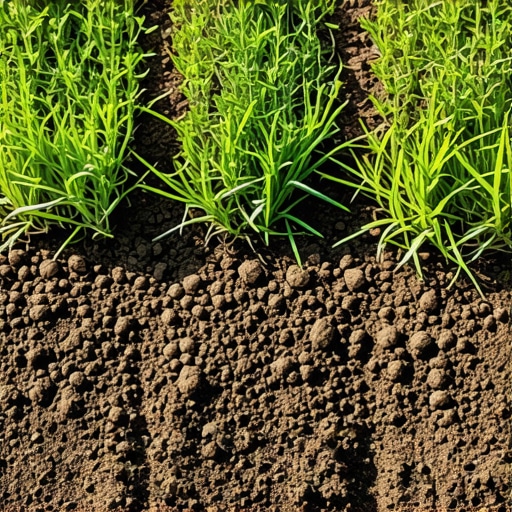
Most homeowners assume their grass is dying because of a lack of nitrogen or a failure of the irrigation system. They see yellowing blades and immediately reach for a bag of high-nitrogen synthetic fertilizer. This is a mistake. I have walked onto hundreds of properties where the turf was struggling, and in 90% of those cases, the issue wasn’t the chemical makeup of the soil—it was the physical structure. The soil was literally gasping for air. When you have high-traffic areas or heavy clay soils, the bulk density of the earth increases to a point where oxygen cannot reach the root zone. Without oxygen, root respiration stops. When respiration stops, the plant cannot uptake nutrients. You are throwing money into a dead system.
The Apprentice Lesson
I always drill into my new crew members: if you don’t fix the soil grading and aeration first, every plant you put in the ground is just expensive compost. I remember a kid named Danny who thought he could just throw seed on a compacted slope in the middle of a July heatwave. Two weeks later, the seed was in the storm drain and the yard was still a dust bowl. I had to take him out there with a penetrometer to show him that the soil was at 300 PSI. A root can’t penetrate that. We had to wait for the right moisture window, pull three-inch cores, and remediate the organic matter. It’s about timing and physics, not just aesthetics.
The Best Time to Aerate Your Lawn for Maximum Growth
The optimal window for core aeration is dictated by the active growth cycle of your specific turfgrass species, which typically occurs in the early fall for cool-season grasses (Bluegrass, Fescue) or late spring for warm-season varieties (Bermuda, Zoysia). Timing aeration with peak growth ensures the plant recovers rapidly from mechanical trauma and fills the core holes with new root mass.
“Core aeration is the process of mechanically removing small plugs of thatch and soil from the lawn to improve soil aeration.” – Penn State Extension
How do I know if my lawn needs aeration?
You can perform a simple “screwdriver test.” If you cannot easily push a standard screwdriver 6 inches into the soil when it is moist, your bulk density is too high. You should also look for localized dry spots where water beads up and runs off rather than soaking in. This is often a sign of a thick thatch layer exceeding 0.5 inches, which acts as a hydrophobic barrier. In high-end garden design, we never install hardscaping like patios or walkways without first assessing how the surrounding turf will drain. If the soil is compacted against a new paver edge, the hydrostatic pressure will eventually undermine the base of your stone work. It is all connected.
The Science of Soil Pore Space and Gas Exchange
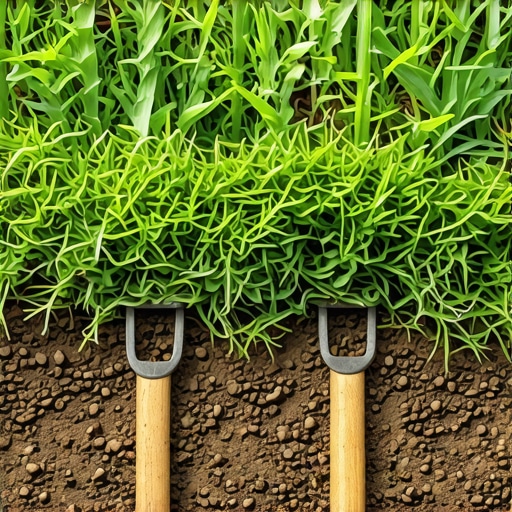
Soil is not a solid mass; it is a collection of minerals, organic matter, and, most importantly, pore space. In a healthy lawn, 50% of the soil volume should be pore space, split between water and air. When you walk on your lawn or mow it with heavy equipment, you crush these pores. This is compaction. Core aeration works by removing a physical cylinder of soil—ideally 0.5 to 0.75 inches in diameter and 2 to 4 inches deep. This creates an immediate pathway for oxygen (O2) to enter the soil and carbon dioxide (CO2) to escape. This gas exchange is vital for the survival of aerobic microbes that break down thatch and convert organic nitrogen into a plant-available form.
Should I aerate my lawn in the spring or fall?
For those in the transition zone or northern climates managing Kentucky Bluegrass or Tall Fescue, fall is the undisputed champion. The cooler air temperatures reduce the risk of the grass drying out, while the soil remains warm enough to stimulate root expansion. If you aerate in the spring, you risk opening the soil just as crabgrass seeds are germinating, giving them a perfect home. If you must aerate in the spring, you have to be surgical with your pre-emergent application timing. For warm-season lawns like St. Augustine or Bermuda, you wait until the grass has completely broken dormancy and has been mowed at least twice. This is usually late May or June. Do not aerate a dormant lawn. You will only cause damage that won’t heal for months.
| Grass Type | Optimal Aeration Window | Recommended Core Depth | Primary Goal |
|---|---|---|---|
| Kentucky Bluegrass | Sept 1 – Oct 15 | 3.0 Inches | Root expansion / Thatch control |
| Tall Fescue | Sept 15 – Oct 30 | 2.5 – 3.0 Inches | Overseeding preparation |
| Bermudagrass | May 15 – July 1 | 2.0 – 2.5 Inches | Relieving summer compaction |
| Zoysia Grass | June 1 – July 15 | 2.0 Inches | Breaking up dense thatch |
Technical Execution: Why Equipment Choice Matters
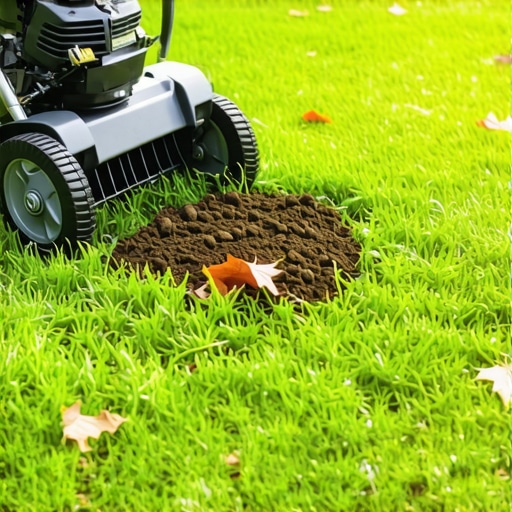
Forget the spike aerators you see at the big-box stores. Spikes do not aerate; they actually increase compaction by pushing soil downward and outward to make a hole. This creates a “glazing” effect on the sides of the hole that roots can’t penetrate. You need a commercial-grade power core aerator with hollow tines. The machine must be heavy enough to pull a clean plug. If the soil is too dry, the tines will barely scratch the surface. If it’s too wet, you’ll smear the soil and destroy the structure. The soil should be the consistency of a wrung-out sponge.
“A retaining wall doesn’t fail because of the stone; it fails because of the water trapped behind it.” – Hardscape Engineering Axiom
The same logic applies to your lawn. If your landscaping includes tiered levels or hardscaping, proper aeration of the turf sections prevents the soil from becoming a saturated, heavy mass that puts unnecessary pressure on your walls. A healthy, aerated lawn absorbs water like a sponge, reducing the load on your drainage systems.
How much modified gravel do I need for a patio base?
While this seems unrelated to lawn care, the drainage of your lawn care zones directly impacts your hardscape longevity. Generally, for a standard pedestrian patio, you need 6 inches of compacted 21A or 3/4-inch modified gravel. If the surrounding lawn is compacted and sheds water toward the patio, you may need to increase that base or install a French drain to handle the surplus. Aerating the adjacent turf helps mitigate this runoff by increasing the soil’s infiltration rate.
Post-Aeration Protocol: The 48-Hour Window
Once the cores are on the surface, don’t rake them up. They contain the very microbes your lawn needs. They will break down in 1-2 weeks and return nutrients to the soil. This is the absolute best time to top-dress with high-quality compost or sand, depending on your soil texture. It is also the golden window for overseeding. The holes provide the perfect seed-to-soil contact required for high germination rates.
- Step 1: Flag all irrigation heads and underground utilities (Call 811).
- Step 2: Mow the lawn slightly lower than usual (approx 2 inches).
- Step 3: Run the aerator in a grid pattern to ensure at least 20-40 holes per square foot.
- Step 4: Apply 0.5 lbs of Phosphorus-rich starter fertilizer per 1000 sq ft.
- Step 5: Water deeply immediately after to settle the seed and initiate the recovery.
Don’t skip the watering. It will rot. If you leave the lawn to bake after pulling cores, you are essentially dehydrating the root system. You must maintain moisture for at least 14 days following the procedure to see the maximum growth benefits. This is not a “one and done” task; it is a seasonal requirement for any high-performance landscape.