
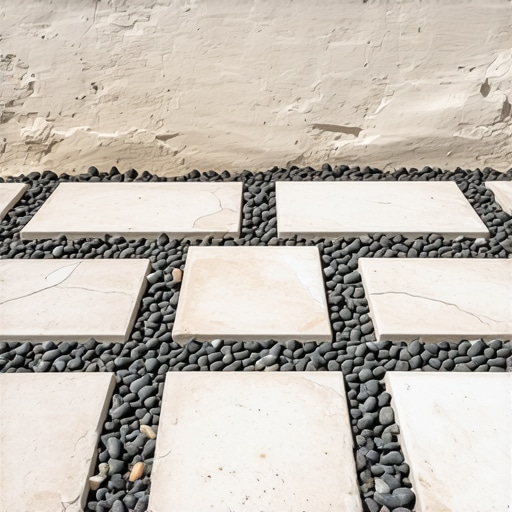
Stop Sinking Flagstones with This Crushed Stone Base Hack
Why Your Flagstone Patio is Tipping Like a Drunk Sailor
Flagstones sink because the base layer fails to distribute the load of the stone and the foot traffic above it to the subgrade. When you see a stone dipping or rocking, you are looking at a failure of hydrostatic pressure management and structural compaction. Most amateur contractors use a thick bed of mason sand, thinking it provides a soft cushion. It does not. Sand is a fluid medium when saturated. To stop sinking, you must transition to a well-graded crushed stone base that utilizes angular interlocking particles to create a rigid, semi-permeable platform.
I recently got called out to tear up a $30,000 patio that was sinking because the previous contractor used rounded pea gravel as a leveling agent. It was a forensic nightmare. Pea gravel is essentially a box of ball bearings. No matter how much you tamp it, the stones will move because the aggregate has no mechanical interlock. We had to excavate 14 inches of material, haul away tons of useless stone, and restart from the native clay subgrade. If you don’t respect the physics of the soil, the soil will eventually claim your investment as compost. Don’t be that homeowner.
“A retaining wall or patio doesn’t fail because of the stone; it fails because of the water trapped behind or beneath it.” – Hardscape Engineering Axiom
The Engineering Hack: Modified Crushed Stone and the Fines Ratio
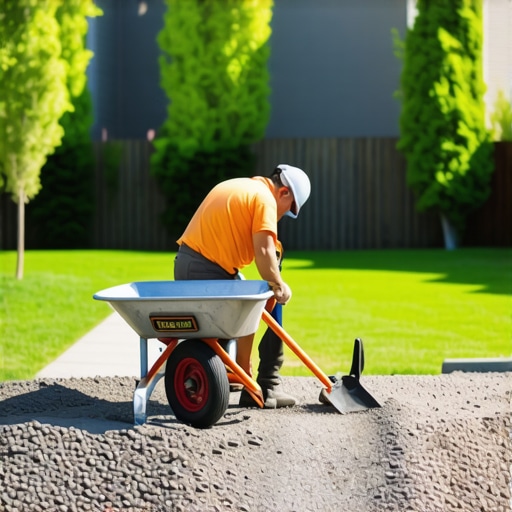
The secret to a permanent flagstone installation is using 3/4-inch minus crushed stone (often called CR6, 21A, or Modified Gravel). This material contains a specific ratio of large angular rocks down to fine stone dust. When compacted, the dust fills the voids between the larger rocks, creating a surface that is nearly as hard as concrete but still allows for microscopic drainage. This is the professional standard for high-traffic hardscaping. You are not just laying stones; you are building a road bed. The stone is merely the decorative veneer on an engineering project.
How much modified gravel do I need for a patio base?
To calculate your base needs, multiply your total square footage by the depth of the base (minimum 4 inches for walkways, 6 inches for patios) and divide by 324 to get the required cubic yards. Always add a 10% waste factor for compaction. In heavy clay soils, you may need to increase your base depth to 8 inches to prevent frost heave from displacing the stones during winter cycles. Dig deep or don’t dig at all.
What is the best base material for flagstone?
The best base material for flagstone is ASTM D2940 graded aggregate topped with a 1-inch layer of coarse washed concrete sand or stone screenings for leveling. This dual-layer system ensures that the structural load is carried by the crushed stone while the sand provides the necessary micro-adjustments for irregular natural flagstone thicknesses. Avoid “play sand” or “all-purpose sand” at all costs. They are too fine and will wash away into the subbase voids over time.
| Material Layer | Purpose | Required Depth | Compaction Method |
|---|---|---|---|
| Native Subgrade | Foundation | Bottom of Trench | Plate Compactor (95% Proctor) |
| Geotextile Fabric | Separation | N/A | Hand-smoothed |
| 3/4″ Minus Gravel | Structural Load | 4-8 Inches | 4,000 lbf Vibratory Tamper |
| Concrete Sand | Leveling Bed | 1 Inch | Screed Pipe Method |
| Flagstone | Surface | 1.5-2 Inches | Dead Blow Mallet |
Step-by-Step Professional Base Installation Checklist
- Call 811: Mark your utility lines. Striking a gas line is a fast way to end a weekend.
- Excavate to 10 Inches: You need room for 6 inches of base, 1 inch of sand, and 2 inches of stone.
- Verify Pitch: Ensure the subgrade slopes 1/4 inch per foot away from any house foundation.
- Install Geotextile: Use a non-woven fabric to prevent the gravel from sinking into the mud.
- Lift Compaction: Add gravel in 2-inch “lifts.” Tamp each layer until the machine bounces.
- The Screed Test: Use a straight edge. If there is a gap larger than 1/8 inch, your base isn’t flat.
“Uniformity of the subgrade is the single most important factor in the long-term performance of any pavement system.” – ICPI Tech Spec No. 2
Soil Mechanics and the Frost Heave Reality
If you live in a region with heavy red clay or high silt content, your soil is expansive. It grows when it freezes. If you don’t provide a thick enough crushed stone chimney for that water to escape, the ice will lift your flagstones like a hydraulic jack. In my experience, a 4-inch base is a recipe for failure in northern climates. Go to 6 or 8 inches. It’s more labor, but you only do it once. The tamper should literally bounce off the compacted base when you are finished. If the ground feels soft, it is. Fix it now or fix it in three years when the stones are vertical.
The Final Lock: Polymeric Sand vs. Stone Dust
Once the stones are set, the battle isn’t over. You must lock the joints. Polymeric sand is the gold standard here. It contains chemical binders that activate with water, turning the sand into a flexible grout. This prevents weed growth and, more importantly, prevents water from infiltrating the base and washing out your leveling layer. Do not just sweep in dirt. Dirt grows weeds. Weeds have roots. Roots destroy bases. Use the right chemistry for the job. Ensure the stones are 100% dry before applying polymer sand or you will stain the surface permanently. Precision matters.
![Build a $350 Flagstone Path in One Weekend [DIY 2026]](https://lawnmajesty.com/wp-content/uploads/2026/05/Build-a-350-Flagstone-Path-in-One-Weekend-DIY-2026.jpeg)